
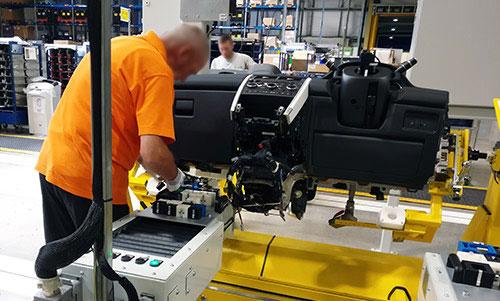
Before any new vehicle leaves the production line, it must undergo a rigorous evaluation known as a Full Vehicle End of Line Test. This test ensures the car meets all quality, safety, and performance standards set by the manufacturer. It’s the final checkpoint—the stage where experts review every critical system to confirm that the vehicle is road-ready. If you're curious about what gets checked or you’re exploring professional testing solutions, this guide gives you a clear understanding of the process.
To learn more about specialised testing systems, check out Full Vehicle End of Line Test services that support manufacturers in achieving flawless final-stage inspections.
Why the Full Vehicle End of Line Test Matters
Imagine buying a brand-new car only to encounter an electrical problem or braking issue on day one. Manufacturers work hard to avoid this by implementing a detailed end-of-line testing process. This stage verifies that every component functions exactly as intended, ensuring the car is safe, compliant, and free from defects.
End-of-line testing protects the consumer, the manufacturer, and the brand reputation. It’s one of the most important steps in vehicle production and a crucial part of modern automotive quality control.
1. Electrical System Verification
One of the first components checked during a full vehicle end of line test is the electrical system. Today’s vehicles rely heavily on electronics—from dashboard lights to advanced infotainment systems—and even minor faults can lead to major issues.
What gets inspected?
-
Battery performance
-
Wiring continuity
-
ECU communication
-
Lighting systems
-
Sensors and onboard electronics
Technicians use diagnostic software to quickly detect electrical anomalies and ensure each system communicates correctly within the vehicle’s network.
2. Engine and Powertrain Performance
The engine is the heart of the vehicle, so it undergoes extensive testing to guarantee smooth and reliable performance.
Key tests include:
-
Idle stability
-
Acceleration response
-
Fuel system performance
-
Noise and vibration levels
-
Gear changes and transmission behavior
This ensures the powertrain operates efficiently and meets performance standards before the car reaches the customer.
3. Braking System Testing
Safety systems receive high priority in an end-of-line test, and brakes are at the top of that list. Even a small defect can compromise driver and passenger safety.
Technicians check:
-
Brake pedal sensitivity
-
ABS system functionality
-
Hydraulic pressure levels
-
Brake light activation
-
Emergency braking response
Automated test benches often simulate road conditions to validate braking performance in real time.
4. Steering and Suspension Checks
Steering and suspension systems play a major role in vehicle handling, comfort, and safety. Any faults in these areas could lead to poor drivability or uneven tire wear.
What’s assessed?
-
Steering wheel alignment
-
Power steering responsiveness
-
Shock absorber performance
-
Ride height and suspension balance
These evaluations ensure the vehicle handles predictably and safely under varying road conditions.
5. Vehicle Diagnostics and ECU Health
Modern vehicles feature multiple electronic control units (ECUs) that monitor and manage essential systems. During a full vehicle end of line test, technicians verify that all ECUs function correctly.
This involves checking:
-
Diagnostic trouble codes
-
Software version consistency
-
Data communication between modules
-
Calibration status of sensors and actuators
Ensuring the ECUs are healthy helps prevent warning light errors or software miscommunication once the vehicle is delivered.
6. Emissions and Exhaust System Testing
With environmental regulations becoming stricter worldwide, ensuring the vehicle meets emissions standards is crucial.
Key tests include:
-
Exhaust leaks
-
Emission output levels
-
Catalytic converter performance
-
O2 sensor readings
-
Exhaust noise levels
These checks confirm the vehicle is environmentally compliant and performs within legal emission limits.
7. Body and Exterior Quality Inspection
The appearance of the vehicle also undergoes close evaluation. Aesthetic flaws reflect poorly on the manufacturer, so the vehicle receives a detailed exterior inspection.
Technicians look for:
-
Paint defects
-
Panel alignment
-
Door and bonnet fit
-
Glass installation quality
-
Seal integrity
This ensures the car not only performs well but also looks flawless.
8. Interior Functionality and Comfort Testing
Inside the vehicle, everything from seat adjustments to interior lighting is assessed for proper operation and quality.
Common checks include:
-
HVAC system performance
-
Seat controls and comfort
-
Dashboard interface responsiveness
-
Window and lock functionality
-
Cabin noise levels
Comfort matters. These checks help ensure the driver enjoys a smooth, ergonomic, and pleasant experience.
9. Infotainment and Connectivity Testing
Today’s vehicles rely heavily on digital features, so infotainment systems receive thorough evaluation.
What’s tested?
-
Touchscreen responsiveness
-
Bluetooth and smartphone connectivity
-
Navigation system accuracy
-
Speaker and microphone performance
-
Voice assistant functionality
A glitchy infotainment system can frustrate drivers, so precise testing ensures everything works seamlessly.
10. Safety Feature Verification
Safety is a non-negotiable element of vehicle manufacturing. End-of-line testing verifies that all safety systems operate perfectly.
These systems may include:
-
Airbag sensors
-
Collision avoidance systems
-
Lane assist and adaptive cruise control
-
Parking sensors and cameras
-
Traction and stability control
Verifying advanced driver assistance systems (ADAS) ensures both safety and compliance with modern automotive regulations.
11. Road Simulation and Final Drive Test
Before the vehicle is approved for shipping, it undergoes a road simulation or real-world drive test. This allows technicians to experience the car the way a consumer will.
During this test, they observe:
-
Acceleration and braking
-
Gear shifting smoothness
-
Steering precision
-
Noise and vibration
-
Overall ride quality
This final step verifies that all systems work together harmoniously.
12. Why Full Vehicle End of Line Testing is Essential for Manufacturers
End-of-line testing is more than a quality checkpoint—it’s a brand safeguard. It helps manufacturers avoid recalls, strengthen customer trust, and maintain consistent product quality.
It ensures:
-
Compliance with legal and safety regulations
-
Reliable performance straight from the factory
-
Minimized defects and warranty claims
-
Higher customer satisfaction
For companies aiming to elevate their quality control, leveraging advanced EOL technology is a must. You can explore expert solutions through professional Full Vehicle End of Line Test systems designed to streamline and optimise the entire testing process.
Conclusion
A Full Vehicle End of Line Test is one of the most critical steps in automotive manufacturing. It ensures every component—from the brakes to the infotainment system—is functioning perfectly before the car reaches its new owner. By meticulously checking electrical systems, mechanical performance, safety features, and overall quality, manufacturers can confidently deliver vehicles that meet the highest standards.
Whether you're part of an automotive production team or simply interested in how cars are perfected before delivery, understanding these key components highlights just how much care goes into every vehicle built. End-of-line testing is the final seal of assurance that each car is safe, reliable, and ready for the road.

 English
 Magyar
 French
 Spanish
 Portuguese
 Deutsch
 Turkish
 Dutch
Dutch
 Italiano
 Russian
 Romaian
 Portuguese (Brazil)
 Greek
Greek