
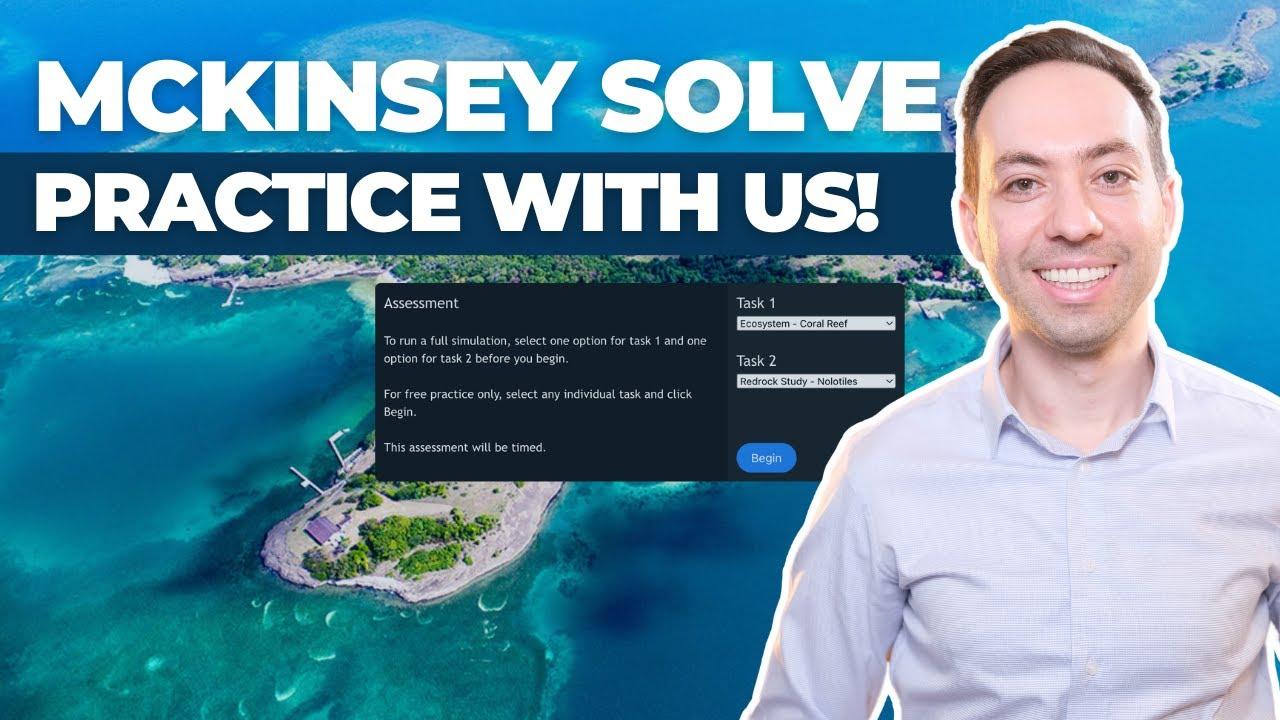
The consulting hiring process has changed significantly in recent years. Firms are no longer satisfied with evaluating candidates solely through resumes, academic credentials, and traditional interviews. While these methods provide surface-level information, they often fail to reveal how a candidate actually thinks, prioritizes, and performs under real consulting pressure.
As a result, many top firms have introduced digital simulation assessments to evaluate problem-solving, decision-making, and analytical thinking. These tools replicate real consulting scenarios in a controlled environment, allowing recruiters to observe behavior rather than relying on rehearsed answers. Candidates preparing for assessments such as the mckinsey solve game are experiencing firsthand how simulations are becoming a central part of modern consulting recruitment.
What Are Digital Simulations in Consulting Hiring
Digital simulations are interactive, scenario-based assessments designed to mirror real-world consulting challenges. Instead of asking candidates to explain how they would approach a problem, simulations place them directly into a situation where they must analyze data, make decisions, and adapt to changing variables.
Unlike traditional case interviews, simulations are standardized and technology-driven. Every candidate faces the same structure, which helps firms maintain consistency and fairness. These assessments are especially useful in early screening rounds, where firms need to evaluate large volumes of applicants efficiently without compromising quality.
How Digital Simulations Work
Consulting simulations typically consist of multiple short modules that test different skill sets. Candidates may be asked to interpret charts, allocate resources, identify patterns, or make strategic trade-offs under time constraints. Each task is designed to capture specific behaviors, such as risk tolerance, attention to detail, and logical reasoning.
Advanced algorithms analyze how candidates approach problems, not just whether they arrive at the correct answer. Factors such as response time, consistency, and adaptability are recorded and compared against benchmarks created from successful consultants. This data-driven approach allows firms to identify high-potential candidates early in the hiring process.
Key Skills Consulting Firms Measure
One of the primary reasons consulting firms use digital simulations is their ability to measure job-relevant skills accurately. Analytical reasoning is a core focus, as consultants must work with complex data sets and extract meaningful insights quickly.
Strategic thinking and prioritization are also critical. Candidates must decide what information matters now and where to focus their efforts. Simulations often introduce uncertainty, testing how well candidates adjust their strategies when new data becomes available. In the middle of the assessment process, tools like the mckinsey solve game help firms evaluate these competencies in a realistic and objective way.
Why Consulting Firms Rely on Digital Simulations
Digital simulations offer several advantages over traditional screening methods. First, they reduce unconscious bias by focusing on behavior and performance rather than background or communication style. This helps firms build more diverse and capable teams.
Second, simulations are scalable. Consulting firms receive thousands of applications each year, and simulations allow them to assess candidates efficiently without compromising rigor. Finally, these tools have strong predictive value. Research shows that performance in structured simulations often correlates with on-the-job success, making them a reliable indicator of future performance.
Candidate Experience in Simulation Assessments
From a candidate's perspective, digital simulations can feel very different from interviews or written tests. The interactive format is often more engaging but can also be mentally demanding. Time pressure and unfamiliar scenarios may create stress, especially for candidates encountering simulations for the first time.
However, many candidates prefer simulations because they provide a fair opportunity to demonstrate skills rather than polished storytelling. The experience feels closer to real consulting work, giving applicants insight into what the role actually involves.
How to Prepare for Consulting Simulation Assessments
Preparation for digital simulations requires a different mindset than traditional interviews. Rather than memorizing frameworks or model answers, candidates should focus on sharpening core skills such as structured thinking, data interpretation, and calm decision-making.
Practicing under time constraints can help build confidence and improve focus. Candidates should also familiarize themselves with reading charts quickly and identifying key variables. One common mistake is overthinking each decision. Simulations are designed to capture natural problem-solving behavior, so consistency and clarity matter more than perfection.
Advantages and Limitations of Simulation-Based Hiring
Simulation-based hiring offers clear benefits for both firms and candidates. Employers gain deeper insights into real-world capabilities, while candidates are evaluated on how they think rather than how well they perform in interviews.
That said, simulations are not without limitations. They may not fully capture interpersonal skills such as communication and teamwork. Technical issues or unfamiliarity with digital tools can also affect performance. For this reason, most consulting firms use simulations as part of a broader hiring process that includes interviews and case discussions.
The Future of Consulting Recruitment
As technology advances, digital simulations are expected to become even more sophisticated. Future assessments may adapt in real time, adjusting difficulty levels based on candidate responses and providing even deeper insights into learning ability and potential.
Many firms are moving towards hybrid hiring models that combine simulations, interviews, and experiential assessments. This approach balances efficiency with human judgment, ensuring that candidates are evaluated holistically while maintaining objectivity and fairness.
Conclusion
Digital simulations have transformed how consulting firms assess candidates. By replicating real consulting challenges, these tools provide a more accurate and unbiased evaluation of problem-solving, analytical thinking, and adaptability.
For aspiring consultants, understanding and preparing for simulation-based assessments is now essential. As recruitment continues to evolve, digital simulations will remain a key component in identifying talent that can thrive in the demanding world of consulting.

 English
 Magyar
 Arabic
 French
 Spanish
 Portuguese
 Deutsch
 Turkish
 Italiano
 Russian
 Romaian
 Portuguese (Brazil)
 Greek
Greek