
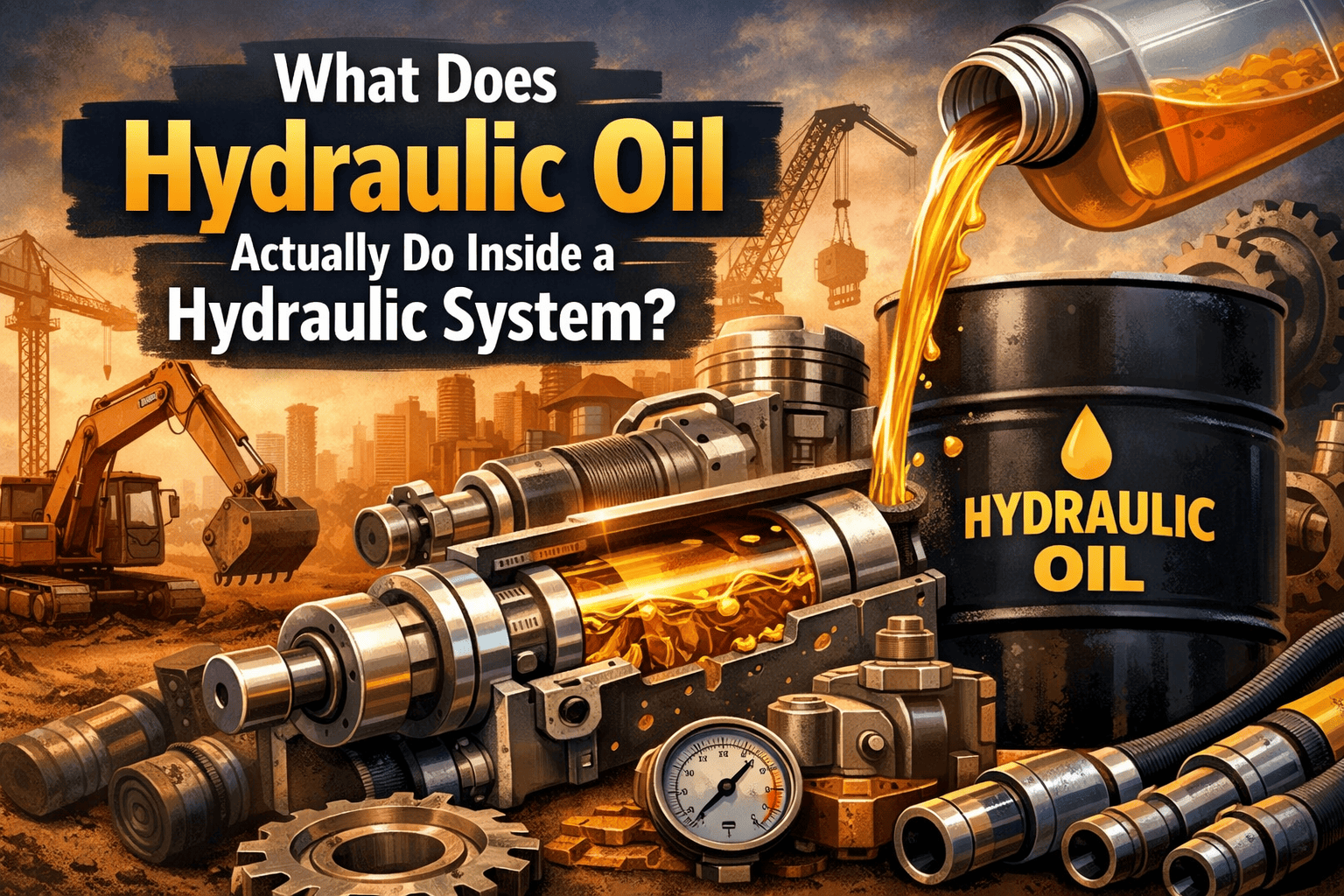
Hydraulic systems power everything from construction equipment and manufacturing machinery to elevators and aircraft. At the heart of all these systems lies one critical component: hydraulic oil. While it may look like just another industrial fluid, its role is far more complex and essential than many people realize—especially in demanding environments like the UAE, where heat, dust, and heavy workloads push equipment to its limits.
So, what does hydraulic oil actually do inside a hydraulic system? Let’s break it down in a clear, practical way.
Why Hydraulic Oil Is the Lifeblood of Hydraulic Systems
In simple terms, hydraulic oil is the medium that transfers power. According to Pascal’s Law, pressure applied to a confined fluid is transmitted equally in all directions. This principle allows hydraulic systems to lift massive loads with relatively little input force.
But power transmission is only one part of the story. Modern hydraulic oil performs multiple critical functions simultaneously, making it indispensable for system efficiency and reliability.
1. Power Transmission: Turning Pressure into Motion
The primary job of hydraulic oil is to transmit energy. When a pump applies pressure to the oil, that force moves through hoses, valves, and cylinders to create motion.
For example, in construction equipment commonly used across the UAE—such as excavators and loaders—hydraulic oil enables smooth lifting, digging, and steering. Without the correct oil viscosity and pressure stability, machines would feel sluggish, unresponsive, or unsafe.
2. Lubrication: Reducing Wear and Tear
Hydraulic systems contain many moving metal components, including pumps, pistons, and valves. Hydraulic oil forms a thin lubricating film between these parts, reducing friction and preventing direct metal-to-metal contact.
Industry data suggests that up to 70% of hydraulic system failures are linked to lubrication-related issues, such as poor oil quality or contamination. In hot climates like the UAE, proper lubrication becomes even more critical, as high temperatures can thin oil and reduce its protective properties.
3. Heat Dissipation: Managing System Temperatures
Hydraulic systems generate heat through friction and pressure. If not controlled, excess heat can degrade seals, reduce efficiency, and shorten equipment lifespan.
Hydraulic oil absorbs this heat and carries it away to reservoirs or coolers, helping maintain safe operating temperatures. This function is particularly important in the UAE, where ambient temperatures often exceed 45°C during summer months.
4. Contamination Control: Keeping Systems Clean
Hydraulic oil also plays a vital role in cleaning and protecting the system. It carries dirt, metal particles, and debris to filters, preventing these contaminants from damaging sensitive components.
Clean oil can extend equipment life significantly. Studies show that effective contamination control can increase hydraulic component life by up to 50%. In dusty environments common across the region, this function cannot be overstated.
5. Sealing and Corrosion Protection
Hydraulic oil helps seal small clearances between components, improving pressure retention and system efficiency. At the same time, additives within the oil protect internal surfaces from rust and corrosion caused by moisture or chemical reactions.
This is especially important for equipment operating near coastal areas of the UAE, where humidity and salt air can accelerate corrosion.
Choosing the Right Hydraulic Oil Matters
Not all hydraulic oil is the same. Factors such as viscosity grade, additive package, and thermal stability must match the system design and operating conditions.
Using the wrong oil can lead to:
-
Increased energy consumption
-
Frequent breakdowns
-
Higher maintenance costs
-
Reduced equipment lifespan
For UAE-based industries, selecting oil designed for high-temperature performance and oxidation resistance is often essential.
Final Thoughts: Don’t Underestimate Hydraulic Oil
Hydraulic oil does far more than just “flow through the system.” It transmits power, lubricates components, manages heat, controls contamination, and protects against corrosion—all at once. In harsh operating conditions like those found in the UAE, its role becomes even more critical.

 English
 Magyar
 Arabic
 French
 Spanish
 Portuguese
 Deutsch
 Turkish
 Dutch
Dutch
 Italiano
 Russian
 Romaian
 Portuguese (Brazil)