
Construction projects in the UAE move at a different pace compared to many other regions. Deadlines are tight, project scales are massive, and expectations for quality are extremely high. From iconic skyscrapers in Dubai to industrial developments in Abu Dhabi and mixed-use communities across Sharjah, there is little room for mistakes on site.
Yet, two of the most common challenges contractors face are rework and delays. Incorrect drawings, coordination conflicts, and last-minute design changes often lead to wasted materials, extended timelines, and increased costs. Even minor structural errors can stop progress for days or weeks.
This is where Structural BIM Services have become a game-changer for contractors and engineers. By using intelligent 3D models and coordinated workflows, BIM helps identify problems before construction begins. Instead of fixing issues on-site, teams resolve them digitally.
For UAE construction companies, this proactive approach significantly reduces rework and keeps projects on schedule.
Understanding the Cost of Rework and Delays in Construction
Rework is one of the most expensive problems in construction. It occurs when completed work must be demolished, modified, or rebuilt because of errors or conflicts. These mistakes are often caused by poor coordination between structural, architectural, and MEP teams.
In traditional workflows that rely on 2D drawings, many issues remain hidden until construction starts. By the time clashes are discovered, labor and materials have already been invested.
Delays create additional complications. Extended timelines lead to increased labor costs, equipment rentals, and contractual penalties. In competitive UAE markets, late delivery can also damage a contractor’s reputation.
Reducing these risks requires better planning and more accurate information. Structural BIM provides exactly that.
What Are Structural BIM Services
Structural BIM Services involve developing detailed digital models that represent the full structural system of a building. These models include foundations, slabs, beams, columns, reinforcement, steel members, and connections.
Unlike simple drawings, BIM models contain intelligent data. Each element carries information about dimensions, materials, and quantities. Engineers can simulate construction virtually before any physical work begins.
Typical services include structural modeling, reinforcement detailing, steel detailing, clash detection, shop drawings, and quantity take-offs. Together, these deliverables create a clear roadmap for construction.
Because everything is planned digitally, errors are detected early rather than during execution.
Early Clash Detection Prevents On-Site Conflicts
One of the biggest reasons for rework is clashes between building systems. For example, a beam may intersect with an HVAC duct or a column may block a service route. These conflicts often go unnoticed in 2D drawings.
When discovered during construction, teams must stop work, redesign, and sometimes demolish completed sections.
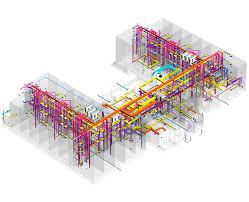
Structural BIM solves this problem through clash detection. Specialized software analyzes models from structural, architectural, and MEP disciplines simultaneously. It automatically identifies conflicts and highlights them.
This allows engineers to:
• Resolve design issues early
• Adjust layouts before construction
• Avoid costly site modifications
• Maintain smooth installation
By fixing clashes digitally, contractors eliminate the need for physical rework.
Improved Accuracy Through Detailed Modeling
Construction delays often happen because drawings lack clarity or precision. Missing dimensions, incorrect levels, or inconsistent details create confusion for site teams.
Structural BIM models provide a higher level of detail. Every beam, column, and reinforcement bar is modeled accurately. This eliminates guesswork and ensures that everyone works with the same information.
Detailed models lead to:
• Clearer shop drawings
• Precise fabrication data
• Better installation planning
• Fewer misunderstandings on site
When crews know exactly what to build, work progresses faster and with fewer mistakes.
Better Coordination Between Stakeholders
Modern UAE projects involve multiple consultants, contractors, and subcontractors. Coordination between these stakeholders is critical.
Without BIM, teams often work separately, sharing information through disconnected drawings and emails. This creates inconsistencies and delays.
Structural BIM encourages collaborative workflows. All disciplines work within a shared model environment. Changes are updated in real time and visible to everyone.
This improves:
• Communication
• Decision-making
• Responsibility tracking
• Workflow alignment
Better coordination reduces the chances of errors that lead to rework.
Accurate Quantities Reduce Material Wastage
Material shortages or excess orders can both slow down construction. Incorrect quantity calculations often result in last-minute purchases or wasted stock.
Structural BIM automatically extracts quantities directly from the model. Because data is linked to geometry, calculations are more accurate than manual methods.
This helps contractors:
• Order correct materials
• Avoid delays caused by shortages
• Reduce waste
• Control budgets
Efficient procurement ensures that work continues without interruptions.
Faster Approvals and Fewer Revisions
Approval delays are common in the UAE, especially for large or complex developments. Authorities and consultants may request multiple revisions if documentation is unclear.
BIM models provide clear visualizations that are easier to understand than traditional drawings. Stakeholders can review designs quickly and confidently.
This results in:
• Faster approvals
• Fewer design revisions
• Reduced back-and-forth communication
• Shorter pre-construction phases
Quicker approvals mean construction can start earlier and stay on schedule.
Enhanced Constructability Planning
Some designs look good on paper but are difficult to build. Poor constructability leads to unexpected issues on site and frequent modifications.
Structural BIM allows engineers to simulate the construction process before actual work begins. They can analyze sequences, access points, and installation challenges.
By identifying practical issues early, teams can adjust designs accordingly.
This leads to:
• Smoother workflows
• Safer operations
• Reduced on-site surprises
• Less rework
Better planning always translates into fewer delays.
Scalability and Dedicated Expertise
Outsourcing Structural BIM Services gives contractors access to specialized teams who focus exclusively on modeling and coordination. These experts bring experience from multiple projects and understand common pitfalls.
Working with professionals such as Engisoft Engineering ensures that structural models are developed with both engineering precision and local UAE construction knowledge. Their expertise helps prevent mistakes that less experienced teams might overlook.
Dedicated BIM specialists also deliver faster outputs, allowing contractors to keep pace with aggressive schedules.
Reduced Risk and Greater Predictability
Rework and delays create uncertainty. Contractors struggle to predict timelines and costs accurately.
Structural BIM reduces this uncertainty by improving visibility. Teams know exactly what to expect before construction begins.
With accurate models and coordinated plans, project managers can:
• Schedule tasks confidently
• Allocate resources effectively
• Avoid emergency fixes
• Deliver on time
Greater predictability leads to smoother execution and better client satisfaction.
Competitive Advantage in the UAE Market
The UAE construction industry is highly competitive. Clients increasingly expect BIM-based deliverables as part of tender requirements.
Contractors who use Structural BIM demonstrate professionalism, technical capability, and reliability. This not only reduces rework internally but also strengthens their market position.
Efficient, delay-free projects lead to better reputations and more repeat business.
Adopting BIM is no longer just an operational improvement. It is a strategic advantage.
Final Thoughts
Rework and construction delays are not just inconveniences. They directly affect profitability, timelines, and client trust. In fast-paced UAE developments, even small mistakes can have major consequences.
Structural BIM Services offer a proactive solution. By detecting clashes early, improving accuracy, enhancing coordination, and enabling smarter planning, BIM helps contractors avoid problems before they happen.
Instead of reacting to issues on site, teams solve them digitally during the design phase. This saves time, reduces costs, and ensures smoother execution.

 English
 Arabic
 French
 Spanish
 Portuguese
 Deutsch
 Turkish
 Dutch
Dutch
 Italiano
 Russian
 Romaian
 Portuguese (Brazil)
 Greek
Greek