
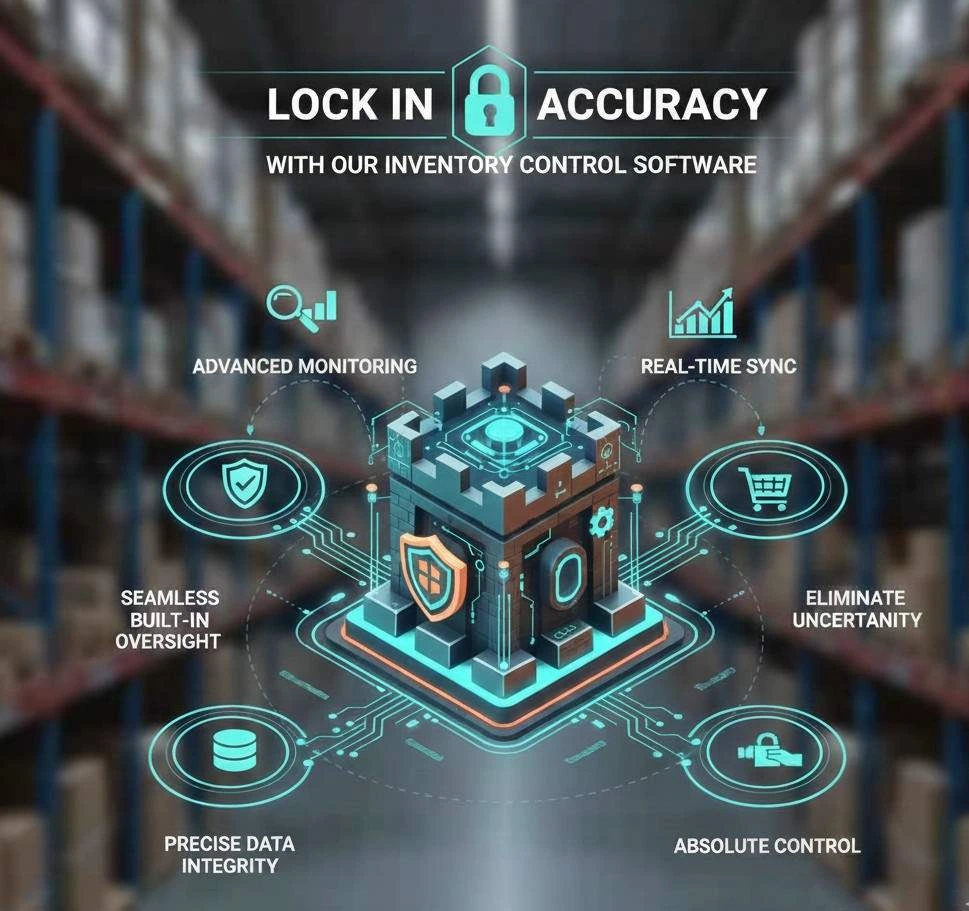
In today’s fast-moving business environment, maintaining accurate stock visibility is no longer optional. Companies across industries are adopting an Inventory Tracking System to gain better control over stock movement, reduce losses, and support data-driven decisions. Whether an organization is a growing startup or a large enterprise managing multiple warehouses, inventory accuracy directly impacts profitability, customer satisfaction, and operational efficiency.
An inventory tracking solution enables businesses to monitor stock levels in real time, record inventory transactions, and streamline workflows across procurement, storage, and distribution. With rising customer expectations and increasing supply chain complexity, businesses that rely on manual tracking often struggle with stock discrepancies, delays, and unnecessary costs.
Understanding How an Inventory Tracking System Works
An Inventory Tracking System uses digital tools to record, update, and monitor inventory throughout its lifecycle. It tracks items from the moment they are purchased or manufactured until they are sold or consumed. By integrating barcode scanning, serial numbers, batch tracking, or automated updates, businesses can eliminate guesswork and maintain accurate stock records at all times.
Modern systems often integrate with accounting, sales, and procurement platforms, allowing enterprises to create a unified operational view. This integration ensures that inventory data remains consistent across departments and supports better forecasting and planning.
Key Benefits for Small Enterprises
Small businesses face unique challenges such as limited budgets, lean teams, and high dependency on cash flow. An efficient inventory tracking approach helps overcome these constraints without adding unnecessary complexity.
Improved Inventory Accuracy
Manual tracking often leads to mismatched records and stock errors. Automated inventory tracking significantly reduces human error by updating stock levels instantly after each transaction. Accurate data ensures small businesses always know what is available, what needs restocking, and what items are slow-moving.
Better Cash Flow Management
According to industry research, excess inventory can lock up nearly 20–30% of a small business’s working capital. With an Inventory Tracking System, small enterprises can maintain optimal stock levels, avoiding overstocking or understocking situations. This balance helps free up cash for marketing, expansion, or operational improvements.
Time Savings and Operational Efficiency
Small teams often juggle multiple responsibilities. Automating inventory updates saves time spent on manual counts and spreadsheet maintenance. Employees can focus on sales, customer service, and growth initiatives instead of administrative tasks.
Enhanced Customer Satisfaction
Accurate inventory visibility allows businesses to fulfill orders on time and avoid canceled or delayed shipments. Customers receive what they expect, which improves trust and repeat business.
Strategic Advantages for Large Enterprises
Large organizations manage complex supply chains, multiple locations, and high transaction volumes. For them, an Inventory Tracking System is a strategic necessity rather than a convenience.
Real-Time Visibility Across Locations
Enterprises operating across warehouses or regions benefit from centralized inventory data. Real-time insights help decision-makers understand stock availability at each location, enabling faster transfers and smarter distribution planning.
Scalable Inventory Control
As businesses grow, inventory complexity increases. A robust tracking system supports scalability by handling high transaction volumes, multiple product categories, and diverse storage conditions without compromising performance.
Reduced Inventory Holding Costs
Carrying excess inventory increases storage, insurance, and handling costs. Studies indicate that optimized inventory tracking can reduce carrying costs by up to 25%. Enterprises can analyze demand trends and align stock levels accordingly.
Stronger Compliance and Audit Readiness
Large enterprises often operate under strict regulatory and reporting requirements. Digital inventory records provide traceability, audit trails, and compliance support, reducing risks during audits or inspections.
Role of Data and Analytics in Inventory Tracking
One of the most valuable aspects of an Inventory Tracking System is its ability to generate actionable insights. Businesses can analyze historical data to identify demand patterns, seasonal trends, and supplier performance.
Key data-driven benefits include:
-
Accurate demand forecasting based on past consumption
-
Identification of slow-moving or obsolete inventory
-
Performance comparison across locations or product lines
-
Better supplier negotiations using purchase and usage data
With analytics, inventory management shifts from reactive problem-solving to proactive planning.
Supporting Omnichannel and Digital Commerce
Modern consumers expect seamless purchasing experiences across online and offline channels. An integrated Inventory Tracking System ensures stock consistency across retail stores, warehouses, and eCommerce platforms. This alignment prevents overselling, stockouts, and order fulfillment errors, which are common challenges in omnichannel operations.
Long-Term Cost Savings and ROI
While implementing an inventory tracking solution requires initial investment, the long-term return is significant. Businesses experience reduced wastage, fewer stock discrepancies, improved order fulfillment rates, and better utilization of storage space. Over time, these efficiencies translate into measurable cost savings and higher profitability.
Choosing the Right Inventory Tracking Approach
The ideal inventory solution should align with business size, industry requirements, and growth goals. Key factors to consider include system scalability, ease of use, reporting capabilities, and integration flexibility. Businesses should also ensure proper training and process alignment to maximize system effectiveness.
Why Businesses Are Moving Toward Digital Inventory Management
The shift toward automation is driven by increasing competition, rising operational costs, and the need for agility. Organizations that rely on outdated inventory practices often struggle to adapt to market changes. In contrast, businesses using an Inventory Tracking System gain better control, faster response times, and improved decision-making capabilities.
Final Thoughts
An Inventory Tracking System is more than a stock management tool—it is a foundation for operational excellence. By providing visibility, accuracy, and actionable insights, it empowers both small and large enterprises to optimize resources, reduce costs, and enhance customer satisfaction. As markets evolve, investing in reliable inventory tracking becomes a strategic move toward sustainable growth.
If you are looking to streamline inventory operations and gain complete control over your stock movement, Plan-IT offers practical and scalable solutions designed for businesses of all sizes. Take the next step toward smarter inventory management with Plan-IT.
Get in touch with Plan-IT:
-
Mobile: +91-9958474631
-
Email: [email protected]

 English
 Magyar
 Arabic
 French
 Spanish
 Portuguese
 Deutsch
 Turkish
 Dutch
Dutch
 Italiano
 Russian
 Portuguese (Brazil)
 Greek
Greek