
The Internet of Things (IoT) is transforming industries worldwide. By connecting machines, sensors, and systems, IoT enables real-time monitoring, predictive maintenance, and data-driven decisions. However, IoT systems rely heavily on stable and continuous connectivity. Any network downtime can disrupt operations, cause data loss, and reduce efficiency.
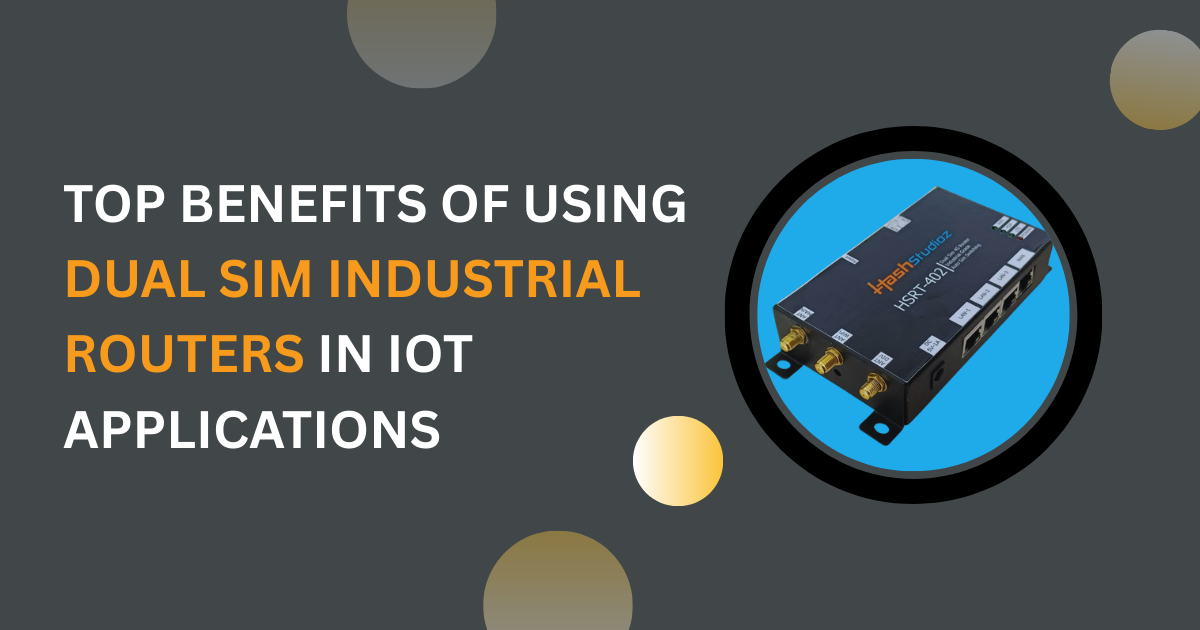
A Dual SIM Industrial Router is a device designed to provide reliable, redundant connectivity for industrial IoT deployments. Also called a Dual Sim Router, it uses two cellular SIM cards to maintain constant communication. This article explains the top benefits of these routers in IoT applications from a technical perspective.
What Is a Dual SIM Industrial Router?
A Dual SIM Industrial Router is a rugged network device built for industrial conditions. It supports two SIM cards from different carriers or plans. The router can automatically switch between SIMs if one network fails.
Key features of these routers include:
-
Support for 4G LTE, LTE-M, NB-IoT, and sometimes 5G networks
-
Rugged design to withstand dust, vibrations, and extreme temperatures
-
Built-in firewalls and VPN support for secure communication
-
Integration with industrial protocols like Modbus, MQTT, and OPC UA
By using two SIM cards, the router ensures uninterrupted connectivity, which is critical in IoT environments.
Why Reliable Connectivity Matters in IoT
Industrial IoT devices collect and transmit critical data to control systems and cloud platforms. Some applications demand real-time updates, including:
1. Critical Data Transmission
Industrial IoT devices continuously collect and transmit essential data to control systems and cloud platforms. Reliable connectivity ensures that this data reaches its destination accurately and on time, which is crucial for decision-making, operational efficiency, and system monitoring.
2. Real-Time Updates for Key Applications
Many IoT applications require immediate data updates to function effectively. Examples include factory automation, remote monitoring of energy grids, fleet management, and healthcare monitoring. Even short delays in connectivity can result in errors, production slowdowns, or missed alerts, affecting safety and productivity.
3. Minimizing Downtime and Data Gaps
Network interruptions, even for a few minutes, can create gaps in data collection or disrupt operations. Reliable connectivity reduces downtime, ensuring continuous monitoring and timely responses, which is especially important for industrial processes and mission-critical IoT systems.
4. Challenges in Remote or Off-Grid Locations
In many remote locations, traditional wired networks are unavailable or impractical. IoT systems in such environments rely on cellular, satellite, or long-range wireless protocols to maintain connectivity. Robust network solutions ensure uninterrupted operation and prevent data loss, even in hard-to-reach areas.
5. Support for Edge AI and Decision-Making
Reliable connectivity enables IoT devices to communicate effectively with edge AI systems. Continuous data flow ensures that AI algorithms receive real-time inputs for processing, allowing automated decision-making, predictive maintenance, and timely alerts, enhancing efficiency and reducing operational risks.
Benefits of Dual SIM Industrial Routers in IoT
1. Network Redundancy and High Availability
A Dual SIM Router maintains connections to two separate networks. If one carrier experiences downtime or poor signal, the router switches automatically to the other.
Advantages:
-
Continuous data flow from IoT devices
-
Reduced risk of production stoppages
-
Support for mission-critical operations
For example, a remote oil rig using a dual SIM router can continuously transmit sensor data even if one cellular provider loses coverage.
2. Minimizing Downtime
Industrial systems aim for maximum uptime. Network outages can cost thousands of dollars per hour in lost productivity. Dual SIM Routers reduce connectivity-related downtime by maintaining an alternate path.
Impact:
-
IoT monitoring continues without interruption
-
Real-time alerts are always delivered
-
Maintenance teams receive timely notifications
This redundancy is particularly valuable in manufacturing, energy, and transportation sectors.
3. Improved Coverage
Cellular coverage varies depending on geography and infrastructure. One network may have weak signals in rural areas. A Dual SIM Router connects to two networks, ensuring broader coverage and stronger connectivity.
Benefits:
-
Fewer dead zones
-
Stable connectivity in remote locations
-
Reliable data transfer for sensors and machines
This is vital for IoT systems in agriculture, logistics, and field services.
4. Load Distribution for Better Performance
Some dual SIM routers support simultaneous use of both networks. This allows load distribution or load balancing.
Advantages:
-
Higher overall bandwidth
-
Lower latency for real-time applications
-
Smooth video or telemetry streaming from remote sites
For example, a construction site using multiple cameras can send live footage while IoT sensors transmit data on the second network.
5. Support for Real-Time and Critical Applications
Certain IoT systems require real-time data. A Dual SIM Router ensures that these systems function continuously. Examples include:
-
SCADA systems for industrial control
-
Predictive maintenance sensors
-
Emergency alert systems
By maintaining dual connections, the router reduces delays and prevents missed critical events.
6. Compatibility with Industrial Protocols
Dual SIM Industrial Routers support industrial protocols such as Modbus, MQTT, and OPC UA. This allows integration with older machines and modern IoT devices simultaneously.
Technical benefit:
-
Smooth connection between operational technology (OT) and IT systems
-
Reliable data collection for analytics and automation
-
No need to modify existing equipment
Technical Examples
1. Remote Manufacturing Facility
A factory located in a rural area uses a dual SIM router to connect multiple PLCs and sensors. When the primary network drops, the router switches automatically. Production data continues to flow without interruption.
2. Healthcare IoT
Mobile clinics use dual SIM routers to transmit patient records. Even when one network has weak coverage, critical health data reaches cloud servers in real-time.
Conclusion
Reliable connectivity is essential for industrial IoT. A Dual SIM Industrial Router ensures high availability, network redundancy, security, and coverage. These routers minimize downtime, support real-time applications, and reduce operational costs.
By maintaining continuous connections, Dual SIM Routers improve the performance, safety, and efficiency of IoT deployments. For industries relying on accurate data, these routers are a vital component of modern IoT infrastructure.

 Magyar
 Arabic
 French
 Spanish
 Portuguese
 Deutsch
 Turkish
 Dutch
Dutch
 Italiano
 Russian
 Romaian
 Portuguese (Brazil)
 Greek
Greek