
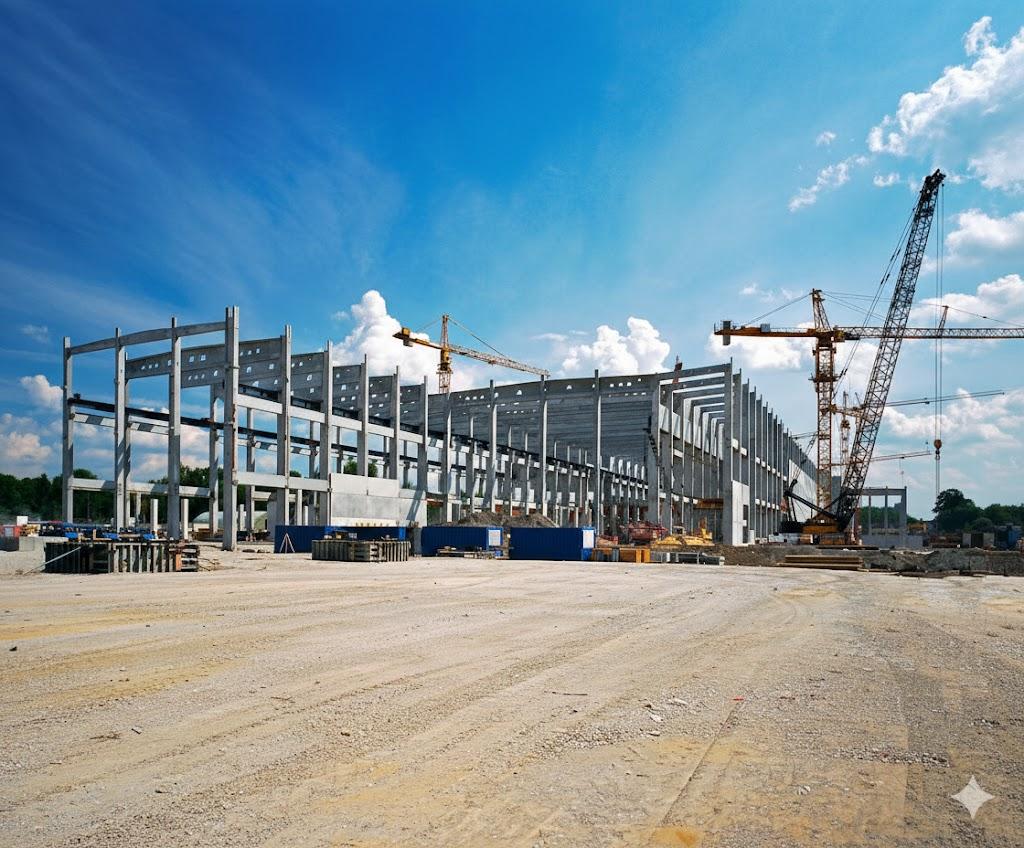
The construction industry is undergoing a profound digital transformation. Traditional methods based on fragmented drawings, manual coordination, and reactive problem-solving are no longer sufficient to meet the demands of modern projects. Today’s construction environment requires precision, collaboration, and data-driven decision-making. Building Information Modeling services have emerged as the foundation of modern construction projects, providing a structured and intelligent approach to planning, design, construction, and facility management.
Building Information Modeling, commonly known as BIM, is not just a 3D modeling tool. It is a comprehensive process that integrates geometry, data, and workflows into a shared digital environment. Through BIM services, project teams can visualize, analyze, coordinate, and manage buildings more effectively throughout their entire lifecycle.
Understanding Building Information Modeling Services
Building Information Modeling services involve the creation and management of intelligent digital models that represent the physical and functional characteristics of a building. These models go beyond visual representation by embedding critical information related to materials, quantities, schedules, costs, and performance.
Unlike traditional CAD drawings, BIM models are data-rich and interconnected. Changes made in one part of the model automatically update related elements, ensuring consistency and accuracy across all project documents. This integrated approach enables teams to work from a single source of truth, reducing errors and improving overall efficiency.
The Shift From Traditional Methods to BIM
For decades, construction projects relied on 2D drawings and isolated documentation. This approach often led to miscommunication, design conflicts, and costly rework during construction. As projects became more complex, the limitations of traditional methods became increasingly apparent.
Building Information Modeling services address these challenges by introducing a collaborative digital workflow. Architects, engineers, contractors, and owners can work together within a shared model, identifying and resolving issues early in the design phase. This shift from reactive problem-solving to proactive planning is a key reason why BIM has become essential for modern construction.
Enhancing Collaboration and Coordination
One of the most significant benefits of Building Information Modeling services is improved collaboration among project stakeholders. BIM enables multidisciplinary teams to integrate architectural, structural, and MEP systems into a coordinated model.
Clash detection is a critical component of BIM services. By identifying conflicts between systems before construction begins, teams can avoid costly on-site modifications and delays. This level of coordination improves communication, aligns expectations, and ensures smoother project execution.
Experienced BIM providers such as yourbimpartner.com specialize in delivering coordinated BIM solutions that support seamless collaboration across all project phases. Their expertise ensures that models are accurate, consistent, and aligned with project objectives.
Improving Design Quality and Accuracy
Design accuracy is fundamental to successful construction outcomes. Building Information Modeling services enhance design quality by allowing teams to visualize projects in three dimensions and evaluate design decisions with greater confidence.
BIM models enable detailed analysis of spatial relationships, building performance, and constructability. Designers can test multiple scenarios, assess design alternatives, and refine solutions before construction begins. This level of insight reduces design errors and improves overall project quality.
Additionally, BIM supports better documentation by generating accurate drawings, schedules, and quantities directly from the model. This reduces discrepancies between design intent and construction documentation.
Supporting Cost and Time Management
Cost overruns and schedule delays are common challenges in construction projects. Building Information Modeling services play a crucial role in addressing these issues through improved planning and forecasting.
By linking model elements to cost data, BIM enables accurate quantity takeoffs and cost estimates. This helps project teams make informed financial decisions and manage budgets more effectively. When design changes occur, cost implications can be evaluated quickly, reducing uncertainty.
BIM also supports construction scheduling through 4D modeling, which integrates time-related data into the model. This allows teams to simulate construction sequences, identify potential bottlenecks, and optimize workflows. As a result, projects are delivered more efficiently and with greater predictability.
Reducing Risks and Improving Decision-Making
Risk management is a critical aspect of modern construction projects. Building Information Modeling services reduce risks by providing greater visibility into design, construction, and operational factors.
With BIM, potential issues can be identified and addressed early, when changes are less costly and easier to implement. This proactive approach improves decision-making and reduces the likelihood of disputes, delays, and claims.
Data-driven insights provided by BIM models enable stakeholders to evaluate options objectively and select solutions that align with project goals. This level of transparency fosters trust and confidence among all parties involved.
Enabling Sustainable and High-Performance Buildings
Sustainability is a growing priority in the construction industry. Building Information Modeling services support environmentally responsible design by enabling performance analysis and optimization.
BIM models can be used to evaluate energy efficiency, daylighting, thermal performance, and material usage. These insights help designers make informed choices that reduce environmental impact and improve building performance.
By supporting green building certifications and long-term operational efficiency, BIM services contribute to sustainable development and reduced lifecycle costs. This aligns with the increasing demand for responsible and future-ready construction practices.
Supporting Construction and On-Site Execution
The benefits of Building Information Modeling services extend beyond design into the construction phase. BIM models provide contractors with accurate and up-to-date information that supports efficient on-site execution.
Detailed models improve constructability planning, site logistics, and sequencing. Contractors can visualize complex assemblies, coordinate trades, and plan installations with greater precision. This reduces errors, improves safety, and enhances productivity on site.
BIM also supports prefabrication and modular construction by providing precise digital models that can be used for off-site manufacturing. This approach improves quality control and reduces construction timelines.
Facilitating Facility Management and Lifecycle Value
Modern construction projects are increasingly evaluated based on their long-term performance rather than just initial costs. Building Information Modeling services support facility management by providing accurate as-built models and asset data.
These models serve as valuable resources for maintenance planning, space management, and future renovations. Facility managers can access critical information about building systems, components, and warranties, improving operational efficiency.
By supporting the entire building lifecycle, BIM services deliver long-term value and help owners maximize their investment.
The Role of Expert BIM Service Providers
The successful implementation of Building Information Modeling services requires specialized expertise, technology, and industry knowledge. Partnering with experienced BIM service providers ensures that projects fully benefit from BIM capabilities.
Firms like yourbimpartner.com offer comprehensive BIM services tailored to the needs of architects, engineers, contractors, and developers. Their BIM-driven approach supports accurate modeling, coordination, and data management, enabling projects to meet high standards of quality and efficiency.
By leveraging expert support, project teams can focus on their core objectives while ensuring that BIM processes are implemented effectively.
The Future of BIM in Construction
As digital technologies continue to evolve, Building Information Modeling services will play an increasingly central role in construction. Integration with digital twins, artificial intelligence, and smart building systems is expanding the capabilities of BIM.
These advancements will further enhance predictive analysis, asset management, and real-time decision-making. BIM will continue to serve as the foundation for innovation, enabling smarter, more resilient, and more sustainable built environments.
Conclusion
Building Information Modeling services are the foundation of modern construction projects because they bring together design, data, and collaboration in a unified digital process. From improving accuracy and coordination to supporting cost control, sustainability, and lifecycle management, BIM transforms how buildings are planned, built, and operated.
In an industry facing increasing complexity and higher expectations, BIM provides the tools and insights needed to deliver successful outcomes. With trusted partners such as yourbimpartner.com, construction professionals can unlock the full potential of Building Information Modeling services, ensuring projects are efficient, resilient, and future-ready.

 English
 Arabic
 French
 Spanish
 Portuguese
 Deutsch
 Turkish
 Dutch
Dutch
 Italiano
 Russian
 Romaian
 Portuguese (Brazil)
 Greek
Greek