
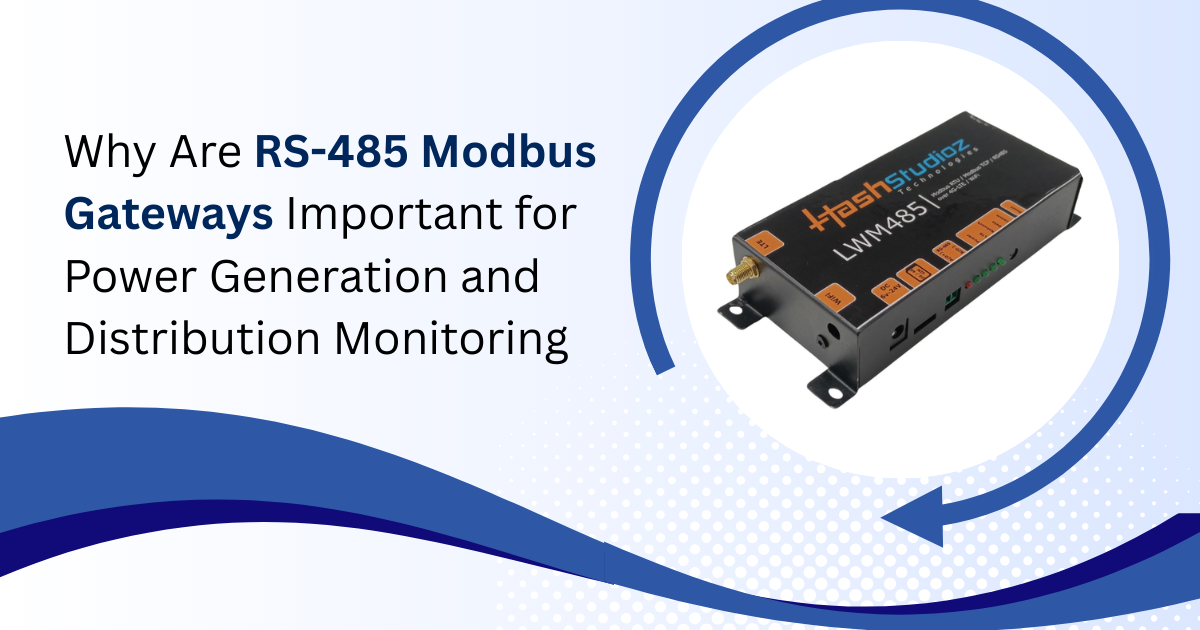
In the world of power generation and distribution, effective monitoring is key to ensuring operational efficiency, safety, and reliability. As energy grids grow more complex and demand increases, the need for advanced communication and monitoring systems becomes critical. One such technology that plays an essential role in modern power systems is the RS-485 Modbus Gateway. These industrial communication devices enable seamless connectivity between field devices, like sensors and controllers, and higher-level supervisory systems. This article will explore the significance of RS-485 Modbus Gateways in power generation and distribution, focusing on their role in industrial monitoring and how they integrate with Industrial IoT Gateways.
What is an RS-485 Modbus Gateway?
An RS-485 Modbus Gateway is a device that facilitates communication between different industrial devices using the RS-485 communication standard and the Modbus protocol. RS-485 is a widely used physical layer standard in industrial environments for long-distance, noise-immune data transmission. Modbus, on the other hand, is a communication protocol used to exchange data between electronic devices, commonly used in SCADA systems (Supervisory Control and Data Acquisition) for industrial monitoring.
The RS-485 Modbus Gateway acts as an intermediary between devices that speak different communication protocols, ensuring smooth data transmission between the systems. In a power generation and distribution environment, these gateways are critical for linking control systems, sensors, and monitoring devices to centralized data collection points or SCADA systems.
Key Features:
-
Support for Long-Distance Communication: RS-485 supports long-distance communication of up to 4,000 feet (1,200 meters), which is ideal for large industrial environments.
-
Multi-Device Connectivity: RS-485 allows communication with up to 32 devices on the same bus, providing scalability for industrial systems.
-
Noise Immunity: The differential nature of RS-485 communication makes it less susceptible to electromagnetic interference (EMI), a common challenge in industrial settings.
Importance of RS-485 Modbus Gateways in Power Generation
1. Real-Time Monitoring and Control
In power generation plants, operational efficiency depends on the ability to monitor and control a wide range of parameters, such as temperature, pressure, voltage, and current. RS-485 Modbus Gateways enable continuous data flow from various sensors and devices to centralized control systems. This ensures that plant operators can access real-time data, analyze system performance, and make timely adjustments.
For Example: An RS-485 Modbus Gateway can collect data from temperature sensors installed on generators and transmit it to a SCADA system for monitoring. This real-time data helps operators identify any abnormal temperature fluctuations that could signal potential failures, allowing them to take corrective action before damage occurs.
2. Improved Fault Detection and Prevention
Fault detection is crucial in power generation plants, where failures in equipment can result in significant downtime and loss of production. RS-485 Modbus Gateways help in detecting faults by facilitating communication between various devices and monitoring systems.
For instance, if a transformer in a power plant experiences an issue, the connected sensors can send alarms or data indicating abnormal conditions (e.g., overcurrent or overheating) to the gateway. The gateway will then transmit this information to a control system, triggering alarms or even shutting down the faulty equipment automatically to prevent further damage.
3. Enhanced Data Logging and Reporting
Another advantage of RS-485 Modbus Gateways is their ability to log and store historical data, which is essential for analyzing system performance over time. By providing connectivity to sensors and meters, these gateways help collect data on power generation efficiency, energy consumption, and operational trends. This data can then be used for:
-
Predictive Maintenance: Identifying wear-and-tear patterns or operational anomalies that might indicate the need for maintenance.
-
Regulatory Compliance: Ensuring that power generation systems meet safety and environmental standards by maintaining accurate records of system performance.
-
Optimization: Identifying areas where energy efficiency can be improved, leading to reduced costs and better resource management.
4. Scalability and Integration
As power generation plants evolve, the number of devices and sensors increases. RS-485 Modbus Gateways offer scalability, allowing for easy integration of new devices without overhauling the entire system. This flexibility is crucial as power generation plants incorporate new technologies, such as renewable energy sources (solar, wind, etc.), which require additional monitoring devices.
RS-485-based systems can be easily expanded by connecting more devices to the existing bus, ensuring the monitoring system grows in tandem with the plant's needs.
RS-485 Modbus Gateways in Power Distribution
1. Enhanced Grid Monitoring
In power distribution systems, ensuring efficient and stable energy flow is critical. RS-485 Modbus Gateways are instrumental in monitoring key parameters across the grid, including voltage levels, current, power factor, and energy usage. With the information provided by the gateways, utilities can assess grid performance in real time and make adjustments to avoid issues like voltage sag or load imbalances.
For instance, an RS-485 Modbus Gateway can be used in a substation to connect various smart meters and relays that monitor energy consumption and voltage levels. This data is relayed to a central control room for further analysis, enabling operators to address any issues before they escalate.
2. Automation and Remote Control
The integration of RS-485 Modbus Gateways with Industrial IoT (IIoT) systems enables remote monitoring and control of power distribution networks. In the event of a fault or an overload, operators can remotely isolate problematic sections of the grid or switch to backup power sources without being physically present. This helps reduce downtime and ensures the grid remains operational even during maintenance or fault events.
3. Reduced Operational Costs
One of the key challenges in power distribution is managing operational costs while maintaining reliability. RS-485 Modbus Gateways facilitate energy efficiency by providing accurate data on energy consumption and system performance. This data can be used for load balancing, identifying areas where power consumption is high, and implementing strategies to reduce wastage.
For example, smart meters connected to Modbus gateways can track energy usage in different sections of the grid, allowing for better demand-side management and optimization of power flow.
Integration with Industrial IoT Gateways
The role of Industrial IoT Gateways (IIoT Gateways) is rapidly expanding, especially in industries like power generation and distribution. While RS-485 Modbus Gateways focus on communication between devices using the Modbus protocol, IIoT Gateways bring additional functionalities, such as cloud connectivity, edge computing, and data analytics.
Benefits of IIoT Gateways in Power Generation and Distribution:
-
Data Integration: IIoT Gateways provide connectivity to cloud platforms, enabling the aggregation of data from various sensors, devices, and control systems. This data can be analyzed in real time to make informed decisions and optimize operations.
-
Edge Computing: IIoT Gateways can perform data processing at the edge of the network, reducing latency and allowing for faster decision-making. In power distribution, this could mean faster fault detection and recovery.
-
Predictive Analytics: By combining historical data collected via RS-485 Modbus Gateways with machine learning algorithms, IIoT Gateways can predict potential failures and schedule maintenance proactively.
Example:
In a smart grid application, RS-485 Modbus Gateways can connect various metering devices, sensors, and controllers within the grid, while IIoT Gateways can aggregate and transmit the data to a central cloud platform. Machine learning algorithms running on the cloud can predict peak demand periods, potential system failures, or maintenance needs, helping utilities to manage the grid more efficiently.
Conclusion
RS-485 Modbus Gateways are critical components in modern power generation and distribution systems, enabling efficient data communication and system monitoring. Their ability to facilitate real-time data exchange, improve fault detection, and integrate with Industrial IoT Gateways has made them indispensable in today's energy infrastructure.

 English
 Magyar
 Arabic
 French
 Spanish
 Portuguese
 Deutsch
 Turkish
 Dutch
Dutch
 Italiano
 Russian
 Portuguese (Brazil)
 Greek
Greek