
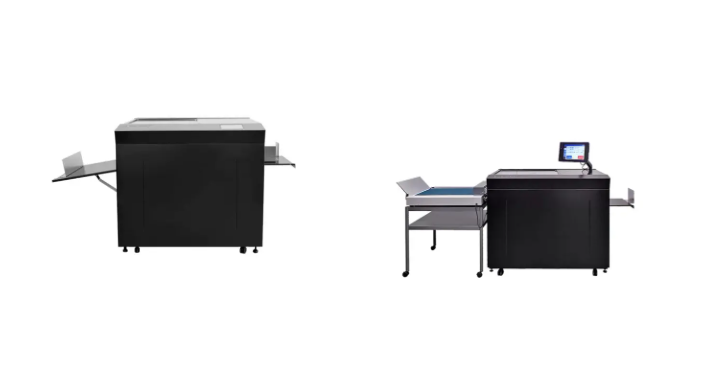
Selecting the right die cutter is a critical decision for any packaging, printing, or manufacturing business. The right machine can improve production speed, enhance accuracy, reduce waste, and increase profitability. However, with so many options available—flatbed, rotary, automatic, and digital die cutters—choosing the best one requires careful evaluation.
In this guide, we’ll walk you through the key factors to consider when choosing the right die cutter for your business.
1. Understand Your Production Needs
Before investing in a die cutter, clearly define your production requirements.
Ask yourself:
-
What materials will you cut? (corrugated board, paperboard, cardboard, foam, plastic)
-
What is your average production volume?
-
Do you handle short-run or high-volume orders?
-
Do you require intricate designs or simple box styles?
For example, if you manufacture corrugated shipping boxes in large quantities, a rotary die cutter may be more suitable. If your business focuses on custom packaging with complex shapes, a flatbed or digital die cutter may be the better choice.
2. Choose the Right Type of Die Cutter
There are several types of die cutting machines, each suited for different applications.
Flatbed Die Cutter
-
Ideal for thicker materials like corrugated board
-
Excellent precision for detailed designs
-
Best for medium production volumes
Rotary Die Cutter
-
High-speed production
-
Perfect for large-volume operations
-
Suitable for consistent, repetitive designs
Digital Die Cutter
-
No physical dies required
-
Great for short runs and prototypes
-
Ideal for custom and on-demand packaging
Your decision should align with your production scale and customization needs.
3. Consider Production Speed and Automation
Production efficiency directly impacts profitability. If your business handles high-volume orders, look for:
-
Automatic feeding systems
-
High-speed operation
-
Inline integration with printing and folding machines
-
Minimal manual setup
Automated die cutters reduce labor costs and improve consistency, especially in large manufacturing environments.
For smaller businesses or startups, a semi-automatic or digital die cutter may offer flexibility without heavy upfront investment.
4. Evaluate Precision and Quality Requirements
Packaging accuracy is essential for product safety, brand presentation, and retail compliance.
Look for a die cutter that offers:
-
High cutting precision
-
Clean edges without tearing
-
Consistent folding and creasing
-
Accurate registration alignment
If you produce retail-ready packaging or display boxes, precision becomes even more important to maintain shelf appeal and structural integrity.
5. Analyze Cost vs Return on Investment (ROI)
The price of a die cutter varies based on type, automation level, and production capacity.
Consider:
-
Initial machine cost
-
Maintenance and spare parts expenses
-
Tooling costs (dies)
-
Energy consumption
-
Labor savings
While automatic or rotary die cutters require higher upfront investment, they may deliver faster ROI through increased output and lower operational costs.
Short-run businesses may benefit more from digital die cutting, which eliminates the need for expensive physical dies.
6. Material Compatibility
Not all die cutters handle every material equally.
Ensure the machine you choose can process:
-
Single-wall or double-wall corrugated sheets
-
Folding carton board
-
Kraft paper
-
Specialty packaging materials
If your product line includes multiple materials, versatility is key.
7. Space and Facility Requirements
Industrial die cutters require adequate floor space, ventilation, and power supply.
Before purchasing:
-
Measure available factory space
-
Confirm electrical requirements
-
Consider workflow layout integration
Compact digital die cutters are ideal for smaller production facilities.
8. Maintenance and Technical Support
Reliable after-sales support is essential for minimizing downtime.
Look for:
-
Manufacturer warranty
-
Local technical support
-
Availability of spare parts
-
Training for operators
A die cutter is a long-term investment, so choose a supplier that offers dependable service and support.
9. Future Business Growth
Think long-term. Will your production volume increase in the next 3–5 years?
Investing in a scalable die cutting solution ensures your equipment can grow with your business. Upgrading too soon can be costly, so plan strategically.
10. Safety Features
Modern die cutters should include:
-
Emergency stop systems
-
Safety guards
-
Automatic shutoff features
-
Operator protection mechanisms
Safety not only protects workers but also ensures compliance with industry standards.
Final Thoughts
Choosing the right die cutter for your business requires balancing production volume, material type, budget, and long-term growth plans. Whether you opt for a flatbed, rotary, or digital die cutter, the key is selecting a machine that improves efficiency while maintaining precision and quality.
The right die cutting solution can:
-
Increase operational efficiency
-
Improve packaging accuracy
-
Reduce material waste
-
Support custom packaging innovation
-
Boost overall profitability
By carefully evaluating your needs and future goals, you can invest confidently in a die cutter that supports your business success for years to come.

 English
 Magyar
 Arabic
 French
 Spanish
 Portuguese
 Deutsch
 Turkish
 Dutch
Dutch
 Italiano
 Russian
 Romaian
 Portuguese (Brazil)