
The Guardian of Controlled Potential Energy
A coil spring compressor manufacturer operates in one of the most critical safety-centric niches within the automotive and industrial tool industry. This entity specializes in designing and producing devices whose sole function is to safely contain and manipulate the tremendous potential energy stored in a compressed coil spring. These tools are not mere conveniences; they are essential safety equipment for suspension work, valve spring replacement, and any repair involving spring-loaded assemblies. The manufacturer’s paramount responsibility is to engineer absolute reliability—a failure of their product under load can result in catastrophic, often lethal, release of energy. This mandates a philosophy rooted in over-engineering, rigorous testing, and clear safety protocols, making their role fundamentally about risk mitigation for the end-user.
Design Taxonomy: Matching the Tool to the Threat
The manufacturer’s catalog is a direct response to different spring configurations and risk profiles:
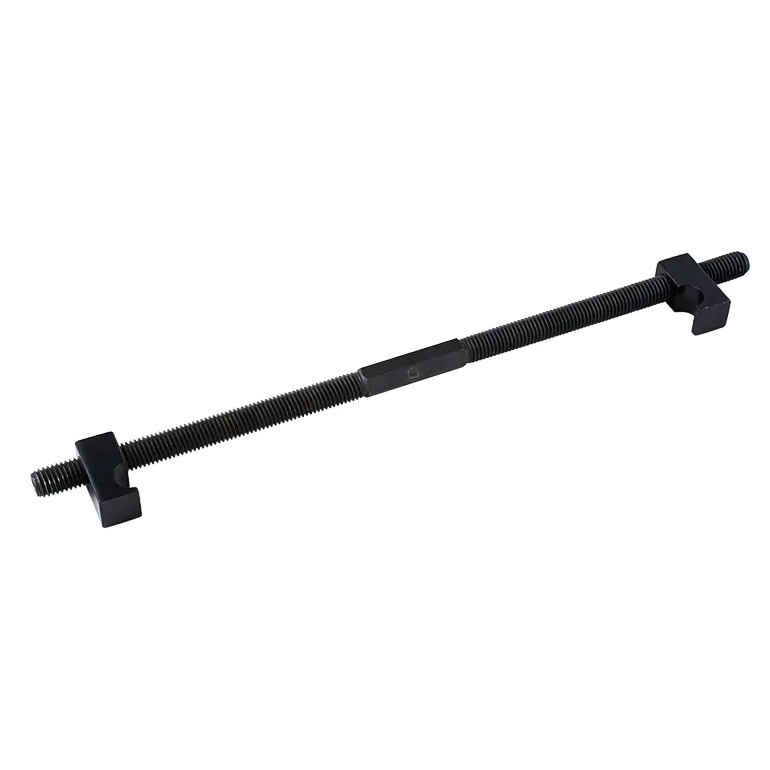
Internal/Threaded Compressors: Used for MacPherson strut assemblies. These feature long, high-strength threaded rods that pass through the center of the spring/strut. Jaws or plates at either end capture the spring coils. The design’s challenge is preventing rod bending or thread stripping under asymmetric loads.
External/Claw-Type Compressors: The classic design for conventional coil springs (e.g., in a double-wishbone suspension). Two heavy-duty forged claws hook onto the spring coils, connected by a central forcing screw or a pair of threaded rods. The critical engineering focus is on the claw geometry and material to prevent slipping off the coil, and the load distribution across the linkage.
Hydraulic Coil Spring Compressors: Used in heavy-duty applications and professional shops. These replace the manual screw with a hydraulic ram, allowing for smoother, more controlled compression with significantly less physical effort and reduced risk of sudden jerk. The manufacturer must integrate reliable hydraulic components (rams, pumps, hoses) with a robust mechanical frame.
Specialized Compressors: For valve springs, clutch diaphragms, or industrial machinery. These are often smaller but require extreme precision to fit confined spaces.
Material Science and Fabrication: No Room for Compromise
Given the consequences of failure, material selection and processing are non-negotiable.
Forged Steel Components: The primary load-bearing parts—claws, yokes, link plates, and screw ends—are hot-forged from medium-carbon alloy steel (e.g., 4140). Forging produces a continuous grain flow that follows the part's shape, providing superior strength and fatigue resistance compared to machining from bar stock or casting.
High-Strength Threaded Components: The central forcing screw is the heart of manual compressors. It is typically machined from a high-grade alloy and features rolled Acme or square threads, which are stronger and withstand higher thrust loads than standard V-threads. The threads are often shot-peened to enhance fatigue life.

 English
 Magyar
 Arabic
 French
 Spanish
 Portuguese
 Deutsch
 Turkish
 Dutch
Dutch
 Italiano
 Russian
 Portuguese (Brazil)
 Greek
Greek