
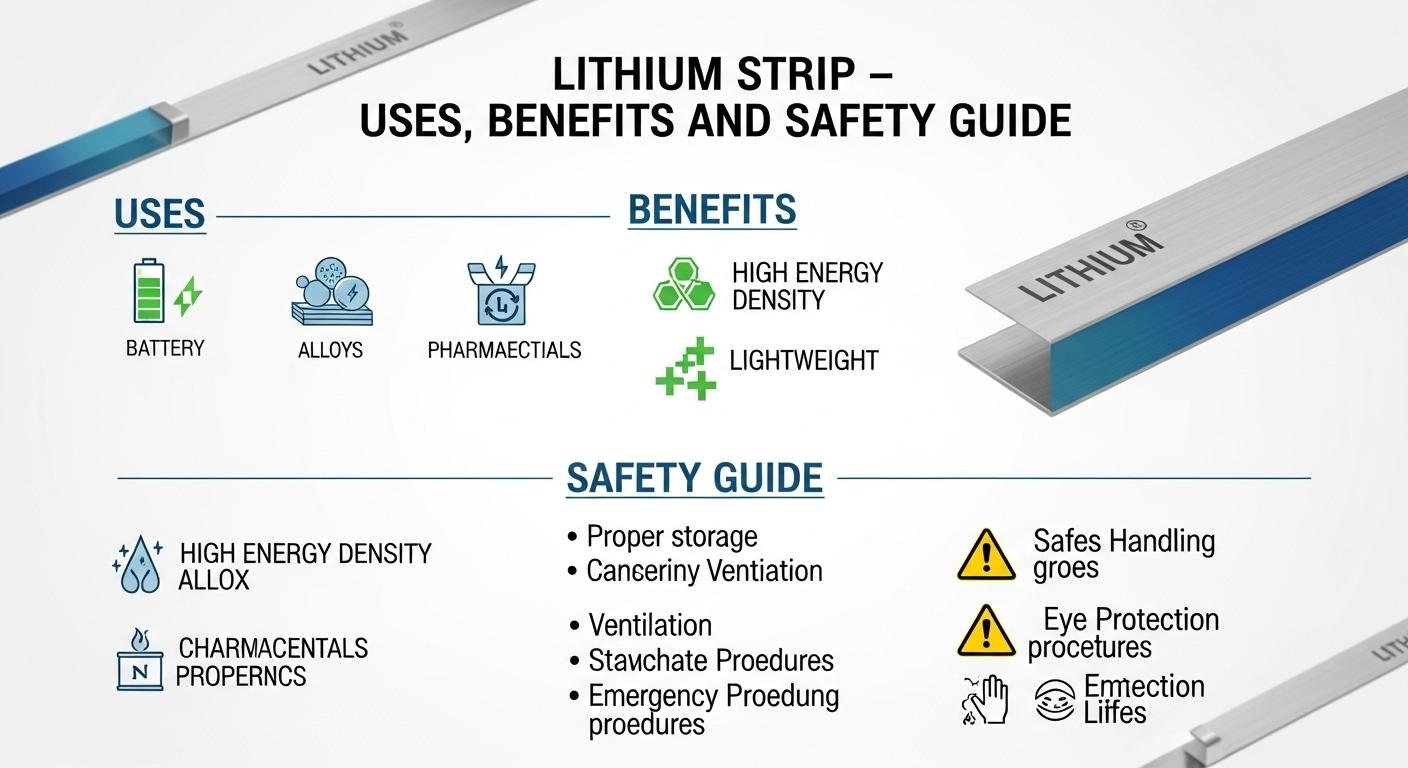
A Lithium Strip is a thin, flexible strip that contains lithium compounds or lithium metal, depending on its application. These strips are commonly used in batteries, medical testing devices, laboratory experiments, and certain industrial processes. Due to lithium’s highly reactive nature and lightweight properties, lithium strips play an important role in modern technology and energy storage systems.
Lithium is known for its low density and high electrochemical potential, which makes it ideal for power-related applications. When shaped into strips, it becomes easier to handle, measure, and integrate into various systems.
Common Uses of Lithium Strip
Battery Manufacturing
Lithium strips are widely used in rechargeable and non-rechargeable batteries. In lithium-based batteries, thin lithium metal strips can act as electrodes, improving energy density and performance. These strips are essential in powering devices such as:
-
Smartphones
-
Laptops
-
Electric vehicles
-
Solar storage systems
The use of lithium strips enhances battery efficiency while keeping the overall weight low.
Laboratory and Chemical Applications
In laboratories, lithium strips are used for chemical reactions and research experiments. Since lithium reacts quickly with water and air, it must be handled carefully. Scientists use lithium strips in controlled environments to study chemical behavior and develop new materials.
Medical and Testing Devices
Some lithium strips are used in medical testing tools and monitoring devices. Lithium-based technology helps ensure accurate readings and reliable performance in compact electronic equipment.
Advantages of Lithium Strip
Lightweight and High Energy Density
Lithium is one of the lightest metals available. This makes lithium strips ideal for portable and high-performance devices where weight matters.
High Reactivity
Lithium reacts efficiently in electrochemical processes, making it perfect for batteries and energy storage solutions.
Flexible and Easy to Shape
Because lithium strips are thin and adaptable, they can be cut or shaped to meet specific technical requirements.
Safety Considerations
Lithium strips must be handled with caution. Exposure to moisture or air can cause rapid reactions, sometimes resulting in heat or fire. Proper storage in airtight containers and handling in dry environments are essential.
Safety guidelines typically include:
-
Using protective gloves and eyewear
-
Storing away from water and humidity
-
Keeping away from open flames
-
Following manufacturer instructions
In industrial settings, trained professionals manage lithium materials to minimize risks.
Storage and Handling
To maintain stability, lithium strips should be stored in cool, dry conditions. Many suppliers package them in sealed containers filled with inert gas to prevent oxidation. Proper labeling and careful transport are also important to ensure safety.
Why Lithium Strip Is Important Today
As the world moves toward renewable energy and electric mobility, lithium-based materials have become increasingly valuable. Lithium strips contribute to advancements in battery technology, helping power sustainable solutions and innovative electronic devices.
Their role in modern industries continues to grow, especially in energy storage, research, and medical technology.
Conclusion
A Lithium Strip is a versatile and powerful material used across multiple industries. From battery production to laboratory research, its lightweight nature and strong electrochemical properties make it highly valuable. However, due to its reactive characteristics, proper handling and storage are essential. As technology continues to evolve, lithium strips will remain a critical component in energy and innovation-driven applications.

 English
 Magyar
 Arabic
 French
 Portuguese
 Deutsch
 Turkish
 Dutch
Dutch
 Italiano
 Russian
 Romaian
 Portuguese (Brazil)
 Greek
Greek