
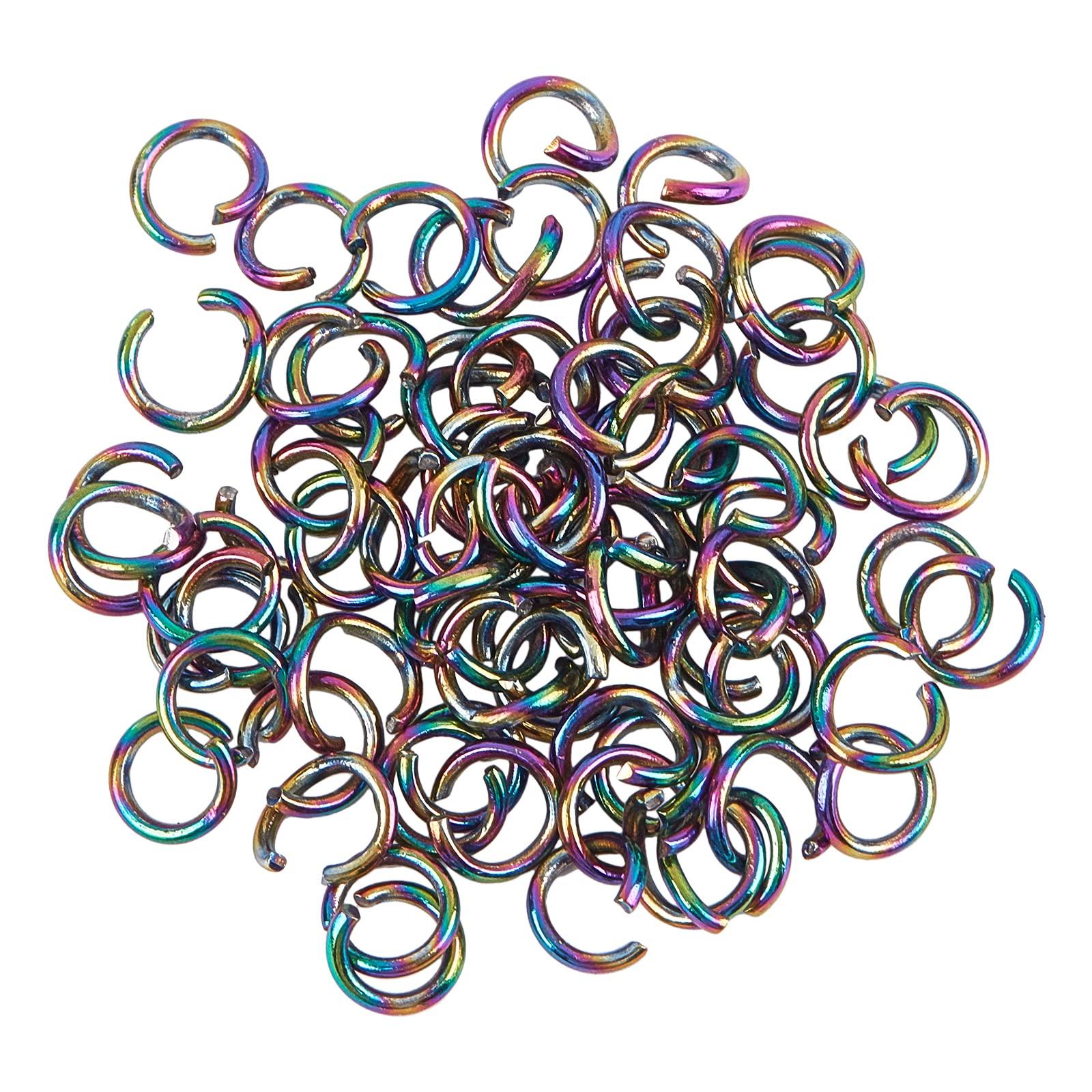
Colored jump rings have transformed traditional jewelry-making into a vibrant, expressive art form. Once limited to basic metallic tones like silver and gold, jump rings are now available in a wide variety of colors and finishes—from anodized aluminum in bold hues to enamel-coated copper and plated brass. These colorful components open up endless creative possibilities, especially in chainmaille and contemporary jewelry design.
Whether you're a beginner experimenting with simple patterns or an experienced artisan pushing the boundaries of design, colored jump rings can elevate your creations from ordinary to eye-catching.
Why Choose Colored Jump Rings?
Colored jump rings offer several benefits:
-
Enhanced visual impact
-
Creative pattern possibilities
-
Lightweight material options (like anodized aluminum)
-
Improved customization for themed designs
-
Greater design flexibility
They allow designers to treat jewelry like a canvas—where color combinations, contrast, and symmetry play a central role.
1. Creating Bold Chainmaille Patterns
Chainmaille is built entirely from interlocking rings, making it the perfect technique for incorporating color.
Two-Tone Weaves
Using two contrasting colors—such as black and red or silver and blue—can emphasize the structure of classic weaves like:
-
European 4-in-1
-
Byzantine
-
Box chain
-
Half Persian
Alternating colors can highlight the pattern’s geometry, making the weave more visually dynamic.
Gradient Effects
You can create an ombré look by gradually shifting from one shade to another. For example:
-
Dark blue → medium blue → light blue
-
Purple → pink → white
This technique works beautifully in bracelets and chokers, adding depth and movement to the design.
2. Themed and Seasonal Jewelry
Colored jump rings make it easy to design jewelry for specific occasions or themes.
Holiday Designs
-
Red and green for festive pieces
-
Orange and black for Halloween
-
Red, white, and blue for patriotic designs
Event-Specific Jewelry
Designers often create custom pieces for weddings, school colors, sports teams, or awareness campaigns using matching color schemes.
This versatility makes colored jump rings ideal for personalized and custom-made jewelry.
3. Modern Minimalist Designs
Colored jump rings are not only for complex chainmaille weaves—they also work beautifully in minimalist designs.
Simple Statement Earrings
Large, brightly colored aluminum jump rings can be stacked or layered to create lightweight, modern earrings.
Geometric Jewelry
Combine colored rings in clean shapes such as circles, triangles, or linear drops. Pair bold colors with neutral tones for contemporary appeal.
Minimalist designs benefit from color contrast and simplicity, making even small pieces stand out.
4. Adding Color Accents to Mixed-Metal Jewelry
If you prefer working with traditional metals like sterling silver or brass, colored jump rings can serve as accent elements rather than the primary material.
For example:
-
Use gold rings with small colored connectors for contrast.
-
Insert a few bright rings into a mostly metallic chainmaille pattern.
-
Highlight focal areas such as clasps or centerpieces with vibrant tones.
This subtle use of color adds personality without overwhelming the design.
5. 3D and Sculptural Designs
Colored jump rings allow designers to experiment with three-dimensional forms.
Mobius Balls and Helm Forms
Multi-colored rings can create striking spherical designs with visual depth.
Layered Cuffs and Collars
Using multiple colors in layered weaves creates texture and dimension, especially in wider bracelets and statement necklaces.
When designing in 3D, color placement becomes even more important, as it influences how the piece appears from different angles.
6. Custom Logos and Symbolic Designs
Advanced chainmaille artists sometimes use colored jump rings to create patterns resembling:
-
Hearts
-
Stars
-
Flags
-
Abstract shapes
By carefully arranging contrasting colors within a weave, you can create symbolic or meaningful designs embedded directly into the structure.
7. Material Considerations
When using colored jump rings, material choice matters:
Anodized Aluminum
-
Lightweight
-
Wide range of vibrant colors
-
Great for large chainmaille projects
Enamel-Coated Rings
-
Glossy finish
-
Available in bold tones
-
Ideal for decorative pieces
Plated or Powder-Coated Rings
-
Offer metallic shine with color
-
May require gentle handling to prevent chipping
Selecting the right material ensures durability and comfort, especially for wearable pieces.
8. Color Theory in Jewelry Design
Understanding basic color theory can dramatically improve your designs.
-
Complementary colors (blue and orange, red and green) create strong contrast.
-
Analogous colors (blue, teal, green) produce a harmonious look.
-
Monochromatic schemes use different shades of the same color for subtle elegance.
Thoughtful color planning makes your jewelry look intentional and professional.
Tips for Working with Colored Jump Rings
-
Use high-quality pliers to avoid scratching coatings.
-
Store rings separately to prevent color transfer or damage.
-
Test color combinations before committing to a full project.
-
Consider how lighting affects color appearance.
Proper handling preserves the finish and ensures long-lasting beauty.
Conclusion
Colored jump rings offer endless creative opportunities in chainmaille and modern jewelry design. From bold two-tone weaves and gradient effects to minimalist accents and sculptural forms, color transforms simple metal rings into expressive art.
By experimenting with patterns, themes, and color combinations, jewelry designers can craft unique pieces that reflect personality and creativity. Whether you're designing for everyday wear or special occasions, colored jump rings provide the flexibility and vibrancy needed to make your creations truly stand out.

 English
 Magyar
 Arabic
 French
 Spanish
 Portuguese
 Deutsch
 Turkish
 Dutch
Dutch
 Italiano
 Russian
 Portuguese (Brazil)
 Greek
Greek