
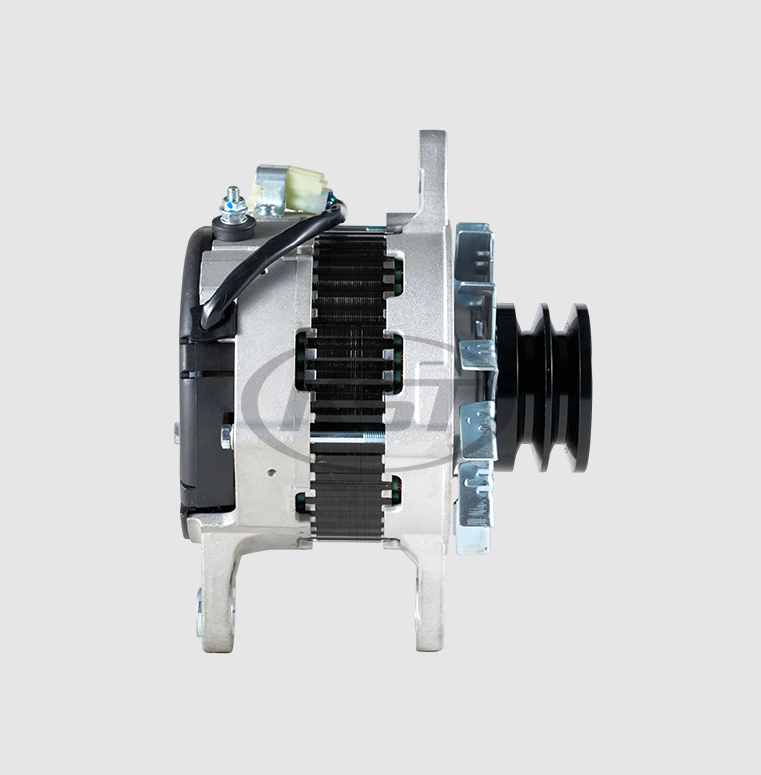
Choosing the right source for a vehicle's charging component is a decision that impacts long-term reliability. An exemplary alternator manufacturer distinguishes itself through a holistic commitment that extends far beyond the assembly line. It involves a seamless integration of advanced engineering, stringent material sourcing, rigorous validation, and robust post-sale support. For fleet managers, technicians, and enthusiasts, understanding the core pillars of a quality producer is essential for making an informed choice that ensures durability, performance, and value over the component's entire lifecycle.
Engineering Philosophy and Design Integrity
The foundation of a superior product is laid in the research and development phase. Top-tier producers invest significantly in design engineering, utilizing advanced simulation software for electromagnetic, thermal, and structural analysis. This proactive approach optimizes the unit for efficiency, heat dissipation, and noise reduction before physical prototyping begins. They design with specific applications in mind, whether it's for a compact car with start-stop technology, a heavy-duty truck with numerous parasitic loads, or a marine environment. This philosophy also includes designing for manufacturability and serviceability, ensuring the product can be built consistently and repaired efficiently, which supports a sustainable remanufacturing ecosystem.
Supply Chain and Production Discipline
Quality cannot be inspected into a finished product; it must be built in from the start. Leading makers exercise rigorous control over their supply chain, sourcing critical materials like copper wire, electrical steel laminations, bearings, and semiconductors from certified suppliers. They often employ statistical process control (SPC) on the production floor to monitor key variables in real-time, preventing defects rather than detecting them later. Modern facilities blend automated precision—such as robotic winding and laser welding—with skilled human oversight for complex assembly and inspection tasks. Adherence to international quality management standards, such as IATF 16949 in the automotive sector, provides a structured framework for this end-to-end discipline.
Validation and Testing: Proving Grounds for Reliability
A credible producer's commitment is unequivocally demonstrated in its testing protocols. Beyond standard performance benches that verify output curves and regulator function, comprehensive environmental and durability tests are non-negotiable. These include thermal cycling tests, salt spray corrosion resistance tests, and high-frequency vibration tests that simulate years of service in a matter of days. For commercial products, extended tests at maximum output and extreme temperatures validate robustness. Transient voltage tests ensure the unit can withstand voltage spikes common in vehicle electrical systems. The willingness to provide detailed test reports or certifications for these validations is a hallmark of transparency and confidence.

 English
 Arabic
 French
 Spanish
 Portuguese
 Deutsch
 Turkish
 Dutch
Dutch
 Italiano
 Russian
 Romaian
 Portuguese (Brazil)
 Greek
Greek