
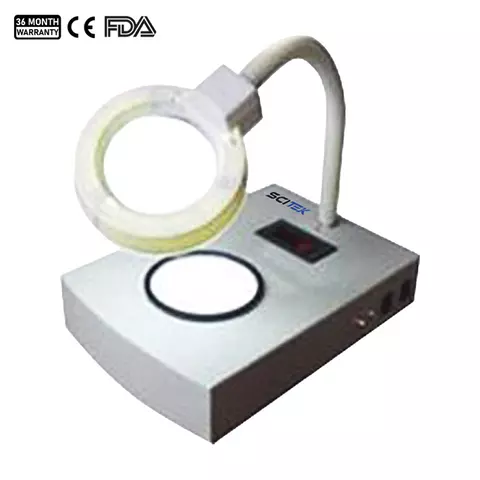
A bacterial colony counter is an essential tool in microbiology laboratories, designed to accurately count bacterial colonies on agar plates. Whether for research, clinical diagnostics, food safety testing, or pharmaceutical quality control, a bacterial colony counter simplifies and standardizes the colony enumeration process. Manually counting colonies can be tedious, time-consuming, and prone to human error, especially on plates with high-density or overlapping colonies. Using a bacterial colony counter ensures accurate, reproducible results while saving valuable laboratory time.
Modern bacterial colony counters utilize optical, digital, or automated technologies to detect colonies precisely. These devices are widely used in laboratories that require reliable data, including hospitals, research institutes, food and beverage testing facilities, and pharmaceutical manufacturing. Incorporating a bacterial colony counter into laboratory workflows increases efficiency, maintains consistency, and supports regulatory compliance.
Why Use a Bacterial Colony Counter
Using a bacterial colony counter provides multiple advantages over manual counting. First, it improves accuracy. Human counting is susceptible to fatigue and errors, particularly with overlapping or tiny colonies. A colony counter uses optical sensors or digital imaging to detect and count colonies reliably, minimizing mistakes.
Second, a bacterial colony counter saves time. A single plate that may take several minutes to count manually can be analyzed in seconds. This allows laboratory personnel to focus on analysis, documentation, and other critical tasks, increasing overall laboratory productivity.
Consistency is another significant benefit. Automated or digital colony counters provide standardized counting methods, ensuring reproducible results across multiple experiments and operators. For research or quality control applications, this consistency is critical to maintaining data integrity.
Types of Bacterial Colony Counters
Manual Colony Counters
Manual bacterial colony counters involve visual counting using a hand-held clicker or counting pen. These devices are simple, portable, and ideal for low-throughput laboratories or educational purposes. While still dependent on human observation, manual counters reduce fatigue and improve counting efficiency compared to traditional hand counting.
Digital Colony Counters
Digital colony counters use cameras and software to capture high-resolution images of bacterial colonies. The software analyzes the images and counts colonies automatically, providing accurate and reproducible results. Many digital counters allow data storage, image annotation, and integration with laboratory software, making them suitable for medium- to high-throughput laboratories.
Automated Colony Counters
Automated bacterial colony counters provide fully automated counting with minimal human intervention. They combine plate handling, imaging, and analysis to deliver precise results quickly. These systems are ideal for high-volume laboratories, research centers, and pharmaceutical or food testing facilities where accuracy, speed, and data management are crucial.
Benefits of Using a Bacterial Colony Counter
Key benefits of a bacterial colony counter include:
-
High Accuracy: Detects overlapping and faint colonies, reducing human error.
-
Time Efficiency: Processes plates rapidly, saving significant labor hours.
-
Consistency: Ensures reproducible results across operators and experiments.
-
Data Management: Digital counters store images, generate reports, and integrate with LIMS.
-
Ease of Use: User-friendly interfaces reduce training time and streamline laboratory workflow.
These benefits make bacterial colony counters indispensable in modern microbiology laboratories, supporting precise, reliable, and efficient analysis.
How to Choose the Right Bacterial Colony Counter
Evaluate Laboratory Throughput
Consider the number of plates and colonies you routinely process. High-throughput labs benefit from automated systems, while smaller labs may find digital or manual counters sufficient.
Check Accuracy and Detection Features
Ensure the counter can detect faint, overlapping, or irregular colonies. Advanced software algorithms improve detection and reduce miscounts.
Consider Integration and Software Compatibility
Many modern bacterial colony counters integrate with Laboratory Information Management Systems (LIMS) for data storage, analysis, and reporting. Ensure the device supports your lab’s workflow requirements.
Assess Maintenance and Support
Select a device from a reputable manufacturer offering calibration services, technical support, and maintenance guidance. Reliable support ensures long-term performance and reduces downtime.
Applications of Bacterial Colony Counters
Bacterial colony counters are widely used in various industries and laboratory settings, including:
-
Clinical laboratories: Counting bacterial colonies for diagnostics and microbiological research.
-
Food and beverage testing: Ensuring safety and regulatory compliance.
-
Pharmaceutical laboratories: Monitoring sterility and quality control during drug production.
-
Academic and research institutions: Supporting microbiology experiments, teaching, and publications.
These applications highlight the versatility and importance of bacterial colony counters in ensuring reliable microbial analysis.
Conclusion
A bacterial colony counter is an essential instrument for any microbiology laboratory, providing accuracy, speed, and consistency in colony enumeration. By reducing human error and saving time, these counters streamline laboratory workflows and improve data integrity.
Whether for clinical diagnostics, food and pharmaceutical testing, or academic research, a professional bacterial colony counter ensures precise, reproducible, and efficient results. Incorporating a colony counter into laboratory operations is a smart investment for improving productivity, reliability, and overall scientific quality.

 Magyar
 Arabic
 French
 Spanish
 Portuguese
 Deutsch
 Turkish
 Dutch
Dutch
 Italiano
 Russian
 Romaian
 Portuguese (Brazil)
 Greek
Greek