
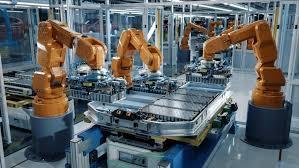
To fully grasp the complexity of the Industrial Automation Market, one must look at the various layers of technology that make modern production possible. At the base layer, we find the field devices—sensors, actuators, and motors—that interact directly with the physical world. These components are the "eyes and ears" of the factory, providing the raw data that informs every decision. Above this is the control layer, where Programmable Logic Controllers (PLCs) and Distributed Control Systems (DCS) process this data and send commands to the machinery. This layer ensures that processes remain within specified parameters and can respond instantly to any deviations. The Industrial Automation Market segment involving control systems is currently seeing a shift toward more open-source and flexible platforms, allowing for easier integration of third-party software. This move away from proprietary hardware is a significant trend that is lowering costs and increasing the speed of innovation across the entire industry.
The upper layers of the stack include Supervisory Control and Data Acquisition (SCADA) systems and Manufacturing Execution Systems (MES), which provide a bird's-eye view of the entire facility. These systems are responsible for production scheduling, resource management, and high-level data analysis. In recent years, the integration of Enterprise Resource Planning (ERP) systems with the factory floor has closed the gap between business operations and physical production. This "vertical integration" allows for unprecedented levels of transparency, as sales orders can trigger production cycles automatically. The final piece of the puzzle is the integration of cloud computing and edge analytics, which allow for the processing of vast datasets at high speeds. By moving some of the computing power to the "edge"—closer to the machines themselves—manufacturers can reduce latency and improve the responsiveness of their systems. This multi-layered approach to technology is what gives modern automation its power and flexibility, enabling a level of precision and efficiency that was once unimaginable.
What is the function of a Programmable Logic Controller (PLC)? A PLC is an industrial computer used to control manufacturing processes, such as assembly lines or robotic devices, by processing input data and executing programmed instructions.
What is "Edge Computing" in the context of a factory? Edge computing involves processing data near the source (the machines) rather than in a centralized cloud, which reduces latency and allows for faster real-time decision-making.
➤➤➤Explore MRFR’s Related Ongoing Coverage In Semiconductor Industry:
Cost Accounting And Financial Analysis Services Market
Creative Design And Development Services Market
Credit Rating Advisory Services Market
Crop Yield Prediction Services Market
Culinary Arts Education And Training Services Market
Customer Experience (Cx) Consulting Services Market
Custom Software Development And Consulting Services Market
Cybersecurity Risk Assessment Consulting Services Market

 English
 Arabic
 French
 Spanish
 Portuguese
 Deutsch
 Turkish
 Dutch
Dutch
 Italiano
 Russian
 Romaian
 Portuguese (Brazil)
 Greek
Greek