
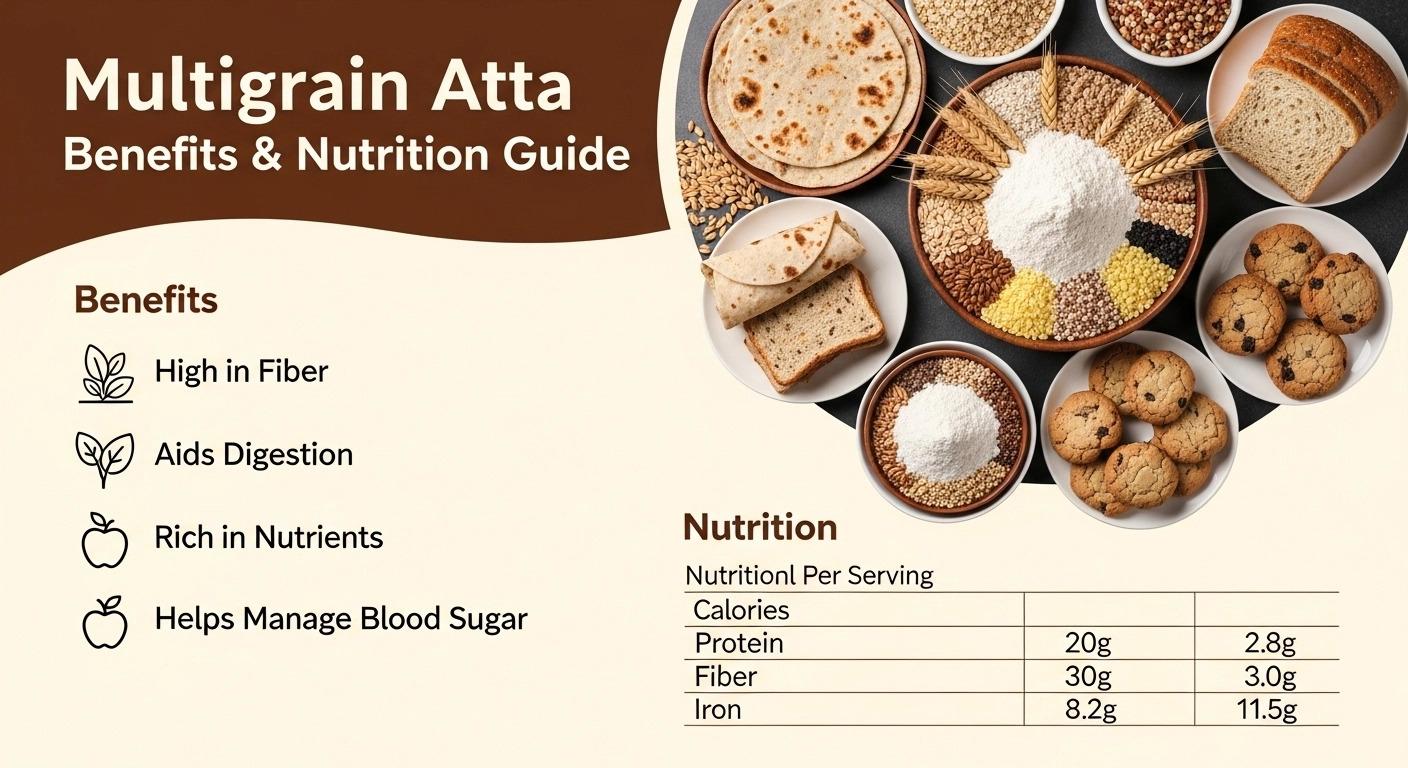
Making the switch to healthier eating doesn't mean compromising on taste or spending hours in the kitchen. Multigrain atta has emerged as a nutritional powerhouse that seamlessly fits into traditional Indian cooking while elevating the health quotient of everyday meals. This versatile flour blend combines the goodness of multiple grains, offering a simple yet effective way to boost your family's nutrition.
Whether you're looking to manage weight, improve digestion, or simply add more variety to your diet, multigrain atta opens up a world of culinary possibilities. From fluffy rotis to crispy parathas and even innovative snacks, this wholesome flour can transform your daily meals into nutrient-rich experiences without requiring complicated cooking techniques.
Understanding Multigrain Atta
Multigrain atta is a carefully crafted blend of various grains and pulses, each contributing unique nutritional benefits. Unlike regular wheat flour, this flour combines ingredients like wheat, oats, barley, soy, chickpea flour, ragi, and other whole grains. The combination creates a flour that's rich in fiber, protein, vitamins, and minerals while maintaining the familiar taste and texture that works well in Indian cuisine.
The beauty of multigrain atta lies in its balanced nutritional profile. While whole wheat provides essential carbohydrates and B vitamins, additions like ragi bring calcium and iron, oats contribute beta-glucan for heart health, and chickpea flour adds plant-based protein. This synergy of grains creates a more complete nutritional package than single-grain flours.
At 10on10foods.com, we understand that quality matters when it comes to multigrain atta. The right blend ensures that you get maximum nutrition without compromising on taste or texture, making it easier to maintain healthy eating habits for the long term.
Health Benefits of Multigrain Atta
Incorporating multigrain atta into your diet brings numerous health advantages that go beyond basic nutrition. The high fiber content aids digestion, promotes gut health, and helps maintain steady blood sugar levels, making it particularly beneficial for people managing diabetes or those looking to prevent metabolic disorders.
The protein content from various pulses and grains supports muscle maintenance and keeps you feeling fuller for longer periods. This satiety factor makes multigrain atta an excellent choice for weight management, as it reduces unnecessary snacking between meals and helps control portion sizes naturally.
Rich in antioxidants, vitamins, and minerals, multigrain atta supports overall immunity and vitality. The presence of complex carbohydrates ensures sustained energy release throughout the day, preventing the energy crashes often associated with refined flour products. Regular consumption can contribute to better heart health, improved cholesterol levels, and reduced risk of chronic diseases.
Essential Multigrain Atta Breakfast Recipes
Starting your day with multigrain atta sets a healthy tone for all your meals. Multigrain parathas stuffed with seasonal vegetables make for a hearty breakfast that combines nutrition with flavor. Simply knead the atta with water and a pinch of salt, stuff with mashed potatoes, grated cauliflower, or paneer, and cook on a tawa with minimal oil for a satisfying morning meal.
Multigrain dosas offer a South Indian twist to your breakfast routine. Mix multigrain atta with rice flour and ferment overnight for a crispy, tangy dosa that pairs perfectly with coconut chutney and sambar. The fermentation process enhances digestibility and adds beneficial probiotics to your meal.
For those rushed mornings, multigrain cheelas provide a quick, protein-packed option. Mix the atta with yogurt, chopped vegetables, and spices to create a batter, then pour onto a hot griddle for instant savory pancakes. These versatile breakfast items can be customized with different vegetables and spices according to your family's preferences.
Wholesome Lunch and Dinner Options
Multigrain rotis form the foundation of healthy Indian meals. The key to perfect multigrain rotis lies in kneading the dough with warm water to achieve the right consistency. Let the dough rest for at least fifteen minutes before rolling, which makes the rotis softer and easier to digest. Cook on medium-high heat to ensure they puff up nicely while retaining their nutritional value.
Multigrain naan and kulcha varieties bring restaurant-style flair to home cooking. Adding yogurt to the dough creates a softer texture, while a touch of baking powder helps with leavening. These can be baked in an oven or cooked on a tawa, making them accessible without a tandoor.
For a complete one-pot meal, try multigrain vegetable paratha wraps filled with paneer tikka, grilled vegetables, or chickpea curry. Roll out the parathas slightly thinner than usual, fill with your favorite curry or dry sabzi, and wrap them like burritos for a nutritious and portable meal option.
Creative Snacks Using Multigrain Atta
Transform snack time with multigrain mathri, a traditional crispy snack that's perfect with evening tea. Mix the atta with carom seeds, crushed black pepper, and a small amount of oil, then roll thin and cut into desired shapes before deep-frying or baking for a healthier version.
Multigrain crackers offer a crunchy, guilt-free munching option. Roll the dough paper-thin, cut into squares or shapes, sprinkle with seeds like sesame or flax, and bake until crisp. These crackers stay fresh for weeks when stored in airtight containers and make excellent accompaniments to dips and spreads.
Baked multigrain namak pare provide a healthier alternative to traditional fried snacks. Season the dough with rock salt, cumin, and red chili flakes for a savory treat that satisfies cravings without the excess oil. The baking method retains the crunch while significantly reducing calorie content.
Sweet Treats with Multigrain Atta
Who says healthy eating means giving up sweets? Multigrain atta laddoos combine nutrition with indulgence. Roast the atta in ghee until aromatic, mix with jaggery, nuts, and cardamom, then shape into balls for an energy-boosting sweet that's perfect for festivals or as a post-workout snack.
Multigrain halwa offers comfort food that doesn't derail your health goals. Cook the atta in ghee, add milk and natural sweeteners like dates or jaggery, and garnish with almonds and saffron for a dessert that feels special while providing sustained energy and essential nutrients.
Baked multigrain cookies present endless possibilities for customization. Add chocolate chips, dried fruits, nuts, or seeds to create your signature cookie. The natural sweetness from dates or raisins can reduce the need for added sugar, making these treats suitable for children and health-conscious adults alike.
Tips for Cooking with Multigrain Atta
Working with multigrain atta requires slight adjustments to traditional wheat flour techniques. Since it contains multiple grains with varying gluten contents, adding a small amount of regular wheat flour can improve elasticity for items like rotis and parathas. Alternatively, a tablespoon of yogurt or oil in the dough enhances softness and workability.
Kneading is crucial when working with multigrain atta. The dough benefits from longer kneading time compared to regular wheat flour, which helps develop structure and prevents crumbling. Always use warm water for kneading, as it helps bind the different flours together more effectively.
Storage plays a vital role in maintaining freshness and nutritional value. Store multigrain atta in airtight containers in a cool, dry place, and consider refrigeration during summer months to prevent rancidity. The presence of various grains means the flour has a shorter shelf life than refined wheat flour, so purchase in quantities you'll use within two to three months for optimal freshness.
Frequently Asked Questions About Multigrain Atta
What is multigrain atta made of?
Multigrain atta typically contains a blend of whole wheat, oats, barley, ragi, soy flour, chickpea flour, and sometimes other grains like maize or bajra. The exact composition varies by brand, with each grain contributing specific nutritional benefits to create a balanced flour blend.
Is multigrain atta better than whole wheat flour?
Multigrain atta offers more nutritional diversity than single-grain whole wheat flour. While whole wheat is nutritious, multigrain varieties provide a wider range of vitamins, minerals, proteins, and fibers from multiple sources, making it a more complete nutritional choice for daily consumption.
Can diabetics consume multigrain atta regularly?
Yes, multigrain atta is generally beneficial for diabetics due to its high fiber content and lower glycemic index compared to refined flour. The complex carbohydrates release glucose slowly into the bloodstream, helping maintain stable blood sugar levels. However, individual responses vary, so consulting with a healthcare provider about portion sizes is recommended.
How should I store multigrain atta?
Store multigrain atta in airtight containers away from direct sunlight and moisture. Refrigeration extends shelf life, especially in humid climates or during summer months. Properly stored multigrain atta remains fresh for two to three months, though checking for any off odors before use is always advisable.
Can children consume foods made with multigrain atta?
Absolutely, multigrain atta is excellent for children as it provides essential nutrients for growth and development. The variety of grains ensures they receive diverse proteins, fibers, and minerals. Start introducing it gradually, mixing with regular wheat flour if needed, to help children adjust to the slightly different taste and texture.
Does multigrain atta help with weight loss?
Multigrain atta can support weight loss efforts due to its high fiber and protein content, which promote satiety and reduce overall calorie intake. However, weight loss depends on total caloric balance and lifestyle factors. Replacing refined flour with multigrain atta is a positive step, but portion control and overall diet quality remain important.
Making the Switch to Multigrain Atta
Transitioning to multigrain atta doesn't have to be abrupt or challenging. Start by mixing it with regular wheat flour in a ratio of one part multigrain to two parts wheat, gradually increasing the proportion as your family adjusts to the taste and texture. This gradual approach helps everyone appreciate the nutty, wholesome flavor without feeling overwhelmed by change.
Experiment with different recipes to find what works best for your household. Some families prefer multigrain atta for rotis and parathas while continuing to use regular flour for other items. There's no right or wrong approach—the goal is sustainable healthy eating that fits your lifestyle and preferences.
Quality matters significantly when choosing multigrain atta. Look for brands that clearly list ingredients and avoid those with unnecessary additives or excessive salt. At 10on10foods.com, we prioritize quality and transparency, ensuring you get genuine multigrain goodness in every package.
Conclusion
Embracing multigrain atta in your kitchen is a simple yet powerful step toward healthier living. The versatility of this nutritious flour allows you to recreate familiar favorites while significantly boosting their nutritional value. From everyday rotis to festive sweets, multigrain atta proves that healthy eating can be delicious, satisfying, and deeply connected to traditional cooking methods.
The recipes and tips shared here provide a foundation for your multigrain journey, but the real magic happens when you experiment and make them your own. Pay attention to how these nutritious meals make you feel—the sustained energy, better digestion, and overall wellness that comes from nourishing your body with whole grains.
Whether you're cooking for yourself, your family, or guests, multigrain atta offers an opportunity to serve meals that truly nourish. With practice, working with this wholesome flour becomes second nature, and the health benefits become evident in your daily life. Start your multigrain journey today with quality products from 10on10foods.com and discover how simple switches can create lasting positive changes in your health and wellbeing.

 English
 Magyar
 Arabic
 French
 Spanish
 Portuguese
 Deutsch
 Turkish
 Dutch
Dutch
 Italiano
 Russian
 Portuguese (Brazil)
 Greek
Greek