
Human Growth Hormone (HGH) has gained popularity in bodybuilding due to its role in muscle recovery, fat metabolism, and protein synthesis. However, determining the correct dosage is complex and highly individual. The amount of HGH used varies depending on factors such as age, weight, training intensity, and overall goals.
Understanding HGH Dosage in IU
HGH is typically measured in International Units (IU), which reflect its biological activity rather than weight. A commonly used approximation is that 1 mg of HGH equals about 2.7–3 IU, depending on the product.
This standardized unit helps athletes and clinicians calculate dosages more accurately when preparing injections.
Typical Daily HGH Dosages
HGH use in bodybuilding is often categorized into different dosage ranges:
- Low doses (1–3 IU/day):
Commonly associated with general wellness, improved recovery, and mild fat loss rather than significant muscle growth. - Moderate doses (4–6 IU/day):
Frequently used by bodybuilders aiming to reduce fat and gradually increase lean muscle mass. - Higher doses (8 IU/day and above):
May accelerate muscle growth but significantly increase the risk of side effects. Typically used short-term by advanced athletes. - Very high or professional doses (10–25 IU/day):
Associated with competitive bodybuilding, often under supervision, but carry substantial health risks.
Dosage Categories Based on Experience
HGH protocols are often grouped into three general approaches:
- Therapeutic use (2–4 IU/day):
Focuses on recovery, joint health, and gradual body recomposition. - Moderate or “amateur” use (4–8 IU/day):
Targets steady muscle gain and improved recovery. - Professional use (10+ IU/day):
Aimed at rapid physique changes, usually for competition preparation, but with elevated risk.
Factors That Influence HGH Dosage
There is no universal dosage that works for everyone. Key variables include:
- Body weight and composition
- Age and hormonal sensitivity
- Training volume and intensity
- Diet quality and caloric intake
- Overall fitness goals (fat loss, recomposition, or muscle gain)
For example, heavier individuals or those with higher training loads may require different dosing strategies compared to beginners.
How HGH Works for Muscle Growth
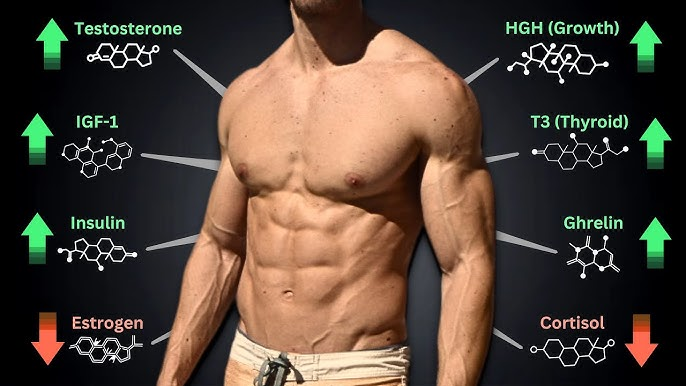
HGH stimulates the production of IGF-1 (Insulin-like Growth Factor 1), which plays a crucial role in muscle growth and recovery. This process enhances protein synthesis and reduces protein breakdown, creating favorable conditions for hypertrophy.
However, muscle growth is not automatic—training, nutrition, and recovery remain essential components.
Cycle Duration and Timing
HGH is not a fast-acting compound. Its effects build gradually:
- Short cycles (8–12 weeks):
Often produce modest improvements in recovery and body composition. - Long cycles (16–24 weeks):
Tend to yield more noticeable physical changes due to cumulative effects.
Timing of injections (morning vs. evening) is less important than consistency, as overall IGF-1 levels depend primarily on total daily dosage.
Potential Benefits
When combined with proper training and diet, HGH may:
- Enhance recovery between workouts
- Promote fat loss
- Improve muscle density and body composition
- Support joint and connective tissue health
That said, increases in strength are often less pronounced than changes in appearance or recovery.
Risks and Side Effects
Higher doses of HGH are associated with significant risks, including:
- Fluid retention and swelling
- Joint pain and stiffness
- Insulin resistance and elevated blood glucose
- Enlargement of tissues and organs
- Nerve compression (e.g., carpal tunnel syndrome)
Long-term misuse may lead to serious metabolic and cardiovascular complications.
Conclusion
hgh dosage bodybuilding is not a one-size-fits-all formula. Lower and moderate doses tend to offer more sustainable benefits with fewer risks, while higher doses may accelerate results but significantly increase the likelihood of adverse effects. Ultimately, outcomes depend not only on dosage but also on training, nutrition, recovery, and overall lifestyle.

 English
 Magyar
 Arabic
 French
 Spanish
 Portuguese
 Deutsch
 Turkish
 Dutch
Dutch
 Italiano
 Russian
 Portuguese (Brazil)
 Greek
Greek