
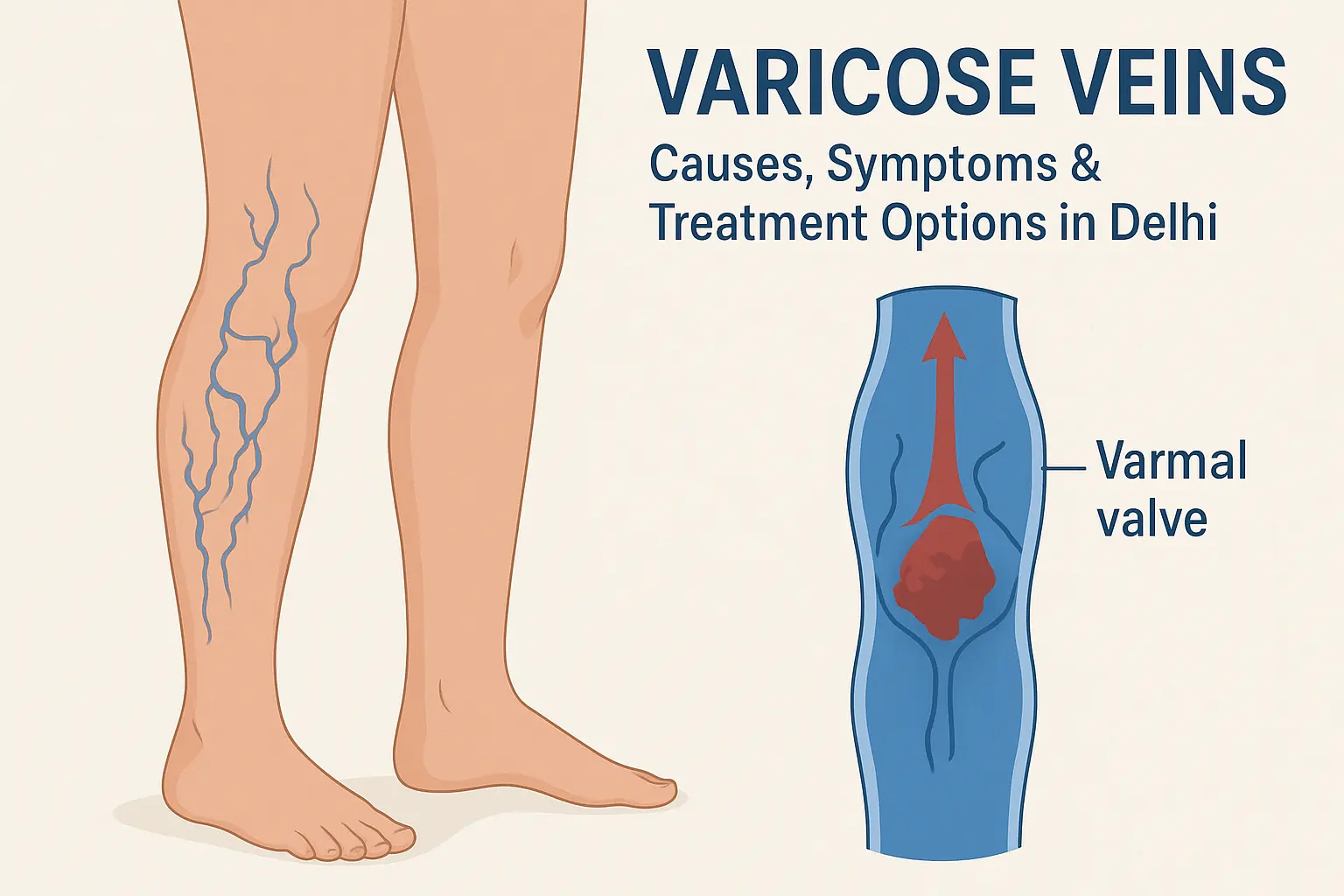
Varicose veins are one of the most common vascular problems worldwide, yet most people ignore the early warning signs until the condition becomes painful or complicated. Recognizing symptoms early can help prevent vein damage, avoid discomfort, and reduce the risk of long-term complications.
This guide explains how varicose veins start, the early symptoms you should never ignore, and when it’s the right time to consult a vascular surgeon.
What Are Varicose Veins? (Simple Explanation)

Varicose veins are enlarged, twisted veins that usually appear on the legs due to weak or damaged vein valves. When these valves stop working properly, blood pools inside the veins, causing them to bulge and become visible on the skin.
They may start as minor cosmetic changes but can progress into a medical condition known as chronic venous insufficiency if not treated.
Early Symptoms of Varicose Veins Most People Ignore
Below are the earliest and most common warning signs. If these symptoms appear regularly—especially in both legs—they may indicate developing vein disease.
1. Heavy or Tired Feeling in the Legs
One of the first signs of varicose veins is a sensation of leg heaviness or fatigue after standing or walking.
People often describe this as:
-
“My legs feel tired even without much activity.”
-
“My legs feel like they are dragging by the end of the day.”
This happens because blood is not circulating efficiently.
2. Mild Swelling in Feet or Ankles
Early varicose veins can cause ankle or foot swelling, especially in the evening.
If your socks leave deep marks or your shoes feel tight at night, this may be an early indicator of venous insufficiency.
3. Aching, Throbbing, or Cramping in Legs
Pain often worsens:
-
after long sitting
-
after standing for hours
-
during warm weather
Muscle cramps at night—especially in the calves—are also associated with early vein disease.
4. Visible Small Veins or Spider Veins
Tiny red, blue, or purple lines on the legs (spider veins) can be a precursor to larger varicose veins.
They are often found on:
-
calves
-
inner thighs
-
around the ankles
Although spider veins appear cosmetic, they may reflect deeper valve problems.
5. Skin Changes on the Legs
Subtle skin changes can indicate early vein disease:
-
dryness or itchiness
-
slight discoloration
-
sensitive patches on the lower legs
This may progress to inflammation known as venous eczema if ignored.
6. Warmth or Burning Sensation
Some people feel:
-
warmth along a vein
-
burning or tingling
-
sensitivity in one area of the leg
These sensations occur due to increased pressure inside damaged veins.
Do Varicose Veins Get Worse Over Time?
Yes.
Without treatment, varicose veins usually worsen because the valves become weaker with time.
Disease progression can lead to:
-
severe pain
-
bleeding veins
-
skin discoloration
-
hardening of tissues
-
non-healing wounds (venous ulcers)
-
increased risk of blood clots
Early detection greatly reduces the chance of complications.
When Should You See a Vascular Surgeon?
You should seek a vascular specialist if:
1. Your leg symptoms affect daily activities
Heavy, painful, throbbing legs that interfere with work or walking need evaluation.
2. Swelling becomes regular or worsens toward the evening
Persistent swelling indicates progressing venous insufficiency.
3. Varicose veins become visible or enlarge quickly
Bulging veins should never be ignored.
4. You develop skin changes or discoloration
This is a sign that blood is pooling under the skin.
5. You experience night cramps or restless legs frequently
This often points to circulation problems.
6. You have a family history of vein disease
Genetics is one of the strongest risk factors.
7. You notice wounds on your legs that heal slowly
Poor circulation can cause chronic ulcers that may require urgent care.
Who Is at Higher Risk of Varicose Veins?
Anyone can develop varicose veins, but the risk increases if you:
-
stand for long hours (teachers, nurses, chefs)
-
sit for long periods (office workers)
-
are overweight
-
have been pregnant
-
have a family history
-
do not exercise regularly
-
wear tight clothing
A vascular specialist can diagnose the condition using a simple Doppler Ultrasound.
How a Vascular Surgeon Helps
A qualified vascular surgeon can:
✔ evaluate symptoms
✔ perform ultrasound mapping
✔ identify damaged valves
✔ recommend lifestyle changes
✔ offer minimally invasive treatments
Modern treatments such as laser therapy (EVLT), radiofrequency ablation, and sclerotherapy are safe, quick, and require almost no downtime.
Natural Prevention Tips for Early Varicose Veins
While lifestyle changes cannot reverse damaged valves, they can prevent worsening:
-
walk 30 minutes daily
-
avoid long standing or sitting
-
elevate legs for 10–15 minutes
-
wear compression stockings (if suggested)
-
maintain a healthy weight
-
drink enough water
-
avoid tight clothing
These habits support healthy circulation.
Conclusion
Varicose veins often start with small, easily ignored symptoms—leg heaviness, mild swelling, visible tiny veins, or occasional cramps. Recognizing these early signs helps prevent progression into serious vein disease.
If symptoms persist or worsen, seeing a vascular surgeon is the most reliable way to diagnose and treat the problem before complications occur. Early care leads to better outcomes, faster recovery, and long-term vein health.

 English
 Magyar
 Arabic
 French
 Spanish
 Deutsch
 Turkish
 Dutch
Dutch
 Italiano
 Russian
 Romaian
 Portuguese (Brazil)
 Greek
Greek