
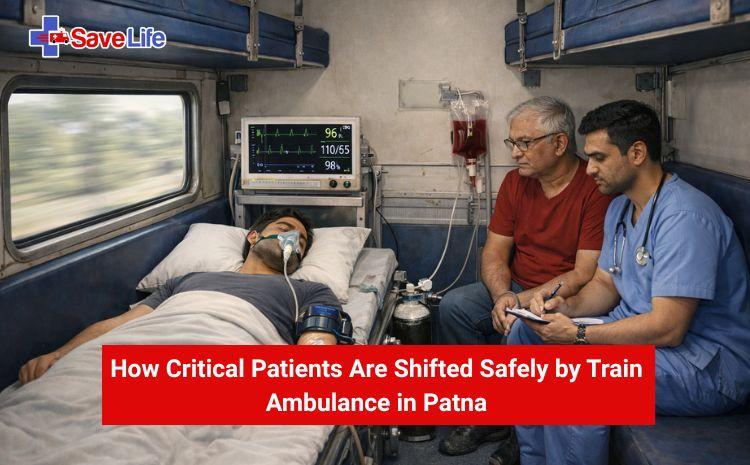
Transporting critical patients quickly and safely is one of the biggest challenges in emergency healthcare. In a city like Patna, where traffic congestion and long distances to specialized hospitals can delay urgent care, the train ambulance service in Patna has become a vital lifeline. Train ambulances are specially equipped coaches or compartments on regular trains that are converted into mobile critical-care units. They offer a cost-effective, timely, and medically sound way to move patients, especially when distances are long or road travel is impractical.
Why Train Ambulances Matter
Train ambulances fill an important gap between standard road ambulances and air ambulances. While road ambulances are efficient for short distances and air ambulances are fast but costly, train ambulances offer the best of both worlds for medium to long-distance transfers. For patients in Patna needing specialized treatment in cities like Delhi, Kolkata, or Mumbai, a train ambulance can be the most reliable method. It provides smooth travel, essential life-support systems, and space for medical personnel to work without the hurdles of traffic jams or uneven roads.
The Process of Shifting Patients by Train Ambulance
The process starts with a doctor’s recommendation or emergency request. Hospitals, family members, or attending physicians contact a reliable train ambulance service provider and share medical details such as diagnosis, current condition, and the level of care required. Once approved, the service provider handles the logistics with the railways.
1. Medical Assessment and Planning
Before boarding, trained medical professionals assess the patient’s condition. They determine whether the patient is stable enough for train travel and what type of medical support will be needed during the journey—such as oxygen supply, ventilators, cardiac monitoring, or IV therapy. A detailed medical plan is created so that all required equipment and medicines are arranged.
2. Customized Ambulance Setup
In Patna, the train ambulance team coordinates with the Indian Railways to reserve a suitable coach or compartment. These are usually positioned near exits to make transfers easier. The space is fitted with a stretcher, life-support equipment, seating for attendants, and emergency medicines. The layout is designed so the medical team can move freely and respond instantly if needed.
3. Safe Transfer to the Train
Patients are shifted from the hospital or home to the train platform using a road ambulance stretcher. This transfer is done with utmost care, ensuring there’s no abrupt movement that could harm the patient. Medical staff monitor vital signs during this transfer and prepare the patient for boarding smoothly.
4. Continuous Monitoring During the Journey
Once onboard, the patient’s care doesn’t stop. A trained medical team—which may include a doctor, nurse, and paramedic—accompanies the patient. They continuously monitor vital signs, provide emergency care if needed, administer medications, and ensure comfort throughout the journey. Regular communication with the receiving hospital is maintained so that the medical team there is ready when the patient arrives.
Benefits for Patients and Families
Train ambulances are significantly more affordable than air ambulances and more comfortable than long road trips. They reduce travel stress for critically ill patients and offer uninterrupted medical care. For families, it brings peace of mind knowing their loved one is being looked after by professionals until they reach the destination hospital.
Conclusion
In Patna, where quick and dependable transfer of critical patients can make the difference between life and death, train ambulances play a transformative role. By combining speed, safety, continuous medical care, and cost-effectiveness, they ensure that even the most vulnerable patients can reach the care they need without unnecessary risk or delay.

 English
 Magyar
 Arabic
 French
 Spanish
 Portuguese
 Deutsch
 Turkish
 Dutch
Dutch
 Italiano
 Russian
 Romaian
 Greek
Greek