
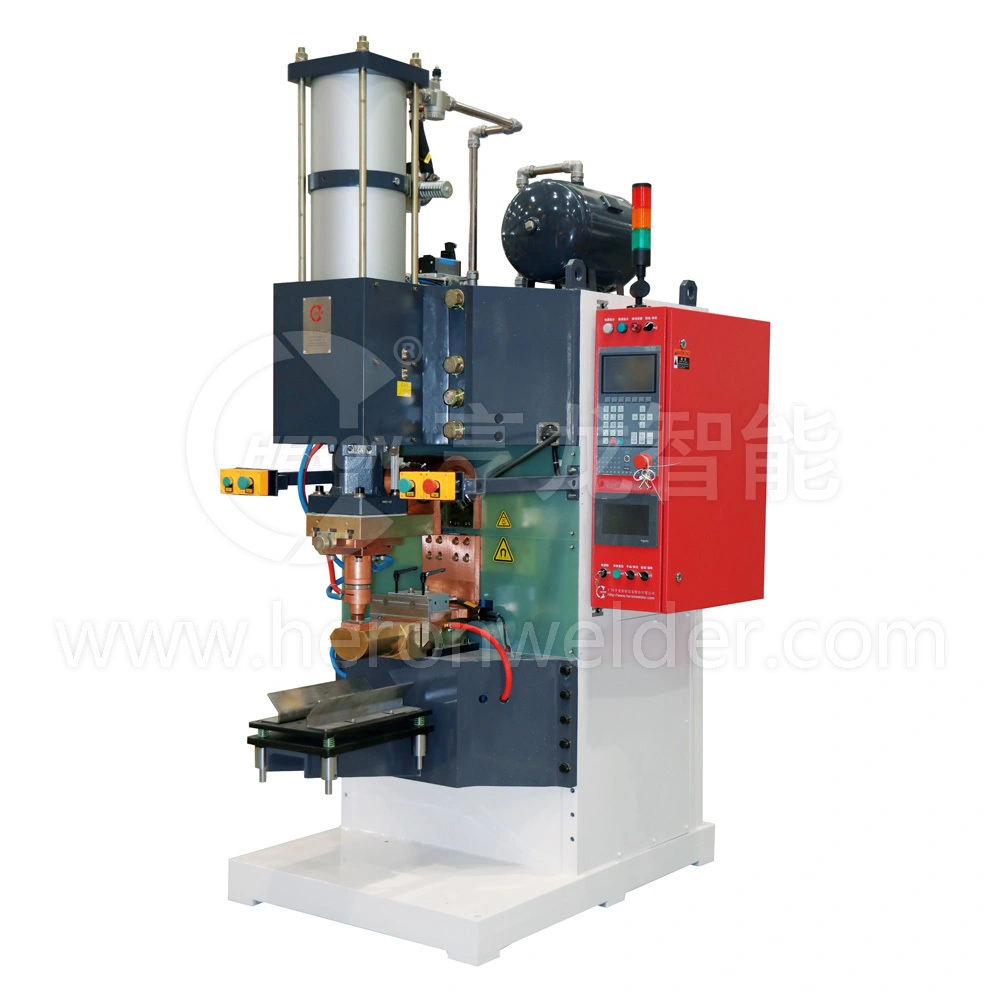
In today’s high-speed, quality-driven manufacturing environments, resistance spot welding (RSW) remains a cornerstone joining process for sheet metal fabrication. From automotive body assemblies to appliance panels, this efficient, reliable technique delivers strong, repeatable welds with minimal heat input and exceptional cycle times. As a global leader in industrial welding and metal-joining solutions, Heron Welder equips manufacturers, automation integrators, and OEM decision-makers with advanced resistance spot welding machines, consumables, and control systems engineered for performance and uptime.
This deep-dive explores the fundamentals of resistance spot welding, real-world applications, comparisons with alternative joining methods, and best practices that drive quality and productivity in automated production lines.
What Is Resistance Spot Welding?
Resistance spot welding (RSW) is a form of resistance welding that joins overlapping metal sheets by applying pressure and passing an electric current through electrodes positioned at the joint. The resistance of the metal to the electrical current generates localized heat, melting the material and forming a weld nugget where the sheets contact.
Key characteristics of resistance spot welding include:
-
Localized heating: Heat is generated only at the interface of the sheets, reducing distortion.
-
Fast cycle times: Typical weld times are in the range of 0.1–1 second per spot.
-
Pressure-assisted joining: Mechanical force ensures intimate contact and nugget consolidation.
-
Electrode cooling: Electrodes are water-cooled to support high-duty operation.
Principles of Resistance Spot Welding
Understanding the physics behind RSW helps in optimizing process parameters and achieving consistent weld quality.
1. Ohmic Heating and Current Flow
At the core of RSW is Joule’s Law - heat generated (Q) is proportional to the square of the current (I), resistance (R), and weld time (t):
Q = I² × R × t
In practice, higher currents and controlled weld time produce a larger weld nugget, but this must be balanced against electrode wear and distortion.
2. Electrode Force
Proper electrode force serves three functions:
-
Ensures low electrical resistance contact between the electrode and the workpiece.
-
Squeezes molten metal during solidification.
-
Controls expulsion of molten metal.
Too little force results in poor contact and weak welds; excessive force thins the workpiece and increases electrode wear.
3. Material and Thickness Considerations
Different metals and thicknesses have unique electrical and thermal properties. For example:
-
Steel has moderate electrical resistance and welds readily.
-
Aluminum has lower electrical resistance and higher thermal conductivity, requiring higher currents and precise timing to achieve sound welds.
Heron’s MFDC (mid-frequency direct current) resistance spot welding systems are specifically engineered to provide consistent power control for challenging materials like aluminum and advanced high-strength steels (AHSS).
Primary Applications of Resistance Spot Welding
Resistance spot welding is ubiquitous across industries where sheet metal joining is critical:
Automotive & E-Mobility Manufacturing
RSW is the standard for automotive body-in-white assembly, enabling high-speed joining of outer panels, inner reinforcements, and structural components. With the rise of electrification and lightweight materials, advanced resistance welding solutions including MFDC and servo-driven systems support joining mixed materials with precision.
Appliance & HVAC Fabrication
Household appliances and HVAC components often require strong, cosmetically consistent welds on thin gauge sheet metal. Resistance spot welding delivers the repeatability and throughput necessary for competitive production.
Electronics & Battery Pack Assembly
Miniaturized resistance spot welding machines are ideal for battery tab welding and electronic enclosures where small weld nuggets and controlled heat input are essential.
Aerospace & Transportation
In aerospace sub-assemblies and transportation frames, RSW provides dependable joints for corrosion-resistant steels and lightweight alloys, supporting structural integrity and fatigue resistance.
Resistance Spot Welding vs. Alternative Joining Methods
Selecting the right joining technology depends on material, cycle time, part geometry, and cost considerations. Here’s how RSW compares to other methods:
Resistance Spot Welding vs. MIG/TIG Welding
| Aspect | Resistance Spot Welding | MIG/TIG Welding |
|---|---|---|
| Speed | Very high (automatable) | Slower (operator dependent) |
| Heat Input | Localized | Wider heat-affected zone |
| Automation | Excellent | Requires fixturing and robots |
| Material Thickness | Ideal for sheet metal | Suitable for thicker sections |
| Consumables | Electrodes | Filler wire, shielding gases |
RSW excels in high-volume, automated environments, while MIG/TIG are better for custom, thicker, or complex welds.
Resistance Spot Welding vs. Adhesive Bonding
Adhesive bonding offers lower-stress joints but longer cure times and surface prep. RSW provides faster production rates and superior electrical conductivity at joints.
Resistance Spot Welding vs. Mechanical Fastening
Mechanical fasteners add weight and require holes; RSW is lighter, more streamlined, and often stronger in fatigue performance.
Best Practices for Optimizing Resistance Spot Welding
1. Parameter Control & Monitoring
Key welding parameters current, time, electrode force must be precisely controlled. Heron’s intelligent controllers offer real-time monitoring, adaptive adjustments, and data logging for traceability and quality assurance.
2. Electrode Management
Electrode wear directly affects weld quality. Maintaining proper tip geometry and using high-quality copper alloys extends life. Automated dressers and predictive maintenance reduce downtime.
3. Material Preparation
Clean, oxide-free surfaces improve electrical contact. For aluminum and plated steels, consistent cleaning and handling protocols reduce variability.
4. Cooling & Duty Cycle Management
Adequate cooling through electrode shanks and welding arms prevents overheating in high-duty applications. Heron’s robust water-cooled designs support continuous operation in automated lines.
Integration with Automation & Industry 4.0
Modern manufacturing demands connectivity, flexibility, and intelligence:
-
Robotic integration: RSW guns and controllers can be seamlessly integrated with multi-axis robots for complex part geometries.
-
Smart data analytics: Welding systems that communicate with plant networks enable predictive maintenance and process improvements.
-
Safety & ergonomics: Automated fixturing reduces manual handling, enhancing operator safety and consistency.
Heron offers turnkey solutions from single-gun systems to fully automated production cells with custom tooling, safety enclosures, and PLC/robot interfaces.
FAQs: Resistance Spot Welding
Q1: What materials can be joined with resistance spot welding?
Most conductive metals including mild steel, stainless steel, aluminum alloys, and coated steels can be spot welded. Material selection influences current and timing settings.
Q2: How is weld quality evaluated in spot welding?
Weld nugget size, mechanical pull/shear tests, and non-destructive inspection (e.g., ultrasonic) are common quality measures.
Q3: What are common causes of weld defects?
Poor contact, worn electrodes, incorrect parameters, and contaminated surfaces can cause expulsion, weak nuggets, or inconsistent welds.
Q4: Can resistance spot welding be automated?
Yes , RSW is highly automatable and widely used in robotic production cells.
Q5: What advantages do MFDC spot welding systems offer?
MFDC systems deliver cleaner current profiles, faster response, and better control for thin or difficult-to-weld materials like aluminum and AHSS.
Partner with Heron for Advanced Resistance Spot Welding Solutions
Resistance spot welding remains a backbone process for high-volume, high-quality sheet metal joining across industries. Whether you’re building automotive body structures, consumer appliances, or battery packs, the right welding equipment and process controls make all the difference.
At Heron Welder, we design and deliver advanced resistance spot welding machines, MFDC power supplies, welding guns, controllers, and automation solutions tailored to your application and production goals.
Request a quote or consult with our welding experts today to optimize your resistance spot welding processes and drive productivity, quality, and efficiency in your manufacturing lines.

 English
 Magyar
 Arabic
 French
 Spanish
 Portuguese
 Deutsch
 Dutch
Dutch
 Italiano
 Russian
 Romaian
 Portuguese (Brazil)
 Greek
Greek