
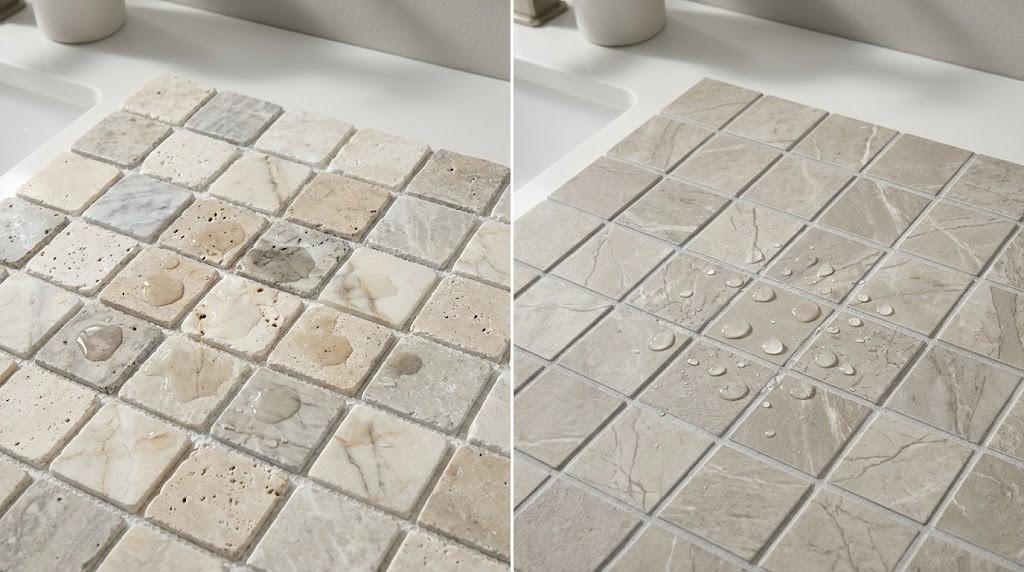
When you step into a ceramic tile shop, the decision between stone mosaic tiles and porcelain mosaics can be a significant one. Both options offer unique aesthetics and benefits, but their performance and maintenance requirements can vary greatly once they are installed. This guide aims to provide a detailed comparison to help you make an informed decision based on your specific needs and preferences.
The Dual Purpose of Mosaics
Mosaics are not just decorative elements; they serve practical purposes as well. They follow slopes on shower floors, adding grip and softening transitions between surfaces. Given their use in wet and detailed areas, performance is just as important as appearance.
While stone and porcelain mosaics may look similar from a distance, their structural differences and maintenance needs set them apart.
The Natural Allure of Stone Mosaic Tiles
Stone mosaics bring a natural, organic feel to any space. Marble, travertine, slate, and limestone each offer unique variations in color and texture. No two pieces are identical, creating a sense of depth and warmth. This randomness is often the primary reason people choose stone. Stone tiles absorb light rather than reflecting it, giving bathrooms a calm, spa-like atmosphere and providing a grounded, tactile feel underfoot.
However, stone is porous, which means it can absorb moisture unless properly sealed. Over time, water, soap, and minerals can stain or darken the tiles.
Maintenance Requirements for Stone Mosaics
Stone mosaics require regular and ongoing care. They need to be sealed before and after grouting, and often require periodic resealing. Cleaning products must be mild, as acidic cleaners can etch or dull the surface.
In low-use areas, this maintenance might be manageable. However, in busy bathrooms or rental units, it can become a burden. Skipped maintenance might not show immediately, but problems can build up over time. If you’re considering stone mosaics, be honest about your willingness to handle the upkeep. This honesty can save you from future regrets.
Ideal Applications for Stone Mosaics
Stone mosaics are best suited for feature areas such as accent walls and vanity backsplashes. They also work well in dry zones with limited water exposure. When sealed properly, they can be effective on shower floors, as the many grout lines add grip and the texture hides wear.
However, they may not be the best choice for full shower walls or heavily used kitchen backsplashes unless you have strong ventilation and cleaning habits.
The Engineered Appeal of Porcelain Mosaics
Porcelain mosaics are engineered to be dense, low-porosity, and consistent. They don’t absorb water like stone does, making them more practical for everyday use. Modern porcelain mosaics can closely mimic the look of natural stone, with convincing marble veins and slate textures. The key difference lies in performance: porcelain resists staining, doesn’t require sealing, and can tolerate stronger cleaners.
While porcelain mosaics may lack the depth of natural stone, they offer a far more predictable and reliable appearance.
Low-Maintenance Reality of Porcelain Mosaics
Porcelain mosaics are designed for low maintenance. Regular cleaning is usually sufficient, and they don’t require sealing. They don’t darken when wet, and soap residue and hard water marks are easier to clean off.
This reliability is particularly important in wet areas, bathrooms with poor ventilation, kitchens with heavy use, and homes with children or tenants. Porcelain mosaics reduce the number of potential issues, providing peace of mind for many homeowners.
Ensuring Slip Resistance and Safety
Both stone and porcelain mosaics can be safe underfoot, but this depends on the finish and rating. Stone mosaics often have natural textures that add grip, while porcelain mosaics rely on surface texture and grout lines. Matte or lightly textured porcelain performs well on shower floors.
Always check the slip ratings for wet areas, as texture alone doesn’t guarantee safety. This is a crucial question to ask at the ceramic tile shop.
Appearance and Aging Over Time
Stone mosaics change with age, developing a patina, softening edges, and deepening colors. Some people appreciate this natural aging, while others see it as wear.
Porcelain mosaics, on the other hand, maintain their appearance over time. They look the same years later as they did on the day of installation. This consistency is ideal for those who prefer stability and predictability. Neither option is right or wrong; it depends on whether you value natural aging or long-term uniformity.
Installation Considerations
Stone mosaics require careful handling and sealing steps, which can add time and complexity to the installation process. Cuts must be precise to avoid chipping, and the choice of adhesive is crucial, as stone can react to moisture trapped beneath it.
Porcelain mosaics are more forgiving. They are easier to cut cleanly and don’t require pre-installation sealing. This can reduce labor time and cost, making porcelain a smoother choice for complex layouts or tight timelines.
Grout: A Key Consideration
Grout is more critical with mosaics than with larger tiles due to the higher number of joints. Stone mosaics still need sealing even if epoxy grout is used, while porcelain mosaics paired with epoxy grout offer the lowest maintenance combination. This reduces staining, mold, and cleaning effort.
Grout color also affects the overall appearance. Matching grout creates a calm look, while contrasting grout highlights the mosaic pattern. Choose carefully, as changing grout color later is difficult.
Cost: Beyond the Price Tag
Stone mosaics often come with a higher upfront cost and can also be more expensive over time due to sealing, special cleaners, and potential repairs.
Porcelain mosaics may have lower maintenance costs, even if the tile price is similar. Installation labor costs are often lower too, as porcelain is easier to work with. When comparing costs, consider not just the square meter price but also the time, maintenance, and replacement risks involved.
Suitability for Different Spaces
Stone mosaics are ideal for homeowners who appreciate natural materials and are willing to invest in maintenance. They work best in controlled environments and as accent features.
Porcelain mosaics are perfect for busy homes, wet zones, and those who desire durability with minimal effort. They are versatile and can be used almost anywhere, from shower floors to kitchen backsplashes. If you’re unsure, porcelain is usually the safer choice.
Making Your Decision at the Ceramic Tile Shop
Don’t rely solely on photos when making your decision. Handle full mosaic sheets, wet them slightly, and compare how they feel and react to light. Ask about water absorption, sealing requirements, and where the tile is rated for use. A reputable ceramic tile shop will provide clear answers and technical details, not just display boards. These conversations are more valuable than brand names.
Final Thoughts
Both stone mosaic tiles and porcelain mosaics can enhance the look of your space. The real differences emerge in daily use. Stone offers character and natural variation but requires care. Porcelain provides consistency and ease, though it may lack the organic depth of stone.
The right choice depends on your lifestyle, the frequency of use of the space, and your willingness to undertake maintenance. Consider these factors carefully, and your mosaic tiles will remain a smart investment long after the renovation is complete.

 English
 Arabic
 French
 Spanish
 Portuguese
 Deutsch
 Turkish
 Dutch
Dutch
 Italiano
 Russian
 Romaian
 Portuguese (Brazil)
 Greek
Greek