
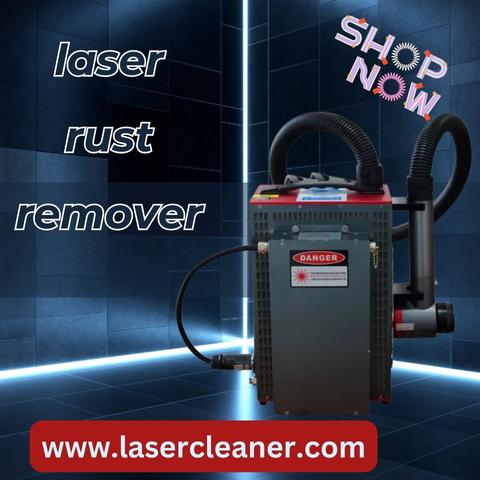
In industries where metal maintenance and restoration are critical, efficiency and precision are key. A laser rust remover represents a cutting-edge approach to maintaining the integrity of metal surfaces without relying on traditional chemical or mechanical methods. These devices harness the power of high-energy laser beams to target and eliminate rust, oxidation, and corrosion layers from a variety of metals, including steel, iron, and alloys. Unlike traditional methods that may damage the metal or leave residues behind, the laser process ensures a clean, smooth surface ready for further processing, painting, or finishing.
Laser rust removal operates on the principle of laser ablation, a process where concentrated light energy is applied to a surface to vaporize contaminants. The precision of this technology allows operators to remove rust at the microscopic level, reaching areas that are otherwise difficult to clean using brushes, sandblasting, or chemical treatments. This is particularly useful for complex machinery, automotive parts, or intricate metal components where traditional methods fall short. With controlled settings, the intensity, focus, and speed of the laser beam can be adjusted according to the depth and type of rust, ensuring uniform results and preventing any risk of damaging the underlying metal.
The adoption of a laser rust remover has transformed maintenance routines across various sectors. In automotive restoration, these devices allow specialists to revive classic cars, motorcycles, and trucks with minimal effort while preserving delicate structural details. Industrial facilities, especially those dealing with metal fabrication, manufacturing, and construction, rely on these systems for rapid cleaning of steel beams, equipment, and machinery, reducing downtime and improving operational efficiency. Even in aerospace and marine industries, where corrosion can compromise safety, lasers offer a controlled and reliable solution for keeping metal surfaces in optimal condition.
One of the most notable aspects of laser rust removal is its environmentally conscious approach. Traditional rust removal techniques often involve chemical solvents, acids, or abrasive materials that generate hazardous waste, posing challenges for safe disposal. In contrast, the laser method is contactless and produces minimal residues. Rust particles are typically removed in the form of fine dust or vapor, which can be safely collected and disposed of without contaminating water sources or surrounding areas. This makes it an ideal choice for companies looking to adopt sustainable practices without sacrificing efficiency.
Laser rust removers are also renowned for their portability and versatility. Handheld units are now available, allowing operators to clean surfaces in tight spaces, hard-to-reach corners, or large equipment without dismantling parts or requiring specialized facilities. Stationary or industrial-grade laser systems, on the other hand, are designed for high-volume applications, providing consistent results for ongoing maintenance processes. The combination of these formats ensures that both small workshops and large-scale factories can benefit from the technology.
The speed at which a laser rust remover can clean surfaces is another important consideration. Traditional methods often involve prolonged scraping, sanding, or soaking processes that can take hours or even days for large projects. Laser cleaning, however, is highly efficient and can remove rust layers in minutes, significantly reducing labor and project timelines. Additionally, because the process is non-contact, there is no risk of mechanical wear on tools or metal surfaces, preserving the material’s structural integrity.
Precision control is a defining factor for laser rust removers. Operators can adjust parameters such as laser power, pulse duration, and scanning speed to match specific requirements. For delicate parts or metals with thin coatings, this precision prevents overheating or surface damage. For larger surfaces or heavily corroded materials, high-intensity laser settings accelerate the cleaning process. This adaptability makes the technology suitable for a wide range of applications, from fine art restoration and jewelry cleaning to industrial-scale equipment maintenance.
The integration of laser rust removers into maintenance routines is also facilitated by advances in user interfaces and safety features. Modern devices come equipped with touch screens, preset modes for different materials, and safety enclosures that protect operators from accidental exposure to laser beams. These improvements not only enhance user experience but also ensure compliance with workplace safety standards.
Industries around the world are increasingly embracing laser rust removal as a reliable and cost-effective solution. In addition to metals, some systems are capable of handling coatings, paints, and other surface impurities, expanding the utility of the device beyond traditional rust removal. Maintenance teams, restoration specialists, and production engineers are recognizing the value of a method that combines speed, precision, and environmental responsibility, all while delivering consistent and professional results.
In practical terms, a laser rust remover allows businesses and professionals to maintain high standards of quality without relying on abrasive or chemical-intensive processes. For collectors and hobbyists, the technology provides a way to restore items to their original condition with minimal effort. For industrial operators, it offers a way to keep machinery and equipment running smoothly while reducing maintenance costs.
As the demand for efficient, safe, and effective metal surface treatment grows, laser rust removers are becoming indispensable tools across sectors. They offer a unique combination of advanced technology, operational flexibility, and environmental friendliness, making them a valuable investment for anyone looking to maintain or restore metal surfaces. By embracing this technology, professionals can achieve results that are precise, fast, and reliable, redefining the standards of surface maintenance in modern industries.
With continued innovation, laser rust removers are likely to become even more adaptable, user-friendly, and efficient, opening new possibilities for industries that rely heavily on metal maintenance and restoration. As such, they represent not just a tool, but a transformative approach to handling one of the most persistent challenges in metal care: rust and corrosion.

 English
 Magyar
 Arabic
 French
 Portuguese
 Deutsch
 Turkish
 Dutch
Dutch
 Italiano
 Russian
 Romaian
 Portuguese (Brazil)
 Greek
Greek