
The Crucible of Sparks and Precision: Building a Versatile Powerhouse
An angle grinder factory is a specialized industrial facility dedicated to the mass production of one of the most rugged and essential tools in metalworking, construction, and fabrication. This factory’s core mission is to engineer and assemble handheld devices that convert electrical or pneumatic energy into high-speed rotational force at a 90-degree angle, enabling grinding, cutting, and finishing of hard materials. Operating such a plant requires a deep integration of mechanical engineering (for gears and bearings), electrical engineering (for motors and controls), materials science (for heat-resistant polymers and alloys), and rigorous safety protocols. The output of this factory empowers workers to shape, cut, and smooth everything from steel beams to concrete slabs, making it a cornerstone of physical infrastructure development worldwide.
The Manufacturing Arsenal: Separate Lines for Distinct Tools
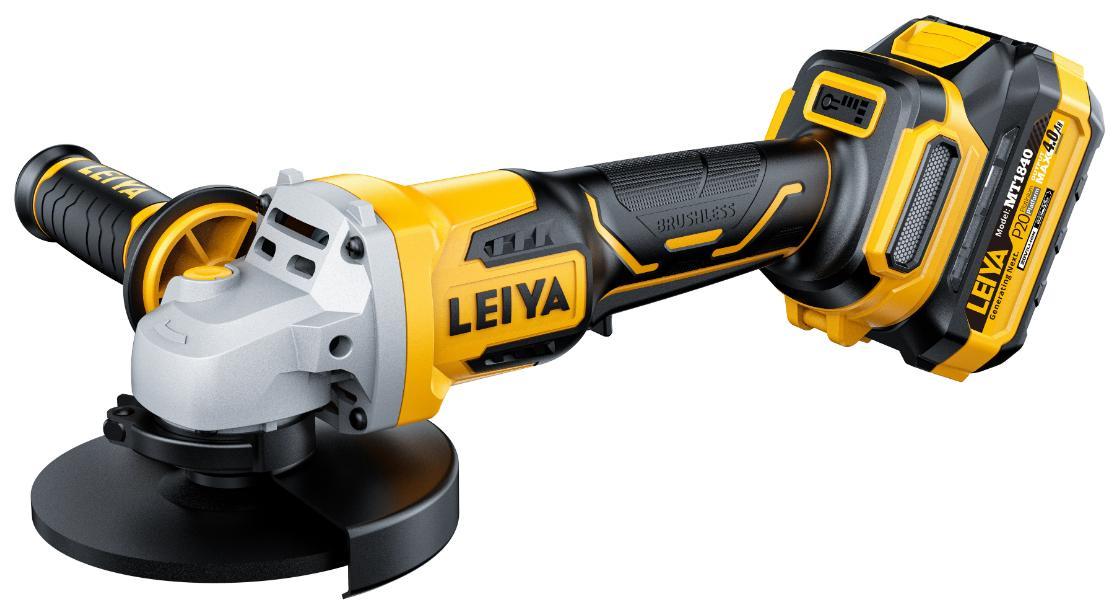
A comprehensive factory typically operates multiple, focused production lines. The corded electric grinder line is the most common, producing tools in standard disc sizes (115mm/4.5”, 125mm/5”, 230mm/9”). This line handles the assembly of universal motors, spiral bevel gears, and robust switches. A separate, increasingly vital line is dedicated to cordless grinders, where the integration of brushless DC motors, electronic speed controllers, and compatibility with a platform of lithium-ion batteries is paramount. A third line may produce pneumatic grinders for hazardous environments, focusing on precision-machined air motors and rotor assemblies. Each line, while distinct, shares common stations for housing assembly, final testing, and packaging, allowing for manufacturing efficiency.
Core Component Fabrication: The Heart of the Grinder
The factory’s capability hinges on its control over key components. The motor is the soul of the tool. For corded models, stators and armatures are wound, varnished, and balanced in-house or sourced from certified specialists. The spiral bevel gear set—which redirects power at a right angle—is a critical piece. These gears are often forged or machined from case-hardened chromium steel, then precision ground and heat-treated to withstand immense tangential forces. The spindle and bearings are another focus; the spindle must run true with minimal runout, supported by high-grade, shielded ball bearings packed with high-temperature grease. The clamshell housing, typically made from glass-fiber reinforced nylon (for insulation and strength) or magnesium alloy (for heat dissipation and rigidity), is injection-molded on-site or nearby, ensuring a tight fit for internal components.

 English
 Arabic
 French
 Spanish
 Portuguese
 Deutsch
 Turkish
 Dutch
Dutch
 Italiano
 Russian
 Romaian
 Portuguese (Brazil)
 Greek
Greek