
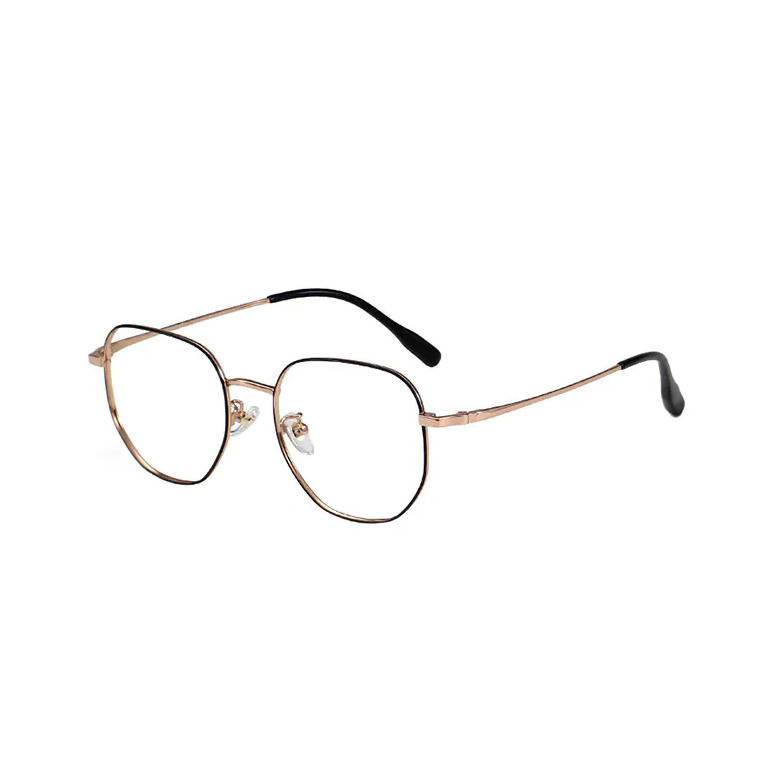
The pursuit of the perfect eyeglass frame is, at its core, a pursuit of disappearance. The ideal pair is not noticed—not as pressure on the nose, not as weight behind the ears, not as an adjustment recurring throughout the day. Lightweight titanium eyeglasses have emerged as the definitive answer to this challenge, not merely because titanium is light, but because it enables engineering feats impossible with other metals. By examining award-winning designs, material science comparisons, and real-world manufacturing innovations, a clear picture emerges: titanium frames represent the closest the eyewear industry has come to creating something from nothing.
The Threshold of True Lightness
Exceptional lightweight eyewear is defined by a fundamental shift in perception. When a complete eyeglass system approaches a certain threshold of total mass, the frame ceases to assert constant sensory presence. Adjustment frequency decreases. Pressure points on the nasal bridge and mastoid surfaces diminish below perceptual level. This transformation from noticeable appliance to sensory neutrality represents the true engineering achievement.
Several manufacturers have reached this threshold through radically different approaches. One producer weaves titanium wire directly into frame structures, eliminating nearly all material waste while achieving unprecedented lightness. Another mills frames from single titanium blocks, maintaining structural integrity without unnecessary bulk. A third has developed woven wire construction that requires neither screws nor welding, reducing both weight and manufacturing defects. These diverse methodologies share a single insight: every gram of conventional construction is a gram that can be removed through smarter geometry and material application.
Pure Versus Flexible: Two Alloys, Two Philosophies
Understanding lightweight titanium eyewear requires distinguishing between its primary forms. The commercially pure grade offers exceptional corrosion resistance, complete hypoallergenic safety, and density significantly lower than stainless steel. Frames constructed from this material provide outstanding longevity, often serving wearers for many years without degradation.
The flexible alloy variant represents an engineering compromise optimized for elasticity. Through specialized heat treatment, it achieves substantially greater flexibility than the pure form. This property allows for frames that can be repeatedly bent and adjusted without permanent deformation or fracture. Manufacturers utilizing this material emphasize both its weightlessness and its memory characteristics—temples that flex substantially while returning precisely to position.
The choice between these alloys hinges on use case. The pure form maximizes corrosion resistance and skin compatibility for sensitive wearers. The flexible alloy prioritizes adjustability and impact resilience for active lifestyles.
The Hidden Complexity of Hardware Elimination
One of the most significant innovations enabling extreme lightweight construction is the removal of conventional hinge hardware. Traditional eyeglass hinges rely on miniature screws that introduce both weight and potential failure points. Screwless hinge systems achieve the same rotational function through integrated material flex or interlocking geometry.
Advanced hinge designs require neither screws nor welding, with the hinge itself cut from the same titanium sheet as the frame body. Other systems eliminate rivets and welded components entirely, enabling customization without the weight penalty of multiple mechanical fasteners. Some manufacturers have developed woven hinge structures that achieve rotational movement through the controlled flex of woven wire itself.
These approaches share a common engineering principle: every component that can be integrated rather than attached is a component that improves the final product.

 English
 Magyar
 Arabic
 French
 Portuguese
 Deutsch
 Turkish
 Dutch
Dutch
 Italiano
 Russian
 Romaian
 Portuguese (Brazil)
 Greek
Greek