
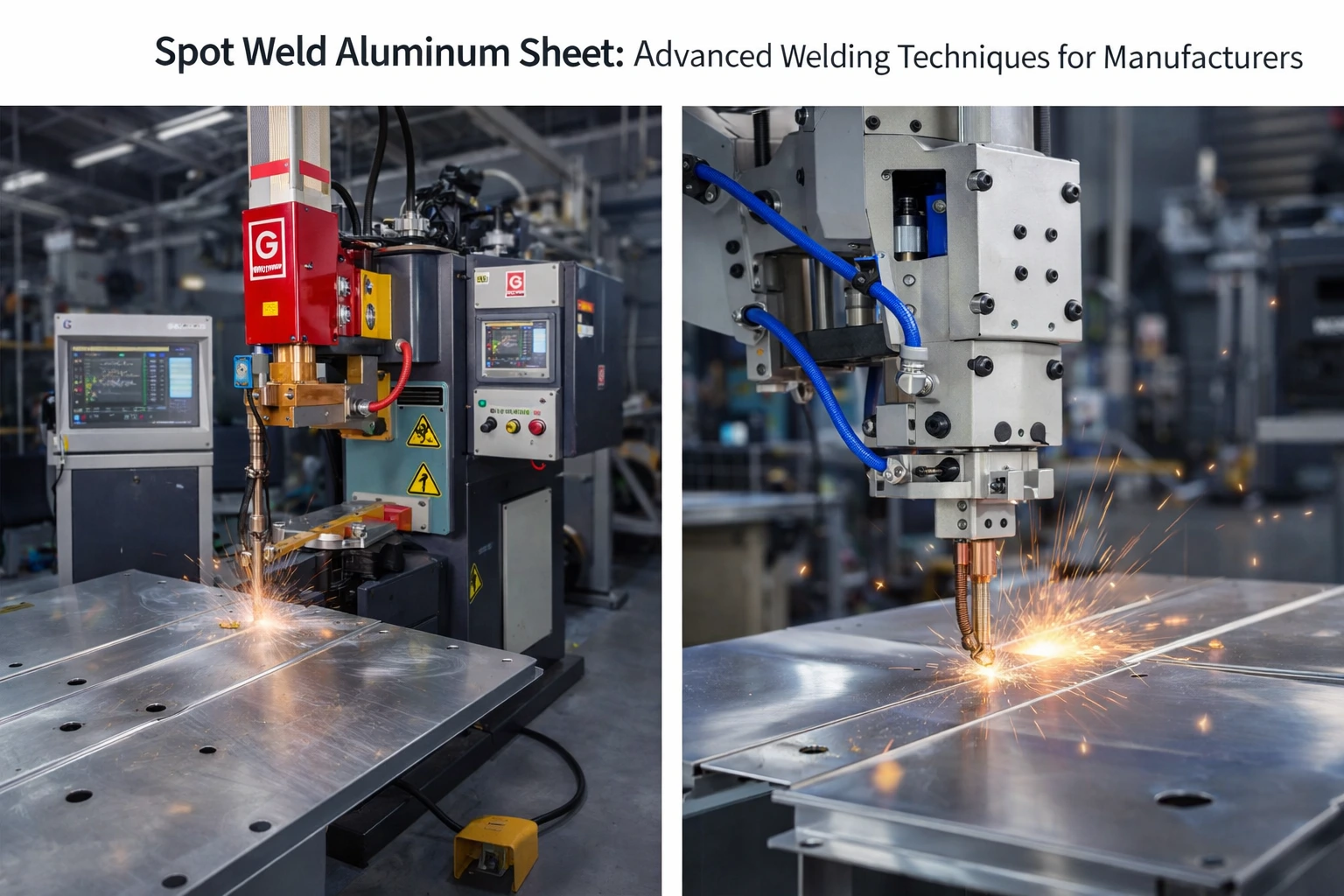
In modern manufacturing, precision, speed, and repeatability are paramount. Spot welding equipment has become an indispensable technology in industries ranging from automotive to electronics, offering reliable and high-speed joining of sheet metals. For OEMs, automation integrators, and factory managers, choosing the right spot welding solution can significantly impact production efficiency, product quality, and operational cost.
At Heron Welder, we specialize in advanced resistance welding machines and automated production systems, providing solutions tailored to your manufacturing needs. This guide will explore the fundamentals, applications, and best practices of spot welding equipment, helping engineers make informed decisions for their production lines.
What Is Spot Welding Equipment?
Spot welding is a type of resistance welding where two or more metal sheets are joined by applying pressure and passing an electrical current through the contact point. The combination of heat generated by electrical resistance and mechanical pressure creates a strong weld, localized at precise points.
Spot welding equipment typically consists of:
-
Welding transformer – provides high current at low voltage
-
Electrodes – usually copper, for transferring current and applying pressure
-
Welding guns – handheld or robotic for precise placement
-
Control system – to regulate current, time, and electrode force
Heron’s spot welding machines offer MFDC (Medium-Frequency Direct Current) and capacitor discharge technologies, ensuring consistent weld quality even on challenging materials like high-strength steels and aluminum alloys.
How Spot Welding Works: The Principle Explained
Spot welding operates on three critical principles:
-
Electrical Resistance Heating – When current flows through the metal sheets, resistance at the contact point generates heat.
-
Pressure Application – Electrodes apply mechanical pressure to consolidate the molten metal and form the weld nugget.
-
Cooling Phase – Maintaining pressure during cooling ensures strong metallurgical bonding and minimizes defects.
The combination of these steps allows spot welding to create precise, repeatable joints without the need for filler materials, making it ideal for high-volume manufacturing.
Key Applications of Spot Welding Equipment
Spot welding is widely used in industries where speed and repeatability are critical. Common applications include:
-
Automotive Manufacturing – Assembly of car body panels, chassis components, and seat frames
-
Electronics and Appliances – Joining battery packs, metal enclosures, and HVAC components
-
Metal Furniture Production – Efficient assembly of steel and aluminum frames
-
Industrial Fabrication – Sheet metal structures, brackets, and frames
Heron’s machines are designed to integrate seamlessly with automated production lines, robotic arms, and FSPR (self-pierce riveting) systems, offering manufacturers flexible and scalable welding solutions.
Spot Welding vs. Other Resistance Welding Methods
Understanding how spot welding compares to other welding methods helps manufacturers choose the right equipment:
| Welding Type | Description | Key Advantages | Typical Use Cases |
|---|---|---|---|
| Spot Welding | Joins sheets at discrete points | High speed, minimal distortion, no filler | Automotive panels, battery packs |
| Projection Welding | Metal projections concentrate current | Consistent welds on complex parts | Fasteners, nuts, studs |
| Seam Welding | Continuous overlapping weld | Leak-proof joints | Fuel tanks, pipes, enclosures |
| Capacitor Discharge Welding | High-speed, short duration | Thin metals, minimal heat input | Electronics, battery terminals |
Heron’s portfolio includes machines for all these processes, enabling manufacturers to select solutions that match production requirements and material specifications.
Best Practices for Optimal Spot Welding Performance
To maximize weld quality and operational efficiency, follow these best practices:
-
Electrode Maintenance – Regular cleaning and dressing prevent spatter build-up and ensure consistent current transfer.
-
Material Compatibility – Match current and force settings to the type and thickness of metals.
-
Weld Scheduling – Optimize weld time, current, and force based on joint design and material properties.
-
Automation Integration – Use robotic arms or conveyor systems for high-volume production to reduce human error.
-
Monitoring and Control – Advanced MFDC systems, like those from Heron, allow real-time monitoring to prevent defects and maintain repeatable quality.
Following these guidelines minimizes defects such as expulsion, weld spatter, or weak nugget formation, ensuring consistent production outcomes.
Why Choose Heron for Spot Welding Equipment
Heron Welder is a global leader in resistance welding technology, offering:
-
Customized welding solutions for OEMs, automation integrators, and factory lines
-
Advanced MFDC, capacitor discharge, and traditional spot welding machines
-
Integrated automation options including robotic welding guns and FSPR systems
-
Expert consultation and technical support to optimize production efficiency
Our machines are engineered for high reliability, precise control, and ease of integration, making them the preferred choice for manufacturers aiming to boost productivity while reducing operational costs.
FAQs About Spot Welding Equipment
1. What materials can spot welding machines handle?
Spot welding is suitable for steel, stainless steel, aluminum, and other conductive metals. Advanced MFDC systems improve weld consistency on high-strength and thin-gauge materials.
2. Can spot welding be automated?
Yes, spot welding is commonly integrated with robotic arms and automated production lines for high-volume, precise welding operations.
3. How do I choose the right spot welding machine?
Consider material type, thickness, production speed, and integration requirements. Heron offers expert consultation to select and customize machines to match your manufacturing needs.
4. How often should electrodes be replaced?
Electrode life depends on material, current, and maintenance. Regular inspection and dressing maximize lifespan and ensure consistent weld quality.
5. Is spot welding safe for operators?
Yes, with proper training and safety systems, spot welding is safe. Heron machines come with protective enclosures, interlocks, and user-friendly controls.
Elevate Your Manufacturing with Heron Spot Welding Equipment
Investing in the right spot welding equipment is critical for achieving high-quality, efficient, and repeatable metal joining. Heron Welder provides customized solutions that integrate seamlessly into your production line, ensuring maximum productivity and operational excellence.
Contact Heron today to request a quote or consult with our experts on spot welding equipment, automated welding systems, and complete metal-joining solutions tailored to your factory’s unique needs.

 English
 Magyar
 Arabic
 French
 Spanish
 Portuguese
 Deutsch
 Turkish
 Dutch
Dutch
 Russian
 Romaian
 Portuguese (Brazil)
 Greek
Greek