
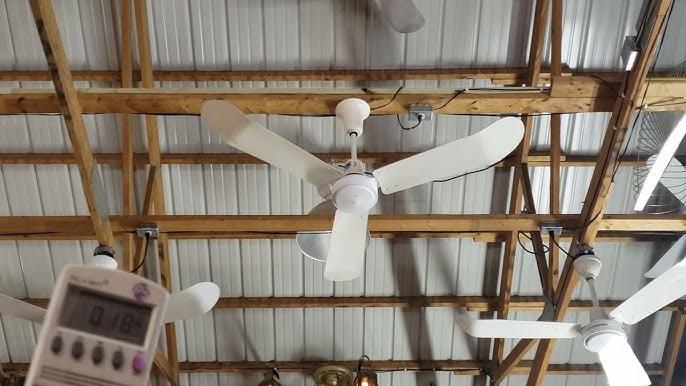
Proper ventilation is essential in agricultural environments. Whether in livestock barns, poultry houses, dairy facilities, or greenhouses, maintaining consistent airflow directly impacts animal health, crop productivity, and overall farm efficiency. agricultural ceiling fans are specifically designed to handle these demanding conditions.
Choosing the right fan requires careful consideration of size, airflow capacity, durability, and environmental factors. This guide will help you make an informed decision.
Why Ventilation Matters in Agriculture
Agricultural buildings often face challenges such as:
-
Excess heat buildup
-
High humidity levels
-
Ammonia and odor accumulation
-
Poor air circulation
-
Temperature fluctuations
Without proper airflow, livestock may experience heat stress, and crops can suffer from mold, disease, or reduced growth rates. Ceiling fans help regulate temperature, control moisture, and maintain a healthier environment.
1. Determine the Right Fan Size
Fan size should match the structure’s dimensions and ceiling height.
General Guidelines:
-
Smaller barns or greenhouses → Medium-diameter fans
-
Large livestock facilities → Large-diameter, high-volume fans
-
High ceilings → Bigger fans for wider air coverage
Proper sizing ensures even air distribution throughout the entire space.
2. Check Airflow Capacity (CFM)
CFM (Cubic Feet per Minute) measures how much air the fan moves.
In agricultural settings, higher airflow is often necessary to:
-
Reduce humidity
-
Remove odors and airborne particles
-
Improve temperature consistency
Compare total CFM output and coverage area to ensure the fan meets your facility’s ventilation needs.
3. Choose Durable, Corrosion-Resistant Materials
Agricultural environments can be harsh due to:
-
Moisture
-
Dust
-
Chemicals
-
Animal waste gases
Select fans made with:
-
Galvanized or stainless-steel components
-
Sealed motors
-
Corrosion-resistant blades
-
Protective coatings
Durability reduces maintenance costs and increases equipment lifespan.
4. Consider Energy Efficiency
Agricultural facilities often run ventilation systems for long hours. Energy-efficient fans help reduce operating costs.
Look for:
-
High CFM per watt ratings
-
Direct-drive motors (low maintenance)
-
Variable speed controls
Efficient systems improve airflow while keeping electricity usage manageable.
5. Evaluate Installation Requirements
Proper installation is critical for performance and safety.
Important considerations include:
-
Structural support capacity
-
Ceiling height and mounting clearance
-
Proper spacing between multiple fans
-
Compatibility with existing ventilation systems
Professional installation ensures optimal airflow and compliance with safety standards.
6. Assess Climate and Environmental Needs
Different agricultural applications have different ventilation priorities:
Livestock Barns
-
Reduce heat stress
-
Improve air exchange
-
Control ammonia levels
Poultry Houses
-
Maintain consistent airflow
-
Prevent moisture buildup
Greenhouses
-
Regulate humidity
-
Prevent fungal growth
-
Promote uniform plant growth
Selecting the right fan type depends on your specific agricultural application.
Long-Term Benefits
Installing the right agricultural ceiling fan provides:
-
Healthier livestock
-
Increased milk, meat, or egg production
-
Improved crop yield
-
Lower disease risk
-
Reduced energy costs
The long-term productivity gains often outweigh the initial investment.
Final Thoughts
Choosing the right agricultural ceiling fan for farms and greenhouses involves evaluating size, airflow capacity, durability, energy efficiency, and installation requirements. Proper ventilation not only protects animals and crops but also improves overall farm profitability.
With the right system in place, agricultural facilities can maintain a stable, comfortable, and productive environment year-round.

 English
 Magyar
 Arabic
 French
 Spanish
 Portuguese
 Deutsch
 Turkish
 Dutch
Dutch
 Italiano
 Russian
 Romaian
 Portuguese (Brazil)