
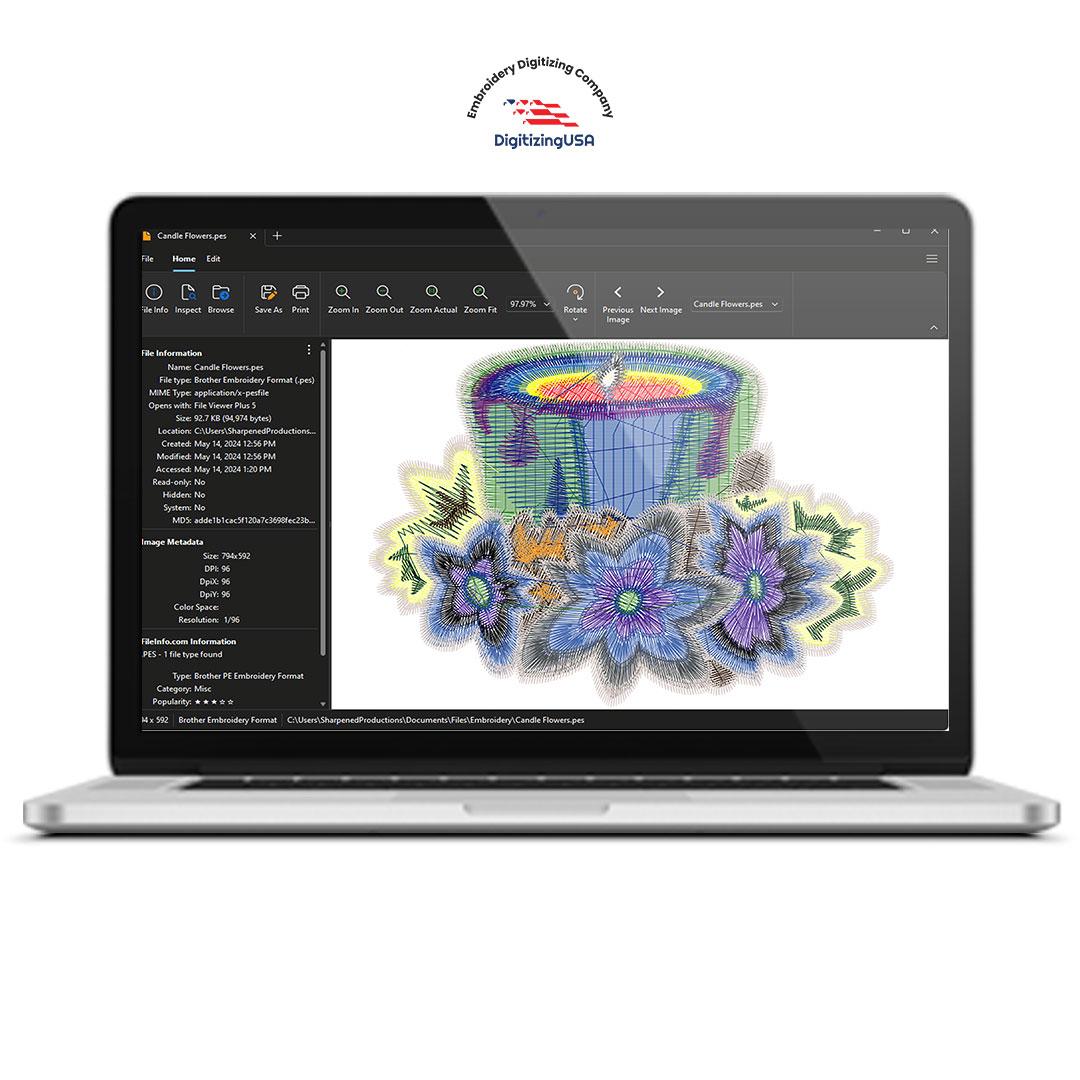
Embroidery is a beautiful blend of art, craftsmanship, and technology. From personalized gifts to branded apparel, embroidery adds sophistication and professionalism to any fabric. But behind every perfectly stitched logo, monogram, or intricate design lies a crucial factor that determines success: the embroidery file format .
Two of the most important file types in the embroidery world are the DST file and the PES file for embroidery . Understanding these formats is key for both hobbyists and professionals, as they directly influence how your design translates from a digital image into thread on fabric.
Whether you're a business owner, designer, or embroidery enthusiast, knowing how DST and PES files work — and how professional digitizing services handle them — will ensure your projects are precise, efficient, and visually stunning.
What Is a DST File?
A DST file is one of the most widely used embroidery file formats, primarily developed for Tajima embroidery machines but supported by many other commercial machines. DST files contain:
-
Stitch coordinates: Exact positions for every stitch.
-
Stitch type instructions: Satin, fill, or running stitches.
-
Jump commands: Needle movements between stitching sections.
DST files are machine-readable files, meaning they don’t store colors or images in the traditional sense. Instead, they focus on stitch placement and sequence, making them ideal for commercial embroidery production where precision and speed are essential.
Benefits of DST Files
-
Compatibility: Works with many commercial embroidery machines.
-
Efficiency: Machines read DST files quickly, allowing faster production.
-
Accuracy: Every stitch is mapped precisely to replicate the original design.
-
Versatility: Suitable for large and complex designs, often used in corporate branding or high-volume production.
What Is a PES File for Embroidery?
The PES file for embroidery is a format commonly used by Brother, Babylock, and other home embroidery machines. Unlike DST files, PES files often include:
-
Stitch data
-
Thread color information
-
Stitch sequence
-
Design dimensions
This additional color information makes PES files particularly useful for small-scale or home embroidery, allowing users to replicate designs accurately without guessing thread colors. PES files are highly popular among hobbyists and small business owners because of their ease of use and precision.
Benefits of PES Files
-
User-Friendly: Easy to work with for home machines.
-
Color Guidance: Contains thread color codes for accurate stitching.
-
Compatibility: Supports Brother and compatible embroidery machines.
-
Detailed Designs: Maintains small details and proportions, even for intricate artwork.
DST vs. PES: Which Should You Use?
Choosing between a DST file and a PES file depends on your machine and project requirements:
-
Commercial production: DST is preferred for efficiency, speed, and compatibility with industrial machines.
-
Home embroidery: PES is ideal for small-scale projects or home-based machines that benefit from color guidance.
-
Complex designs: Professional digitizers often provide both file formats to ensure versatility across different machines.
A humanized digitizing service for embroidery ensures your design works flawlessly in both DST and PES formats, taking into account fabric type, stitch density, and thread characteristics.
How Professional Digitizing Services Use DST and PES Files
Professional embroidery digitizing services take your design from a digital image to a stitch-ready file using a humanized approach. Here’s how the process works:
-
Design Analysis: The digitizer evaluates the artwork, checking detail, size, and colors.
-
Stitch Mapping: They choose stitch types, directions, angles, and sequencing for perfect reproduction.
-
Thread and Density Optimization: Adjustments are made for fabric type, stitch density, and thread flow.
-
File Export: The design is exported in DST or PES format depending on machine requirements.
-
Test Stitching: A sample run ensures the file produces clean, accurate results before full-scale production.
The human touch in digitizing is critical. Software alone can create a basic file, but experienced digitizers adjust designs for aesthetic appeal, fabric behavior, and machine limitations, resulting in flawless embroidery.
Common Mistakes to Avoid
Even with the correct file format, errors can occur without careful digitizing:
-
Using the wrong format: Loading a DST file into a home machine may cause misalignment or errors.
-
Incorrect stitch density: Too tight stitches can damage fabric, too loose can create gaps.
-
Ignoring fabric type: Different fabrics require different underlay or tension settings.
-
Skipping test stitching: Errors may only appear during full production.
Professional digitizing services for embroidery anticipate these issues, ensuring smooth, high-quality results.
Tips for Using DST and PES Files
-
Provide high-quality artwork: Vector files like AI or EPS yield the best results.
-
Specify fabric type and size: Helps the digitizer adjust stitch density and underlay.
-
Communicate color preferences: Especially important for PES files with color guidance.
-
Request a test stitch: A small sample ensures the design looks perfect before full production.
By following these tips, your DST or PES file will translate into a flawless stitched design.
Why Humanized Digitizing Matters
While automated software can produce basic DST or PES files, humanized digitizing services for embroidery elevate the design. Expert digitizers consider:
-
Fabric texture and stretch
-
Thread characteristics and color transitions
-
Machine limitations and capabilities
-
Aesthetic balance and design enhancement
This combination of technical expertise and creative judgment ensures your embroidery is not only accurate but also visually striking and professional.
Conclusion
Understanding DST files and PES files for embroidery is essential for achieving high-quality, precise embroidery. These files serve as the blueprint for machines to turn digital designs into stitched reality.
By using professional, humanized embroidery digitizing services, you ensure every stitch is optimized for accuracy, thread density, and fabric type. Whether for commercial production, home projects, or branded merchandise, the right digitizing service ensures flawless results every time.
Investing in proper digitizing and the correct file formats transforms your embroidery from ordinary to exceptional, creating designs that are visually stunning, durable, and professionally finished.

 Magyar
 Arabic
 French
 Spanish
 Portuguese
 Deutsch
 Turkish
 Dutch
Dutch
 Italiano
 Russian
 Romaian
 Portuguese (Brazil)
 Greek
Greek