
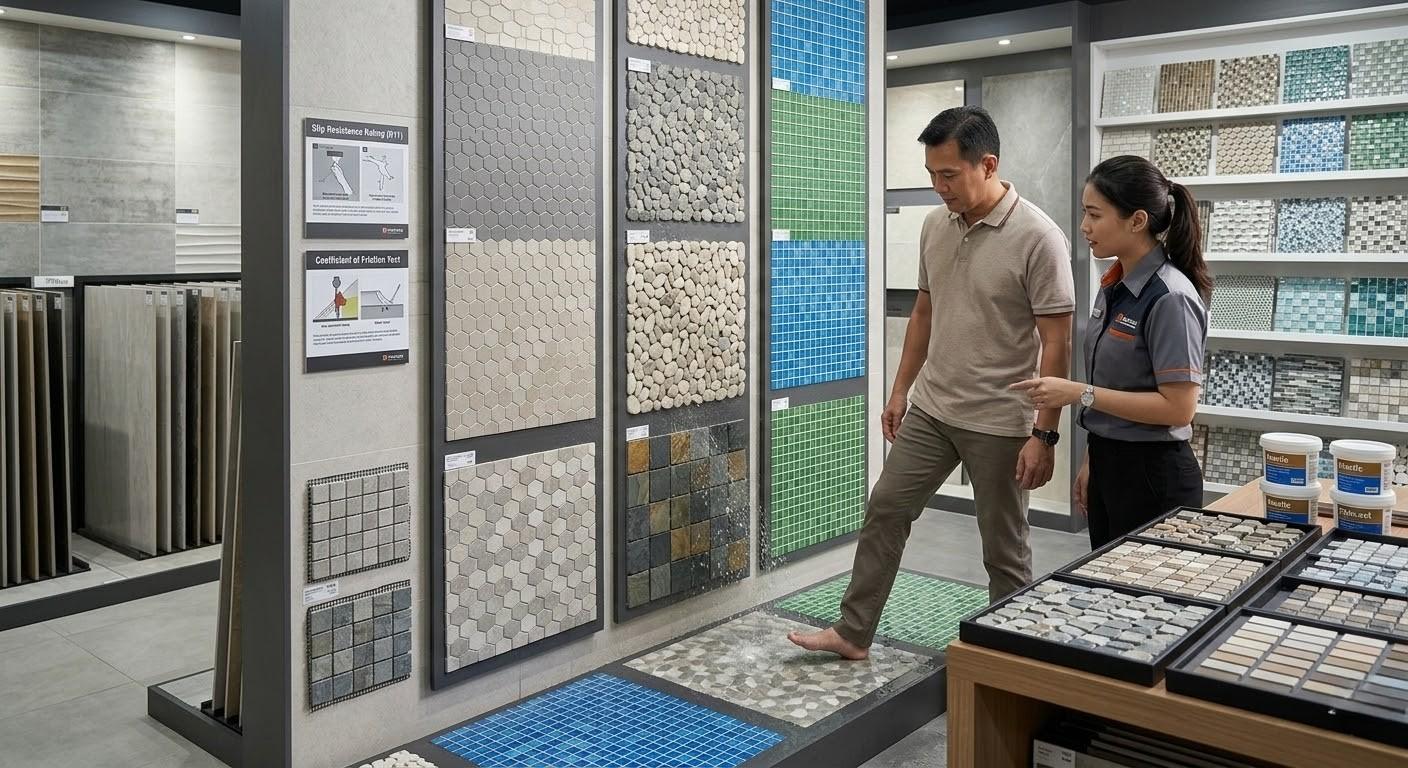
A refined, finished bathroom is the goal of every homeowner. Mosaic tiles bring texture and color where plain walls or large slabs simply fall flat. But a shower floor isn't a vanity top. It sees heavy traffic. It stays wet. And safety is always the number one rule here.
Many homeowners choose mosaics because the small pieces create nice visual interest. Sometimes, we do it because that's what looks trendy online. But before you sign off on a renovation plan, pause. There are practical hurdles with shower floors that aren't always obvious in the catalog.
If you're looking to buy mosaic tiles for a wet zone, you need to weigh aesthetics against function. You need to know what works in a real environment, not just on a display stand.
Here are five things to consider before making the final call.
1. Grip and Safety First
The most important factor is slip resistance. This isn't about style. It is about safety.
Shower floors get wet. Soap residue builds up. Your feet slide. Standard mosaic tiles sheets often sit on a mesh backing that is flat. While this looks smooth, it offers zero traction once water mixes with shampoo or body oils.
You need to ask for a specific rating. Manufacturers usually label these as R-values or give a Coefficient of Friction rating. Look for something designed for flooring rather than wall cladding. Some mosaic tiles have a flared edge or a rougher finish built right into the individual piece.
Glass mosaic tiles are beautiful. They handle water well. But many types are glossy. That gloss turns into a hazard when the floor is slick. Matte finishes are safer. Textured stones offer grip but can trap dirt. Test a sample under running water if you can. Do your shoes stick? Do you feel stable? If the answer is no, walk away from that option regardless of how pretty it is.
2. The Grout Line Problem
When you go with small tiles, you get lots of grout lines. That sounds fine until you clean.
Every line between those mosaic tiles is a potential breeding ground for mold. Humid bathrooms are perfect for mildew. Over time, standard cement-based grout stains. It absorbs moisture from the air and drips. Even if you use epoxy grout, which is stronger, it is still more prone to visible discoloration around the edges if not applied perfectly.
Think about maintenance. Do you scrub your floors daily? Or will you hose them down? If you expect low maintenance, the high number of grout joints in a mosaic tiles layout is a concern.
There are ways to manage this. Epoxy grout resists staining better than traditional mix. Grout sealers help, too, though they need reapplication every year or two. But remember, the more complex the pattern, the more chances there are for errors in application. If the installer leaves gaps or uneven depth, water gets trapped underneath the skin. Mold grows there quietly. It ruins the adhesive bond eventually.
3. Visual Scale and Space Perception
Small patterns read differently in small spaces. In a cramped ensuite, lots of detail can feel busy.
A mosaic tiles pattern draws the eye in. If the design is complex—like a basket weave or a checkerboard—it adds visual noise. In a large master bath, that looks intentional. In a small HDB or condo shower cubicle, it might feel claustrophobic.
Sometimes a simple field of larger porcelain tiles gives a cleaner look. They show fewer seams and make the room feel bigger. If you want the mosaic tiles, try using them only as an accent strip or in a niche. Using them for the entire floor changes the feel of the whole space.
Neutral tones help reduce visual weight. Dark mosaic tiles can hide dirt better, but they also show water spots immediately. Lighter colors show dust and soap scum more easily. The scale of the grout lines relative to the tile size also matters. Very thick grout on tiny tiles looks chunky. Very thin lines on large tiles look sleek. Match the grout width to the tile size.
4. Durability of the Material
Not all mosaic tiles hold up equally well to constant soaking.
Porcelain is usually the best bet for wet areas. It is dense. It absorbs almost no water. Ceramic is softer and can crack under pressure. Natural stone, like marble or travertine, is porous. It needs sealing. If the sealer wears off, the stone soaks up water. Stains set in quickly.
Also, consider the material on the mesh backing. You want the mosaic tiles to stay put. Some cheaper backings disintegrate in damp environments. This causes lippage, where tiles stick out higher than others. Lippage creates tripping hazards and traps debris.
If you choose stone, check the hardness rating. Soft stones scratch easily from sand and grit carried on shower shoes. They look worn after a few years. Porcelain mimics stone well now without the fragility. It takes heat and water without changing dimensionally.
5. Installer Skill and Sourcing
Finally, look at the source. You cannot treat a shower floor installation like a kitchen backsplash. The slope needs to be precise so water drains to the main outlet.
A poor slope leads to puddles. Puddles rot the floor structure. Only experienced fitters understand the correct pitch for a mosaic tiles base. Because mosaic tiles come in sheets, leveling them requires care. If the sheets don't lay flat, the shower pan leaks.
This is why finding the right supplier matters. Visit a reputable tile shop in Singapore. Don't rely solely on online orders or generic hardware stores. Walk into a showroom. Handle the material. See how the pieces align.
Talk to the staff about the project. Ask if they recommend specific adhesives for floor mosaic tiles. A good tile shop in Singapore will know which mortar bed works best for vertical or horizontal substrates. They can also guide you on local climate factors. Singapore is humid. Materials react differently here compared to drier climates.
Budget is another part of this. Installers charge more for mosaic tiles than for large format tiles. There is more cutting. There is more grouting. Factor that extra cost into your total budget. Cutting corners on labor often costs more in repairs later.
Final Thoughts
Choosing materials for a shower is about balancing beauty with longevity. Mosaic tiles bring character and personality to a bathroom. But they require more upkeep than solid slabs.
Make sure you prioritize safety. Ensure you can clean the grout. Check the material density. And find a contractor who respects the complexity of the job. If you take the time to vet these five points, your shower floor will last for decades without leaking or becoming a slipping hazard.
Renovations are exciting. Don't let a bad choice turn into a costly headache. Plan well, measure twice, and choose with confidence.

 English
 Magyar
 Arabic
 French
 Spanish
 Portuguese
 Turkish
 Dutch
Dutch
 Italiano
 Russian
 Romaian
 Portuguese (Brazil)
 Greek
Greek