
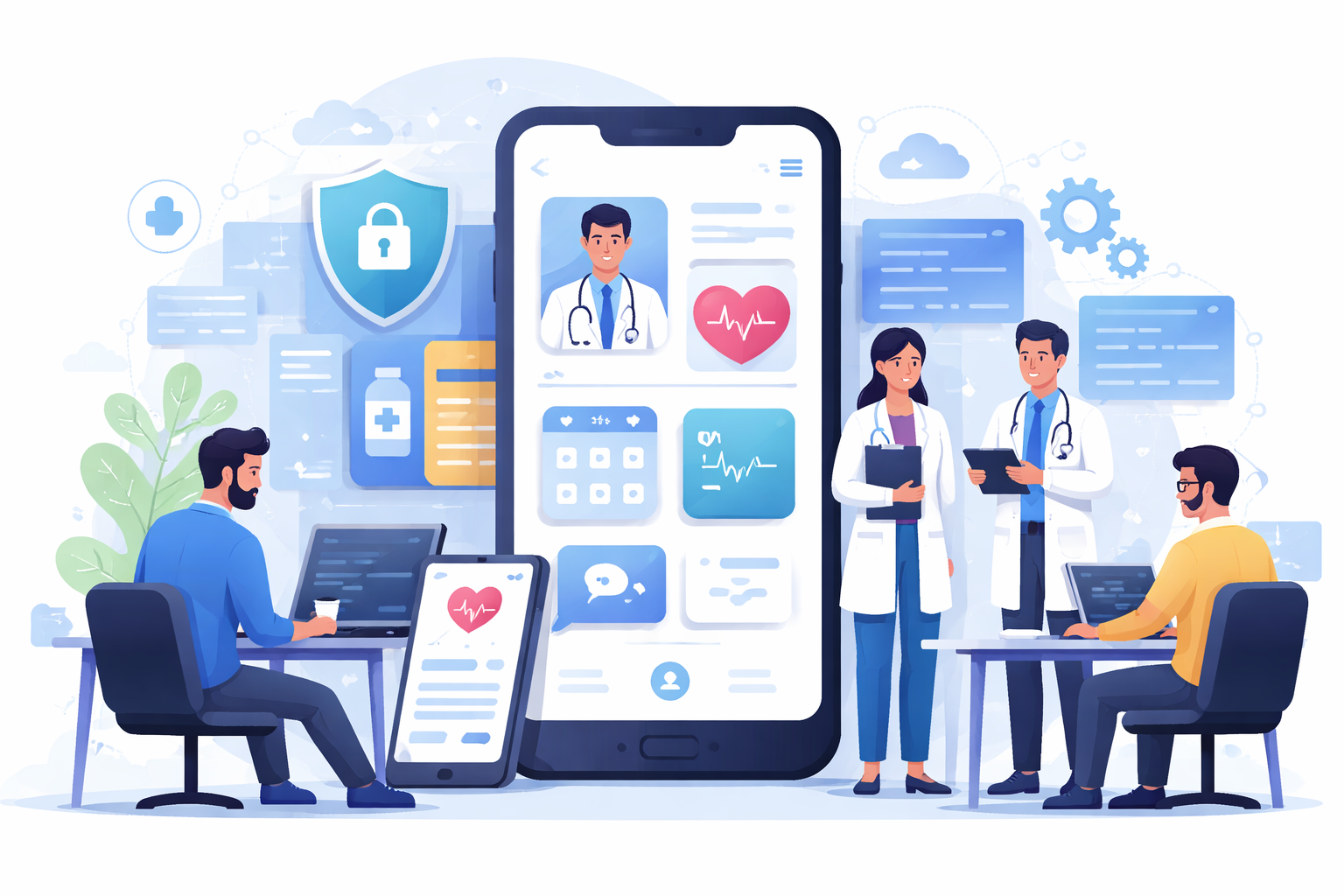
Artificial Intelligence (AI) is transforming many industries, and healthcare is one of the sectors benefiting the most from this technological advancement. With the growing demand for digital health solutions, AI has become a crucial component in modern app development for healthcare. From improving patient diagnosis to streamlining hospital operations, AI-powered applications are making healthcare services more efficient, accurate, and accessible.
Healthcare mobile applications are no longer limited to basic appointment scheduling or health tracking. Today’s apps are designed to deliver intelligent insights, real-time monitoring, and personalized healthcare recommendations. By integrating AI into healthcare app development, developers are helping healthcare providers deliver better patient care while reducing operational costs.
Improving Diagnostic Accuracy
One of the most significant roles of AI in healthcare app development is improving diagnostic accuracy. AI algorithms can analyze large volumes of medical data, including medical images, patient records, and lab results, in a matter of seconds. This allows healthcare professionals to detect diseases earlier and make more informed decisions.
For example, AI-powered healthcare apps can assist doctors in identifying conditions such as cancer, heart disease, or neurological disorders by analyzing medical imaging data. These systems use machine learning models trained on thousands of medical cases to detect patterns that may not be easily visible to human doctors.
By integrating AI into healthcare applications, developers enable faster and more reliable diagnostic tools, ultimately improving patient outcomes.
Personalized Treatment and Patient Care
AI also plays a key role in delivering personalized treatment plans. Modern healthcare apps collect patient data from various sources such as wearable devices, electronic health records, and patient inputs. AI algorithms analyze this data to generate personalized health recommendations tailored to each patient’s unique medical condition.
For instance, AI-based apps can recommend medication reminders, dietary plans, and exercise routines based on the patient’s medical history and lifestyle. This personalized approach helps patients manage chronic conditions more effectively and improves long-term health outcomes.
Healthcare providers can also use AI-powered apps to track patient progress and adjust treatment plans accordingly.
Remote Patient Monitoring
Remote patient monitoring has become increasingly important, especially with the rise of telemedicine and digital healthcare services. AI-powered healthcare apps allow doctors to monitor patients in real time without requiring frequent hospital visits.
Using connected devices and wearable sensors, these apps collect vital health data such as heart rate, blood pressure, glucose levels, and oxygen saturation. AI algorithms then analyze this data to detect abnormalities or potential health risks.
If any unusual patterns are detected, the system can alert healthcare providers immediately. This proactive monitoring helps prevent serious medical emergencies and ensures timely intervention.
Remote monitoring apps are particularly beneficial for elderly patients and individuals with chronic illnesses who require continuous medical supervision.
Enhancing Telemedicine Services
Telemedicine has become a vital part of modern healthcare, and AI is playing a major role in enhancing its capabilities. AI-powered chatbots and virtual assistants are now integrated into many healthcare apps to assist patients with basic medical queries.
These AI-driven systems can provide instant responses to common health questions, guide patients through symptom checks, and recommend whether they should consult a doctor. This reduces the workload on healthcare professionals and ensures that patients receive quick guidance.
Additionally, AI tools can analyze patient symptoms and medical history before a virtual consultation, helping doctors prepare for more accurate and efficient online appointments.
Streamlining Hospital Operations
AI is not only improving patient care but also helping healthcare organizations streamline their internal operations. Healthcare apps powered by AI can automate administrative tasks such as appointment scheduling, patient record management, and billing processes.
By reducing manual work, hospitals and clinics can focus more on patient care rather than administrative duties. AI can also analyze hospital data to optimize resource allocation, reduce waiting times, and improve overall operational efficiency.
For example, predictive analytics powered by AI can forecast patient admission rates, helping hospitals prepare staffing and equipment in advance.
Enhancing Data Security and Compliance
Healthcare data is highly sensitive, and protecting patient information is a top priority for healthcare organizations. AI technologies are increasingly being used to enhance cybersecurity in healthcare apps.
AI systems can detect unusual activity patterns and potential cyber threats in real time, preventing data breaches before they occur. Additionally, AI can help ensure compliance with healthcare regulations by monitoring data access and usage within healthcare applications.
This added layer of security helps build trust between patients and healthcare providers while maintaining the integrity of sensitive medical information.
Accelerating Drug Discovery and Research
AI-powered healthcare applications are also supporting medical research and drug development. Machine learning algorithms can analyze vast datasets from clinical trials, genetic research, and medical studies to identify potential drug candidates faster than traditional research methods.
Healthcare apps equipped with AI tools allow researchers and healthcare professionals to collaborate more efficiently and gain valuable insights from complex medical data.
By accelerating the research process, AI contributes to the faster development of new treatments and medications that can benefit patients worldwide.
The Future of AI in Healthcare App Development
The future of healthcare app development is closely tied to advancements in artificial intelligence. As AI technologies continue to evolve, healthcare apps will become even more intelligent, predictive, and patient-focused.
Future applications may include AI-powered mental health support systems, advanced predictive health analytics, and even robotic-assisted healthcare services integrated with mobile apps. These innovations will further enhance the accessibility and efficiency of healthcare services globally.
In conclusion, AI is playing a transformative role in modern healthcare app development. From improving diagnostic accuracy and enabling personalized treatment to enhancing remote monitoring and hospital operations, AI-powered applications are reshaping the healthcare industry. Businesses looking to build innovative healthcare solutions often collaborate with experienced development teams, such as a mobile app development hyderabad provider, to create advanced and secure healthcare applications that meet the growing demands of digital healthcare.

 English
 Magyar
 Arabic
 French
 Portuguese
 Deutsch
 Turkish
 Dutch
Dutch
 Italiano
 Russian
 Romaian
 Portuguese (Brazil)
 Greek
Greek