
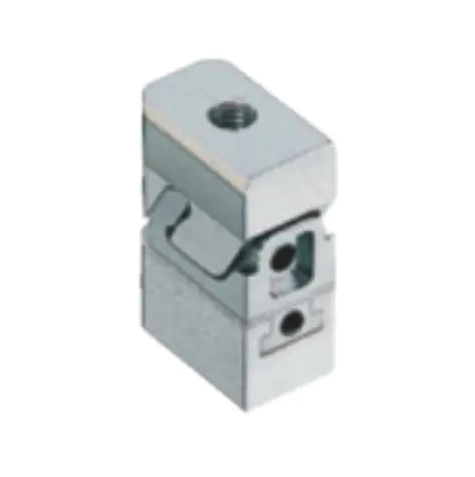
Core Cost Factors
The side core pulling price depends primarily on the complexity of the mechanism required for a specific injection mold project. Adding side actions to a mold increases tooling costs significantly compared to straight-pull designs. Multiple factors influence the final cost including mechanism type, number of slides, stroke length, and required precision. Understanding these variables helps manufacturers budget accurately and make informed design decisions that balance functionality with economic feasibility.
Percentage Increase Estimates
Industry data indicates that incorporating side-action cores typically raises total tooling costs by fifteen to thirty percent above standard mold pricing. For typical production molds ranging from ten thousand to one hundred thousand dollars, this represents an additional expense of approximately one thousand to fifteen hundred dollars per mechanism. The side core pulling price varies based on whether the application requires simple linear sliders or more complex hydraulic, pneumatic, or cam-driven systems.
Mechanism Type Impact
Different side action designs carry distinct cost implications. Straight linear sliders represent the most economical option, using angled guide pins to convert mold opening motion into lateral core movement. Hydraulic and pneumatic systems add expense through cylinders, valves, controls, and installation labor but become necessary for long strokes or heavy cores. Angled sliders and multi-axis mechanisms increase complexity further, requiring precision machining and careful alignment that drives up both initial cost and ongoing maintenance requirements.
Number of Slides Consideration
Projects requiring multiple side cores face compounded costs as each additional slide adds its own mechanism. Molds with features on several faces may need slides operating in different directions, each with independent actuation and timing considerations. However, consolidating multiple undercuts onto a single well-designed slide proves more economical than individual mechanisms for each feature. Strategic design decisions significantly affect total side core pulling price by minimizing the number of required slides.
Stroke Length and Size Factors
Longer stroke requirements increase mechanism size and complexity. Extended travel demands larger slide blocks, longer guide pins, and sometimes powered actuation instead of mechanical cam operation. Larger slides require more mold steel removal, additional machining operations, and increased material costs. The physical space occupied by slide mechanisms may force larger mold bases, further elevating overall tooling expense beyond the core pulling components themselves.
Precision and Tolerance Effects
Applications demanding tight tolerances at slide interfaces require more meticulous machining and fitting. Shutoff surfaces where slides meet cavity steel must seal perfectly against flash while allowing smooth motion. Higher precision requirements extend machining time, demand more skilled labor, and may necessitate secondary operations like EDM or grinding. These factors contribute directly to increased side core pulling price for high-specification applications.
Tool Life and Material Choices
Production volume expectations influence material selection for slide components. High-volume runs require hardened tool steels, wear plates, and replaceable components that withstand millions of cycles without degradation. Lower-volume prototypes or short production runs may use softer materials with shorter lifespans but lower initial cost. Material choices significantly impact both upfront pricing and long-term ownership costs through maintenance intervals and replacement frequency.
Hand Load versus Core Pull Tradeoffs
For limited production quantities, hand-loaded inserts present an alternative to automated core pulls. Hand loads involve manually inserting mold components, ejecting with each part, and removing them by operators. This approach reduces the initial side core pulling price by eliminating the mechanism complexity,y but increases per-part labor costs and slows cycle times. Core pulls become economically justified when production volumes exceed the breakeven point,t where automated efficiency outweighs higher upfront investment.

 Magyar
 Arabic
 French
 Spanish
 Portuguese
 Deutsch
 Turkish
 Dutch
Dutch
 Italiano
 Russian
 Romaian
 Portuguese (Brazil)
 Greek
Greek