
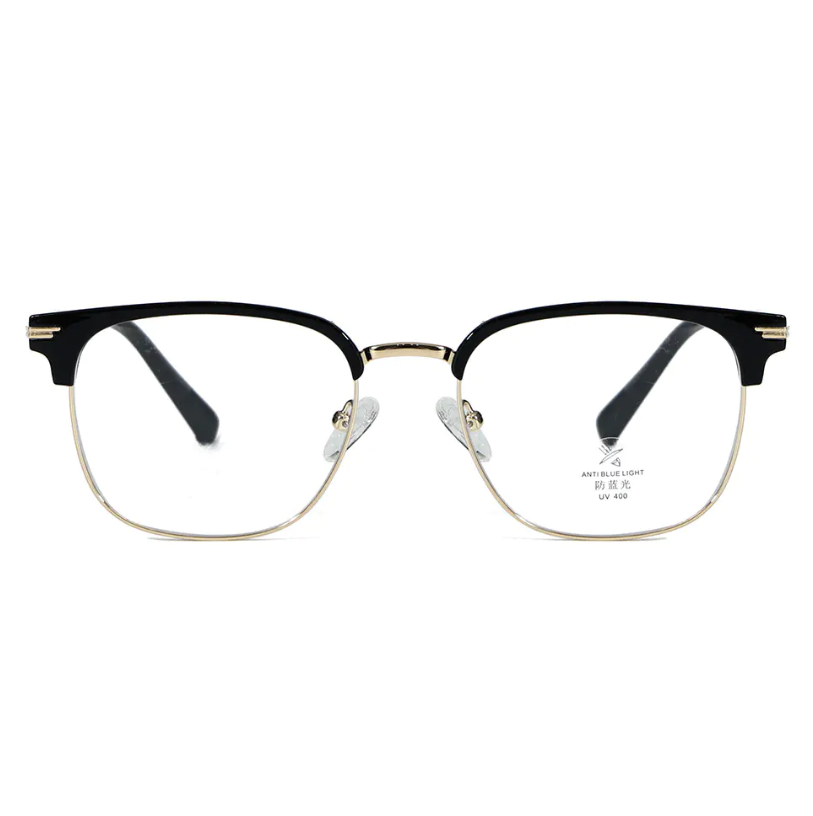
Core Business Definition
An optical eyewear factory is a specialized manufacturing facility that produces prescription glasses, sunglasses, reading glasses, and related vision correction products. These factories integrate frame production, lens manufacturing, and final assembly operations to create complete eyewear products meeting international quality standards. The manufacturing process combines precision engineering, materials science, and optical technology to produce eyewear that corrects vision while providing comfort, durability, and aesthetic appeal. Factories range from large-scale facilities producing millions of units annually to specialized operations focusing on premium handmade frames or advanced lens technologies.
Global Manufacturing Landscape
Optical eyewear factories are concentrated in key regions with established optical industries serving international markets. Wenzhou, Zhejiang province, hosts numerous manufacturers, including Wenzhou Rainbow Optical, founded in 2001, specializing in optical frames, sunglasses, and reading glasses with established markets across Europe, North America, and the Middle East . Mike Optical, established in Wenzhou in 2010, operates additional branches in Jiangsu Danyang and Hangzhou, employing roughly 200 worker,s including more than 20 professional eyewear designers with strong research and development capabilities. Danyang, Jiangsu province, serves as a major optical hub where companies like Danyang Mike Optical maintain production bases. Emerging manufacturing centers include India, where Lenskart has broken ground on a 50-acre integrated facility in Hyderabad, representing an investment of 1,500 crore rupees, expected to eventually manufacture over 200,000 glasses per day, serving domestic, Asian, and Middle Eastern markets.
Manufacturing Facilities and Scale
Leading optical eyewear factories operate substantial production facilities with advanced capabilities. Sunpet Industries, established in 1972, operates a factory complex in China spanning 30,000 square meters across six blocks, housing approximately 600 workers with ISO9001 quality management and ISO14001 environmental certification. In 1994, Sunpet became the first to establish an ultra-precision machining centre for aspherical plastic lens manufacturing in Hong Kong, subsequently installing additional advanced ultra-precision machines. New facilities continue development, such as the Dexi Optical in Sichuan province, a 10-story modern factory spanning nearly 10 acres, designed to collaborate with Zeiss, Essilor, and other international brands, with annual production capacity exceeding 200,000 optical products.
Lens Manufacturing Technology
The heart of optical eyewears factory operations lies in precision lens fabrication. Premium manufacturers like Zeiss utilize advanced free-form technology, where semi-finished lens blanks with pre-formed front surfaces are processed using 5-axis CNC methods, completing lens generation in approximately 90 seconds through three distinct steps: grinding, shaping, and precision surfacing using natural diamond tools controlling tens of thousands of processing points . This technology enables creation of completely customized optical surfaces tailored to individual prescriptions and visual requirements .
Alternative manufacturing approaches include innovative fluidic shaping technology developed for low-resource settings, where liquid photopolymer is injected into elliptical frames submerged in immersion liquid of equal density, utilizing surface tension to form two lens surfaces corresponding to the required prescription . After several minutes of curing under low-power LED arrays, complete solid lenses are obtained requiring no post-processing, demonstrating potential for local manufacturing where conventional machining technologies remain inaccessible .
Frame Material Production
Optical eyewears factories produce frames from diverse materials each requiring specific manufacturing techniques. Acetate frames utilize cellulose-based sheets cut, shaped, and polished through multi-stage processes including CNC machining, tumble polishing, and extensive hand finishing. Metal frames including titanium, stainless steel, and monel are stamped, welded, and surface finished through electroplating and coating applications. TR90 and other injection-molded thermoplastic frames are produced through high-pressure molding creating lightweight, durable designs. Each material category requires specialized equipment and skilled operators to achieve consistent quality.

 English
 Magyar
 Arabic
 French
 Spanish
 Portuguese
 Deutsch
 Turkish
 Italiano
 Russian
 Romaian
 Portuguese (Brazil)
 Greek
Greek