
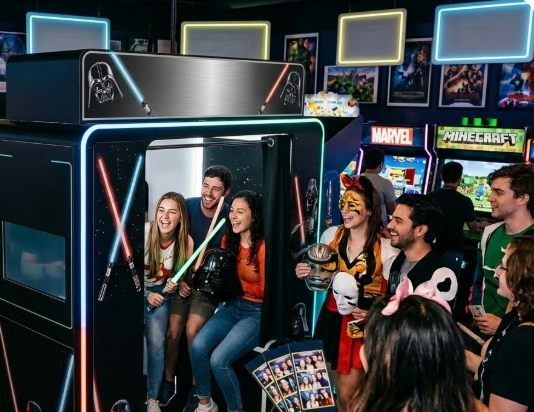
Arcades are changing. They are no longer built only around skill games. Today, many visitors want experiences they can capture and share. This shift has opened a new avenue for increasing revenue through immersive, content-driven attractions.
Arcades increase revenue today by offering immersive, content-based experiences that visitors can create and share.
A modern arcade experience is a digital interaction in which users create content rather than just play a game. This content can be saved, shared, and remembered.
This change is shaping how arcades attract and retain visitors.
Why Are Arcades Moving Beyond Traditional Skill Games
Classic arcade games are still popular. But they offer short play sessions with limited replay value. Once the game ends, the experience ends.
The Rise of Content-Driven Entertainment
Visitors now look for something more personal. They want moments they can keep and share.
Content-based attractions create:
• Longer engagement time
• Higher repeat visits
• Stronger emotional connection
Arcades now compete with social platforms where content is always being created and shared. This shift changes how revenue is generated.
How Do Modern Arcades Increase Revenue Per Visitor
Footfall alone is no longer enough. Operators now focus on how much each visitor spends during their visit.
The Premium Experience Model
People are willing to pay more for experiences that feel unique and personal.
A photo booth vending machine fits this model well. It offers a quick experience that delivers a high-value output. Visitors pay for a short session but leave with something they can keep. This creates a higher perceived value compared to traditional games.
This leads directly to the role of fandom.
How Does Fandom Influence Arcade Spending Behavior
Fans connect strongly with characters and stories. This connection affects how they spend money.
The Power of Licensed Content
Recognised characters create instant interest. Visitors trust what they already know.
This leads to:
• higher engagement
• stronger emotional pull
• willingness to pay more
Licensed attractions, such as a Marvel photo booth, give users a chance to step into a familiar world. The experience feels real and personal, not generic.
This emotional value increases both usage and repeat visits.
What Technology Turns a Simple Photo into an Immersive Experience
The experience is powered by a mix of camera systems and smart software.
From Static Photos to Interactive Content
The system captures the user in real time. It then places them inside a themed environment using digital effects.
The final output can look like a comic scene or a cinematic moment.
This includes:
• Character placement based on user position
• Scene matching for realism
• High-quality image output
The result is not just a photo. It becomes a piece of content that users want to share.
To work in busy arcades, speed is critical.
How Do These Systems Perform in Busy Arcade Environments
Arcades have constant movement. Systems must handle high usage without delays.
High-Speed Output and Guest Flow
Fast performance keeps the experience smooth. Users should not wait too long.
Key factors that support this include:
• Quick image processing
• Simple touch-based controls
• Fast payment flow
• Minimal waiting time
A coin-operated photo booth setup works well in this environment. Visitors are already used to quick, pay-per-use machines.
This makes the transition from games to content-based experiences feel natural.
How Do Arcade Operators Manage These Systems Efficiently
Operators need systems that run without constant attention.
Remote Monitoring and Control
Modern setups allow operators to track performance from a central system.
They can manage:
• Number of sessions per day
• Supply levels like paper or ink
• System updates
• Usage patterns
This reduces the need for on-site staff. It also helps maintain smooth operation during peak hours.
With this setup, the system becomes a steady revenue source.
Why Do Licensed Immersive Attractions Deliver Strong ROI
Revenue comes from both direct usage and indirect exposure.
Each session generates income. At the same time, shared content brings attention to the venue. Licensed experiences often command higher prices due to their perceived value.
They also encourage repeat usage, especially among fans who want to try different scenes. This combination helps these systems recover their cost faster than many traditional arcade machines.
What Should Arcade Operators Consider Before Adding These Experiences
Not every setup works the same way. Operators need to match the system to their space and audience.
Key factors include:
• Placement within the arcade
• Expected visitor flow
• Type of audience
• Relevance of content
Systems built for continuous use perform better in busy environments. Reliability and speed are just as important as the experience itself.
FAQs About Licensed Immersive Arcade Experiences
Why are arcades shifting toward content-based attractions?
Visitors now prefer experiences they can capture and share, not just play once.
Do licensed experiences increase revenue?
Yes. They allow operators to charge more due to higher perceived value.
How fast are these systems during peak hours?
Most are designed to handle quick sessions so they can serve many users.
Do these systems require staff?
No. They usually run automatically and can be monitored remotely.
Where should these attractions be placed?
High visibility areas, such as entrances or main walkways, perform best.

 English
 Magyar
 Arabic
 French
 Spanish
 Deutsch
 Turkish
 Dutch
Dutch
 Italiano
 Russian
 Romaian
 Portuguese (Brazil)
 Greek
Greek